Latest Updates
Who's Online

Please sign in to add comments


Cart Contents
| Item: | Price: | Qty: |
|---|---|---|
| Total: R 0.00 | ||
User Content
Latest Poll
Feature
Nexus Month of Horror Gaming - Part 5 (Alien Isolation, The Evil Within, SOMA)
It’s almost Halloween, not that I’d recommend trick-or-treating this year, and the end of our 31-day horror-binge. In the fifth and final part of this feature, I’m finally looking at the resurgence of horror games at the start of this generation (ending in like two weeks). A period of enlightenment after a decade of listening ignorant and incompetent publishers declare there was no market for horror games (and certainly not single-player ones), while setting unrealistic sales targets and withdrawing funding as part of a self-serving agenda. May they all rot in some equivalent of Silent Hill’s otherworld.

If you ever need a great example of misplaced priorities, consider the fact we had to wait until Creative Assembly, a developer best known for their Total War real-time strategy games, took a gamble and created a great first-person Alien game (emphasis on Alien, not Aliens). Alien Isolation is considered canon, following Ellen Ripley’s daughter Amanda as she travels to the rundown Sevastopol Station to collect the Nostromo’s black box. It's slow-burn, stealth-oriented horror that goes on for a bit too long; has a manual save system that often clashes with the randomness of Alien encounters, yet I can't think of another game that manages to captures the “feel” of inhabiting the Alien universe.
Even if you’re not a fan of the slow and methodical gameplay, it’s impossible not to appreciate Alien Isolation’s dedication to recreating environments from the movies. To set the scene, the prologue starts off in an M-Class starfreighter, which is near-identical to the Nostromo from the Alien movie. After a spacewalk across to the damaged Sevastopol goes wrong, leaving Amanda is separated from her two companions, she finds the station in disarray. It’s partially deserted due to ongoing decommissioning – full of dark, claustrophobic tunnels with automatic-lights clunking on and off as you move past – and the human inhabitants have split into small groups, terrified and hostile to one another. The first proper chapter onboard Sevastopol again – and deliberately I’m sure – takes you through areas similar to the loud, clanking, moisture-filled engineering decks of the Nostromo.
Unlike the player, Amanda has no idea what’s going on, but it doesn’t take long to encounter the xenomorph. What follows is a mechanically-simple game of hide-and-seek against several hostile factions, the environment, and an unkillable foe. There are weapons, access tools, and craftable items that’ll help you navigate the station and survive encounters against fellow humans and “working joes” (think terrifying, low-budget androids), so it’s not a game in which you feel completely powerless. You even get your hands on a fuel-guzzling flamethrower and Molotov cocktails that can even be used to chase away the Alien, briefly, though that’s never a wise decision. Alien Isolation has several scripted sequences, the bulk of your playtime involves enemies with three AI states – relaxed, searching, and hunting – which drastically affects your ability to navigate through the station.

Players who keep quiet and out of sight can easily move between objectives or get the drop on human and android foes. Keeping to stealth also ensures the alien is either absent from the area or remains in the “searching” state, sticking to the vents and only rarely emerging to explore the corridors. Once the alien begins hunting you, all bets are off. Using distractions repeatedly will cause the alien to eventually ignore them (so you can’t craft your way out of trouble) and, despite its size, the alien is prone to keeping quiet while camping in corners or behind doors, making survival – pre-flamethrower – feel like a game of chance at times. When you really need to get somewhere fast and loud, your best bet is leaving human enemies alive as bait for the alien, an efficient albeit sadistic approach.
Taken as a whole, Alien Isolation is a stylish, narrative-driven, stealth- and exploration-focused game with three distinct, overlong acts. Unfortunately, it suffers from several alien encounters that can feel distinctly unfair and too random, which will no doubt put some people off entirely. However, after getting past these brief roadblocks, you’re back to tense but rewarding exploration, avoiding or dispatching humans and android foes, while revealing more about the downfall of the station and the fate of the Nostromo. Alien Isolation (or The Collection with the survival-oriented DLC missions bundled in) is frequently discounted and can be picked up on PC, Xbox One, and PlayStation 4.

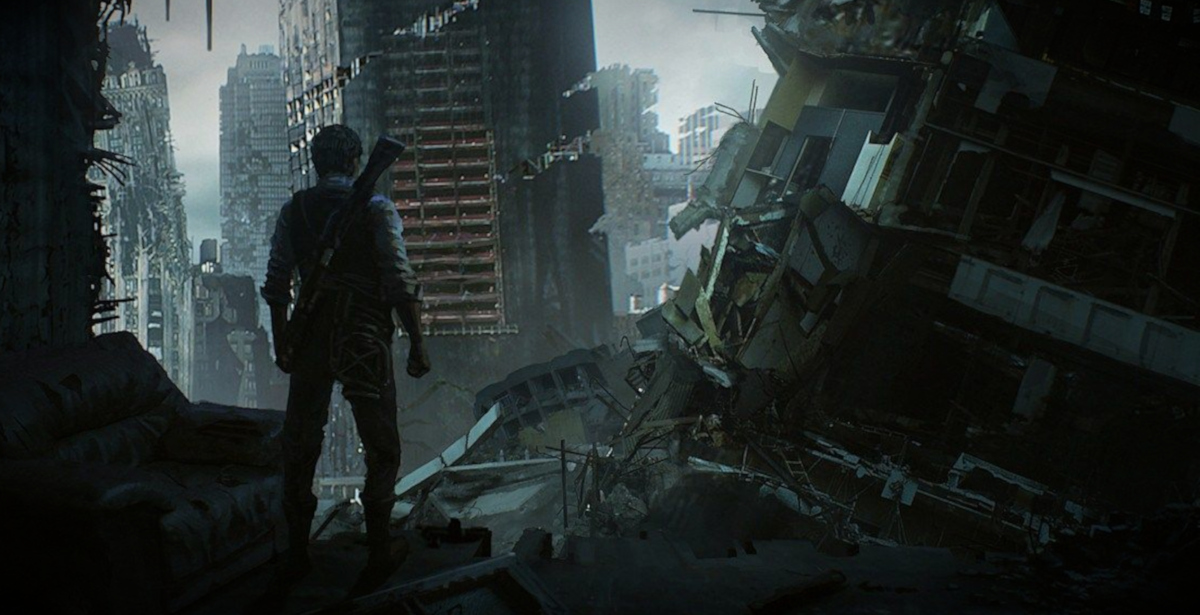
I think a lot of people were looking forward to The Evil Within as an opportunity for Shinji Mikami to once again revive the survival-horror, the way he did with Resident Evil 4. Unfortunately, it didn’t turn out that way. Partly due to some obnoxious game design choices, and partly due to severe technical issues. Replaying The Evil Within this year, after several hefty patches had improved the performance and even removed the “cinematic” letterboxing, provided an enjoyable survival-horror experience – though it also gave me time to focus on the dubious gameplay mechanics and boss designs instead.
Early into The Evil Within (slight spoiler), detective Castellanos and his team realise they’ve been drawn into an artificial world, a shared-consciousness constructed in part by their own minds, but also a construct that can be consciously altered by the psychopathic protagonist Ruvik. It’s a great narrative setup that allows the game to toss you from one terrifying, nonsensical location to the next, ramping up the intensity and keeping you on your toes. This constant shift is coupled with more conventional RE4-style survival-horror, albeit one with a stronger focus on stealth, puzzles, avoiding traps, and defeating recurring bosses.

When you’re scrambling to dodge the zombie-like “haunted”, with one round left in your revolver, looking for an environmental trap or explosive that could kill the entire horde, The Evil Within shines. Exploring the varied and grotesque environments, witnessing your safe room deteriorate, solving simple but gruesome puzzles, and slowly piecing together events are also highlights. Unfortunately, set pieces that involve insta-kill traps and bosses with one-hit-kill attacks (sometimes simultaneously) can feel like frustrating trial-and-error experiences. The Evil Within is well known for 1) providing the player with little information on what to do, and 2) rubbish check-pointing. In retrospect, after playing the streamlined sequel, these elements certainly add to the intensity of the experience and, if I had to describe The Evil Within in one word, it would be “relentless”.
If you enjoyed The Evil Within, but found the bat[censored] ending sequence leaves you confused, I’d recommend picking up the two DLC expansions, The Assignment and The Consequence, that star Juli Kidman, Castellanos’ rookie who clearly knows more than she’s letting on. It explores the idea of the STEM construct appearing different to each person in it, pushes stealth to the forefront, and explains (maybe overexplains) what has been going on in the background. You can pick up The Evil Within (or the “Digital Bundle” with the DLC) cheaply on Xbox One, PlayStation 4, or for PC on GOG and Steam.

Frictional Games deserves credit for popularising what I’d call the “run-and-hide” horror subgenre. They initially developed the Penumbra games, but these gave you tools to fight back (albeit badly). With 2010’s Amnesia: The Dark Descent, they proved you could create effective horror games by leaving the player powerless. This triggered a wave of similar games, such as Outlast and Layers of Fear, and even influenced parts of my favourite horror titles (see Alien Isolation above). It also triggered a wave of screaming YouTuber “Let’s Play” videos, but I can’t blame them for unforeseen consequences.
From a pure gameplay perspective, Amnesia: The Dark Descent would be my top pick – combining powerless horror with resource management and a “sanity” meter – but my experience with their horror/sci-fi hybrid, SOMA, has stuck with me for much longer. It sticks to the claustrophobic first-person perspective, oppressive environments, and darkness, but removes most inventory management and reduces the run-and-hide monster encounters to short but intense sequences. SOMA’s emphasis is rather on exploring unsettling environments, puzzling, and slowly unraveling the plot.

The protagonist, Simon Jarrett, goes for an experimental brain scan after surviving a severe car crash that leaves him with persistent injuries. That alone seems like a rough start but shortly after starting the scan, he blacks out and wakes up in a deep-sea research base, seemingly abandoned, filled with strange bio-mechanical hybrid creatures (several of which want to kill you). Without spoiling too much, you’re swiftly teamed up with the unexpectedly empathetic AI “Catherine”, who becomes your companion for the grueling journey. She points you in the right direction as you traverse research laboratories and the seafloor, provide hints for puzzles, but also comments on several decisions you’ll be forced to make along the way when dealing with the “surviving” crew.
Thinking back on my first playthrough, sci-fi fans might see some of the twists coming, but I’ve yet to play another game with an ending that got me to slump back in my chair and curse the developers (in a good way). SOMA is one of those rare games that had me sitting awake at night thinking about the ending and all the hints I had missed along the way. The experience is made that much better thanks to stunning visuals (especially when exploring the sea-floor), unsettling ambient audio, and great voice work. You can pick up SOMA on Xbox One, PlayStation 4, or for PC on GOG and Steam.
With October almost over and the chaotic November/December rush of games on the horizon, did you manage to spend this month playing any horror games of note? If so drop us your suggestions in the comments below or let us know what you thought of our picks.
Nexus' Month of Horror Gaming Part 1
Nexus' Month of Horror Gaming Part 2
Nexus' Month of Horror Gaming Part 3
Nexus' Month of Horror Gaming Part 4

There are 3 comments
 Blaze
Blaze


Please login to post comments.
More Features

10 Witchy Anime to Get You in the Spooky Spirit This October
With October here, that means only one thing: spooky season has arrived! In the lead-up to Halloween...
09-10-26 Read more

Comic Con Africa 2026 Wrap-Up
Comic Con Africa is one of the biggest events of the year, hosting over 70,000 people across a span ...
30-09-26 Read more

New and Returning Anime This October 2026
With October bringing a new change in season as well as Spooky Season, it also brings in a new anime...
29-09-26 Read more

MSI Modern A15 AI+ vs Cyborg 15 vs Crosshair 17 HX AI: Which MSI Laptop Should You Buy in South Africa?
There was a time when buying a laptop was relatively simple. You found one within your budget, checked...
28-09-26 Read more

Top 10 Things To Do at Comic Con Africa 2026
Comic Con Africa opens its doors this week as South Africa’s premier destination for all things geek...
23-09-26 Read more

Shoma Govender's Game Over Cancer Campaign Taps Into Tabletop & Board Gaming at Nexus Hub
Gaming communities are often at their best when they come together for something bigger than the games...
22-09-26 Read more

Comic Con Africa 2026 International Guests Roundup
With Comic Con Africa 2026 only a week away, the excitement and hype is slowly building towards the ...
15-09-26 Read more
BlizzCon 2026: All the Biggest Announcements
After taking a three-year break, BlizzCon has finally returned, and Blizzard had plenty to announce...
14-09-26 Read more

Cyberpunk 2077 Would Be Even Better If It Were More Deus Ex And Less Assassin's Creed
Five years, a dozen major patches, and one sizeable expansion have evolved, expanded, and improved Cyberpunk...
07-09-26 Read more

Mrs South Africa Finalist Shoma Govender Launches Game Over Cancer Fundraiser
For Mrs South Africa finalist, Shoma Govender, the journey towards the crown has become about far more...
05-09-26 Read more