Latest Updates
Who's Online

Please sign in to add comments

Cart Contents
| Item: | Price: | Qty: |
|---|---|---|
| Total: R 0.00 | ||
User Content
Latest Poll
Feature
Best of Xbox Game Pass - Olija & art of rally
There’s no denying the value of Microsoft’s Xbox Game Pass subscription on both console and PC. Their aggressive push could end up redefining how we consume and value games - for better and worse. This feature aims to highlight some of the great games currently part of the subscription - but don’t assume that means they’re not worth your attention on another platform or after they’ve left the service.
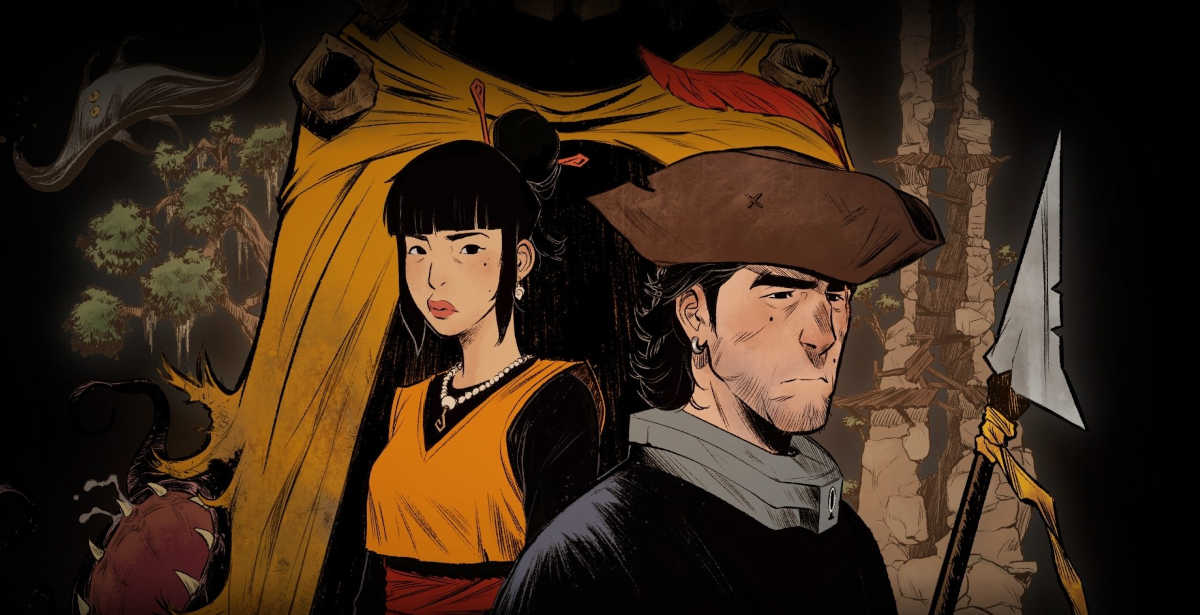
Olija (“o-li-yah” if you are wondering) is a slick 2D action-platformer - blending traversal, combat, puzzling, and secret-hunting - but the focus is primarily on the unfolding narrative and thick atmosphere. Lord Faraday, a noble down on his luck, sets sail with a small crew towards a group of Asian-inspired islands, known as “Terraphage”. They're believed to hold treasures that could restore his kingdom, but few ships return. Naturally, a storm destroys his vessel, and he only survives thanks to a mysterious boatman that ferries him to an island of fellow shipwrecked outcasts.
This kicks off a brisk but unexpectedly epic-feeling adventure that has you explore the surrounding islands for a means to escape the Terraphage archipelago through the massive “Shadow Gate”. To do this, the Faraday must defeat several bosses and collect the required keys, navigate a fledgeling romance with an enigmatic princess, and defeat a gruesome monster that refers to the events as part of an unfolding prophecy. Apart from ongoing narration from the boatman, Olija features minimal direct storytelling, relying on detailed backdrops, beautifully animated interactions, and brief but stylish cutscenes. Olija's limited pixel-art is used to great effect, backed up by intricate animations, vibrant and contrasting colours, and a great soundtrack that alternates between high-tempo Flamenco and soothing Japanese-inspired pieces.
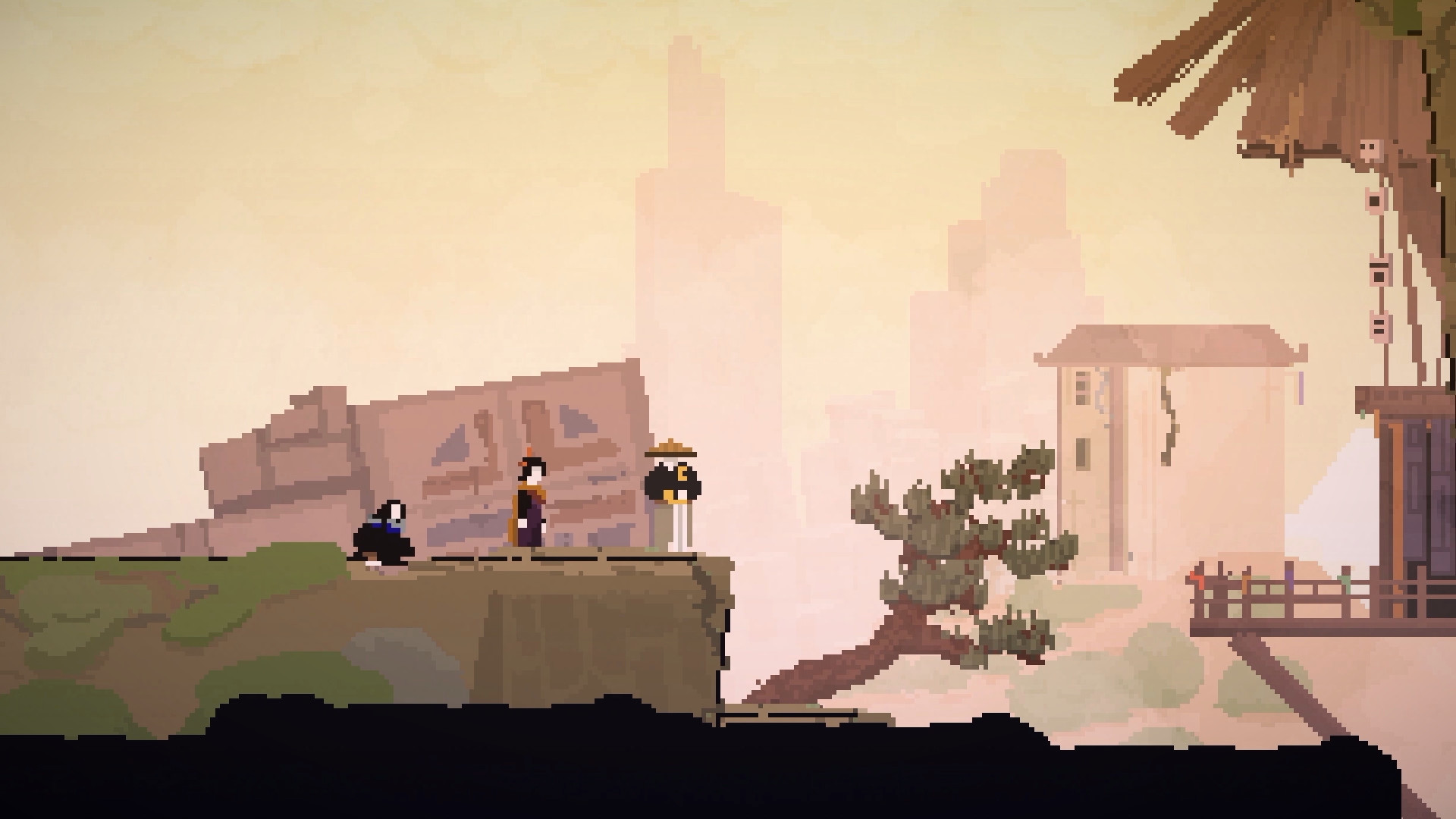
Gameplaywise, Olija is a classic 2D action-platformer (with checkpoint, not rogue-like elements - yay!) in which you move from screen to screen, jumping, grappling, dodging, slashing, and shooting your way through caves, temples, forests, and catacombs. Early in the game, Faraday retrieves a magical harpoon that is used for combat, traversal, and several puzzles. You can fling it at enemies; recall it back for a second hit; latch on to enemies or grapple points to teleport around, or simply trigger distant switches. There's a simple crafting and upgrade system, and "gear" to equip (think a variety of hats with unique buffs) but it's all streamlined.
Olija's greatest strength is the fine balance of traversal, combat, puzzles, and narrative sequences that pushes you forward for the 5-ish hour runtime. You will rarely traverse more than a handful of screens before discovering a puzzle sequence, mysterious wandering NPCs, a challenging boss, or a beautifully-animated interaction with the princess Olija and her retinue. For me, Olija is exactly what I want from an indie game - a short, well-designed, and entertaining experience that respects my time. If you are a fan of 2D action-platformers, Olija is a must-play on Game Pass (and it's cheap on other platforms if you're interested).
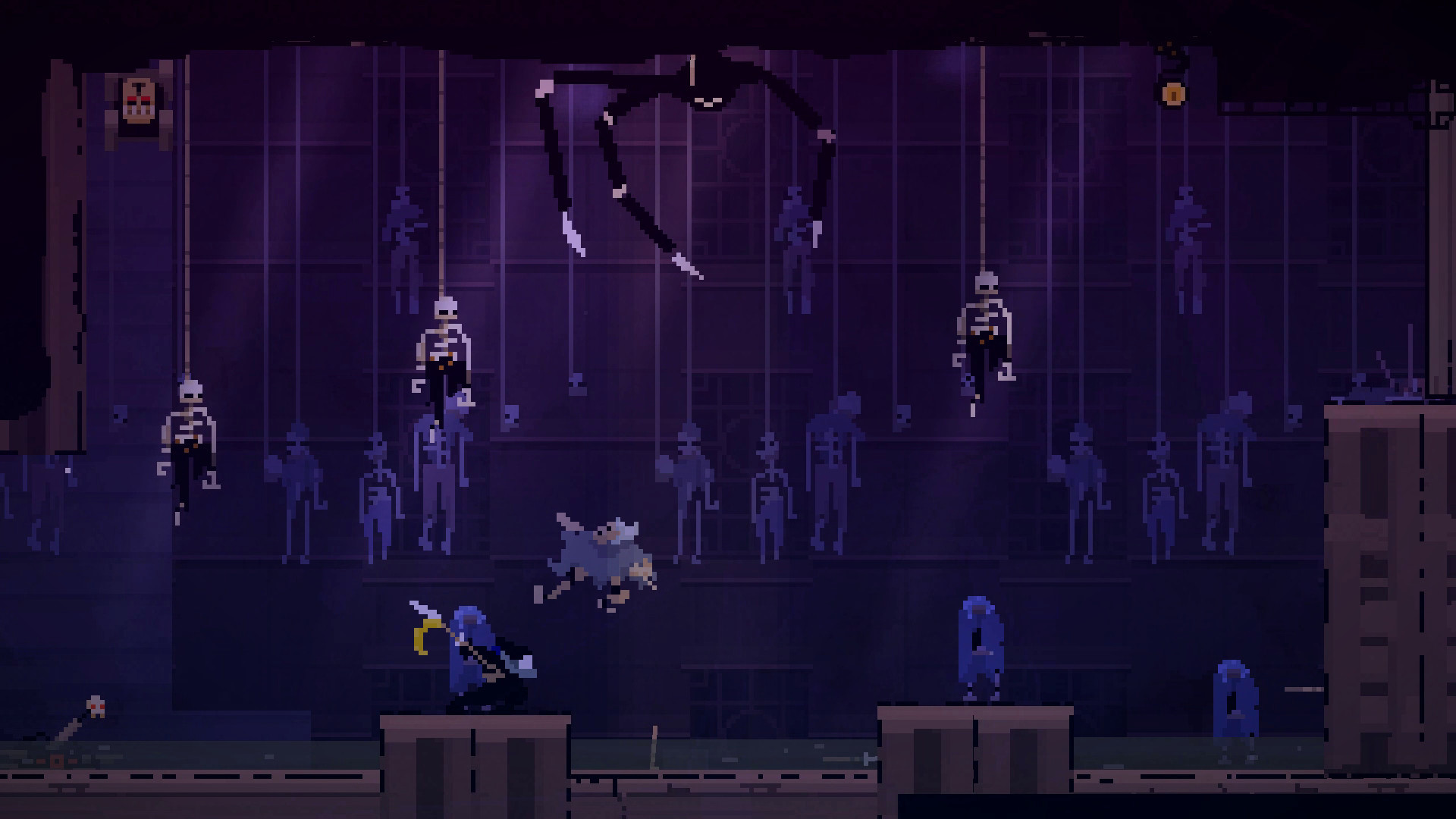
Funselektor Labs’ art of rally provides a driving experience that merges tense and (sort of) technical gameplay with a stunning presentation that can completely entrance you. Visual and audio pace notes are absent, so every event is all about you, your chosen car, a winding track, and the immersive presentation. You’ll tear through stylised natural environments, at different times of the day and in various weather conditions, all to the beat of an incredible electronic soundtrack.
There's no official license, so art of rally rather presents itself as a stylised facsimile of the real sport. That said, you’ll still recognize cars by their distinctive shapes and decal patterns; the environments are based on real-world settings with iconic - if exaggerated - backdrops; and the roadside props look like they’ve been pulled straight out of an official WRC event. Progress is simplistic but engaging, as you work your way through short rallies from 1967 to 1996, moving up through different vehicle classes - including the insanely fast and difficult-to-control B-class (before things get faster but easier to handle with all-wheel-drive vehicles).
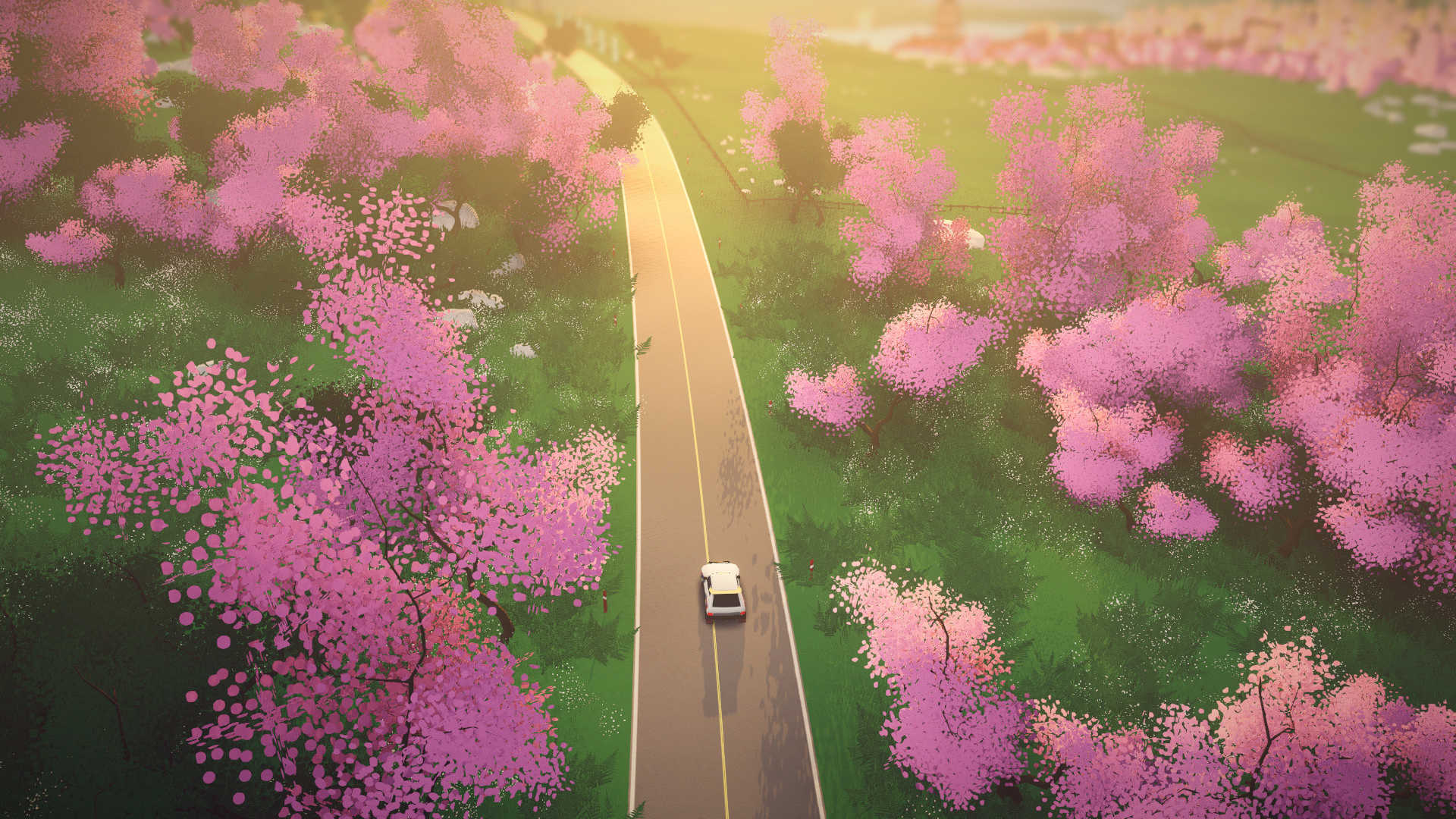
The handling model is closer to that of a simulation than an arcade racer, so you can expect challenging driving mechanics that force you to keep an eye on the track ahead, understand the physics of your car, and favour caution (at first). Individual events are made up of several quick stages, typically 2-10 minutes in length, which allows for an addictive gameplay loop that kept me coming back whenever I wanted a quick breather from work or another game.
Thanks to the pulled back perspective and cinematic visual effects, playing art of rally feels like watching a traditional post-rally summary, tracked from a distance by a drone as cars tear along rugged tracks. Mechanically, it’s just a competent rally game, but when you combine the gameplay loop with the audio-visual experience, it somehow captures the “feel” of a rally experience better than most of its peers. Gameplay and presentation combine to create a strangely cathartic experience despite the challenging driving mechanics.

There are 1 comments
 Tea
Tea
Please login to post comments.
More Features

Top 10 Things To Do at Comic Con Africa 2026
Comic Con Africa opens its doors this week as South Africa’s premier destination for all things geek...
23-09-26 Read more

Shoma Govender's Game Over Cancer Campaign Taps Into Tabletop & Board Gaming at Nexus Hub
Gaming communities are often at their best when they come together for something bigger than the games...
22-09-26 Read more

Comic Con Africa 2026 International Guests Roundup
With Comic Con Africa 2026 only a week away, the excitement and hype is slowly building towards the ...
15-09-26 Read more
BlizzCon 2026: All the Biggest Announcements
After taking a three-year break, BlizzCon has finally returned, and Blizzard had plenty to announce...
14-09-26 Read more

Cyberpunk 2077 Would Be Even Better If It Were More Deus Ex And Less Assassin's Creed
Five years, a dozen major patches, and one sizeable expansion have evolved, expanded, and improved Cyberpunk...
07-09-26 Read more

Mrs South Africa Finalist Shoma Govender Launches Game Over Cancer Fundraiser
For Mrs South Africa finalist, Shoma Govender, the journey towards the crown has become about far more...
05-09-26 Read more
Five Best Announcements From Gamescom Opening Night Live 2026
Gamescom Opening Night Live 2026 has passed, delivering yet another stacked show filled to the brim ...
26-08-26 Read more

The Witcher 3 Remastered Stole The Show at Gamescom – Here’s What to Expect
While we knew CD Projekt Red was going to debut its Songs of the Past expansion pack for The Witcher...
26-08-26 Read more
Here's How Long it Will Take to Watch These Modern Anime
We've recently been exploring how long it would take you to watch certain anime, if your'e curious about...
21-08-26 Read more
GTA: Vice City Revisited - What Made It So Good?
2002’s Grand Theft Auto: Vice City holds nothing but pleasant memories for both myself and the many ...
20-08-26 Read more