Latest Updates
Who's Online

Please sign in to add comments


Cart Contents
| Item: | Price: | Qty: |
|---|---|---|
| Total: R 0.00 | ||
User Content
Latest Poll
Review
World to the West
Dash, smash, dig, and charm your way out west
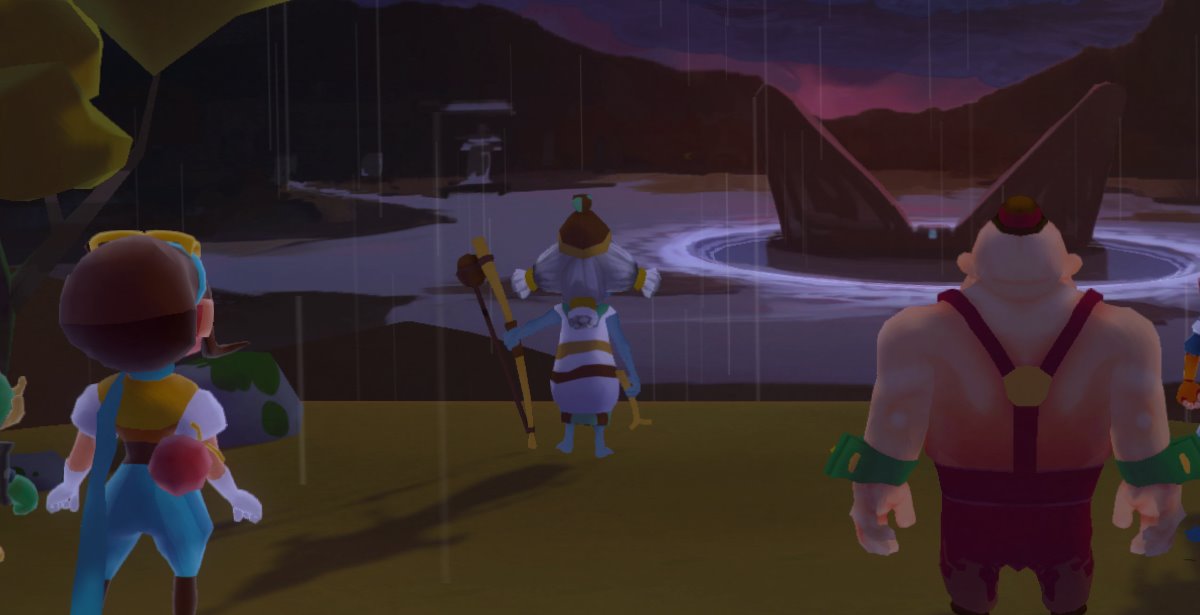
World to the West is the sequel to Teslagrad, a critically and commercially successful tough-as-nails, one-hit-and-you’re-dead platformer. Personally, I struggled to get through Teslgrad and would only recommend it to the most resilient masochists. This left me skeptical of the sequel until I discovered it only shares the same world and basic lore; rather offering up a sprawling 3D adventure-puzzler. If anything, World to the West often feels a little too safe, a game that is clearly designed to be enjoyed by everybody with only a few difficulty spikes early on.
World to the West introduces the player to four unique protagonists over the course of several early chapters. Their paths criss-cross repeatedly and they eventually team up to defeat a nefarious villain and save the world. Clichéd, for sure, but the opening chapters do a great job of introducing the characters, resolving their individual quests, and introducing their unique move-set.
There is Lumina, an apprentice Teslamancer who is accidentally teleported to the island and sets off to find an artifact that'll get her home. Knaut, an orphan boy (and Luigi lookalike) forced to work in mines owned by the villain. Miss Teri, an adventurer and treasure hunter who initially works for the villain before she’s (predictably) betrayed. Finally, there is Lord Clonington, self-absorbed aristocrat and pugilist who has come to prove his worth to the islands “Affluent Society”, run by the villain.
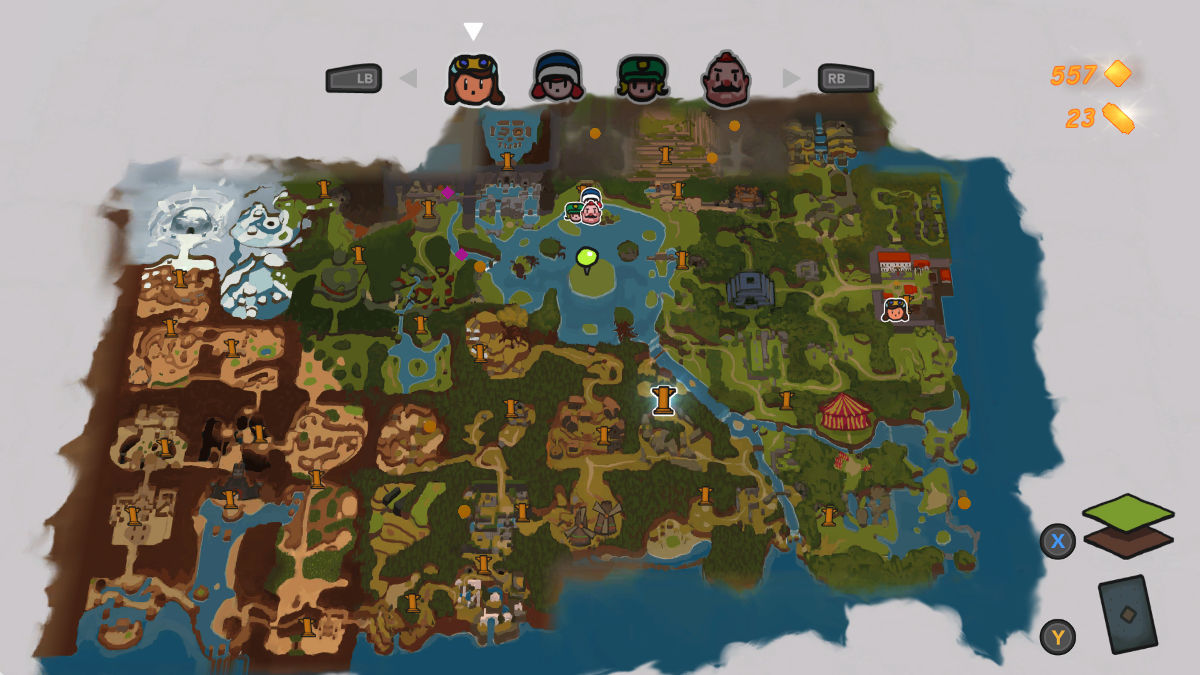
The opening chapters take place in the eastern half of the island before it finally opens up to provide hours of exploration and puzzling. For every zone on the surface, there is an equally complex, interconnected labyrinth below.
The first eight chapters, representing just over half of the total playtime, focus on one or two characters working together, usually to achieve individual goals. They may need each other’s skills to progress but often have different end points, different routes across the expanding map, and their own narrative arc to complete. There’s no voice acting but the writing is short, smart and often humourous. Before long, it becomes clear there is a much greater threat to the people on the island and, with each character having a personal interest in defeating the primary villain, they set off on the final chapter, “The Great Adventure”.
At this point the narrative pacing is dependent on the player; all characters are available and the entire map is accessible, roughly 80 surface zones and almost as many underground. There are a few key objectives to achieve before tackling the final boss but completionists will find themselves spending the bulk of their time scouring every corner of each map, juggling between the characters, on the hunt for scrolls (a small number of which are required to progress the plot), and health upgrades. Much like Teslagrad, these scrolls tell the history of the island nation and provide more context to current events.
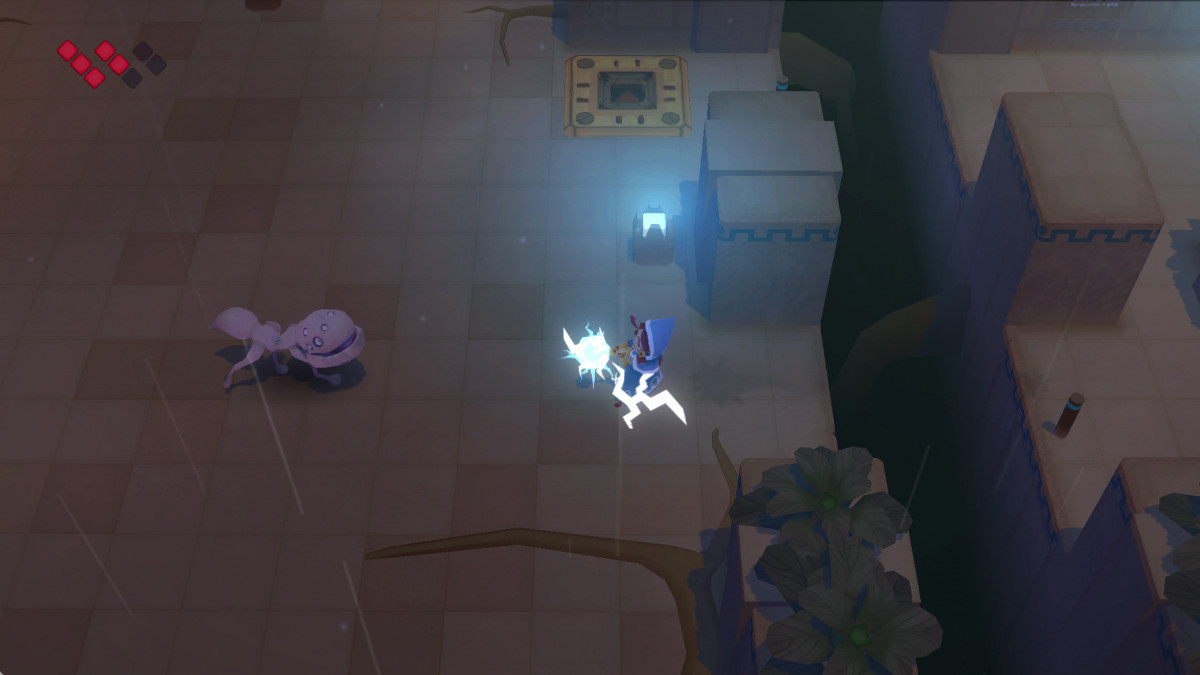
Lumina the Teslamancer is one of the more combat-focused characters, capable of holding her own in a fight and teleporting around the environments.
Outside of the linear opening chapters, the narrative is fairly sparse but the gameplay does a great job of keeping you hooked; I always felt the urge to explore another greyed out corner of the map and puzzle through just another zone to uncover its secrets. Aside from a few dramatic camera pans, the bulk of the game is played from a fixed isometric viewpoint, as you guide the characters through twisting jungles, snowy plains, scorched deserts, temple ruins, and dark caves. Each character, during the introductory chapters, gains three primary skills that either modify movement, provide new attacking options, or a mix of both.
Lumina can batter foes with her staff, teleport-dash across gaps, and eventually fling balls of lightning that can inflict massive damage, destroy certain obstacles, or be used as a moving teleport target. As these ricochet around the environment, they become essential to later puzzle solving. Lumina will also face off against a good chunk of the games more puzzle-oriented bosses.
Knaut can initially dig into and travel through soft ground, to avoid enemies and obstacles, and later gains a pair of “ice” skates that make their own ice, allowing him to skate across any body of water. Lastly, he gets access to dynamite, giving him more offensive options and means to blow through certain obstacles.
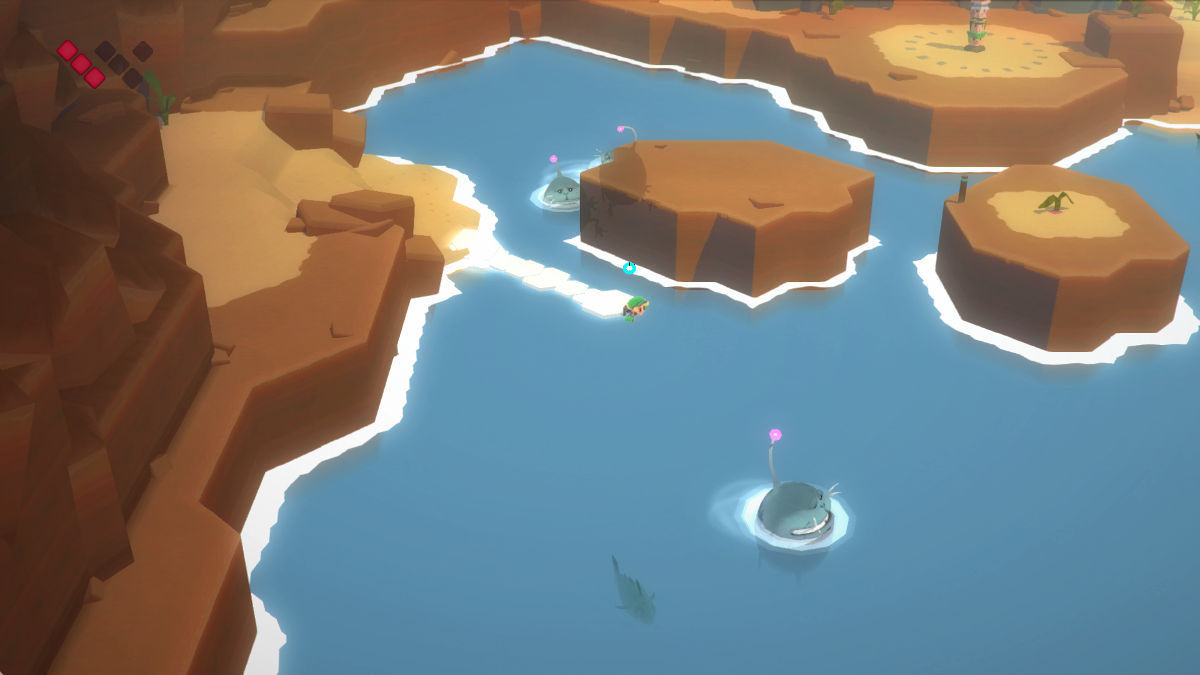
Knaut is pretty bad at combat, unless you're really good and luring enemies into bundles of dynamite. However, his ice skating ability makes him the only character able to traverse any water body.
Miss Teri, despite her renown as an “adventurer”, is the least equipped for combat but has the ability to mesmerise enemies and control them in battle. She can even ride larger creatures to navigate the environment and eventually earns the ability to store small creatures for later use. A steady supply of (what I believe) are exploding guinea pigs simplified many combat encounters and also provide the means to demolish certain obstacles.
Lord Clonington is the most offensive character, in many ways, and spends the bulk of his time in combat or scaling ledges that are too high for the other characters. He also simply punches his way through many obstacles. Along with Lumina, he spends the most time relegated to tackling some tough bosses, using his punching combos to whittle down their substantial health bars. Mercifully, and unlike Teslagrad, you’ll ever encounter a boss that can fell you in a single blow.
If you’re someone who enjoys exploring every inch of a game and scouring the map for secrets, you’ll be pleased to know that skills sets eventually overlap to a degree. While initial chapters had me frantically swapping between characters to open up paths, it becomes much simpler to explore the world in the final chapter. There are certain locations and power-ups accessible by only one character but not too many as to be frustrating.

Miss Teri does little damage with her scarf but can mesmerise creatures, such as this tongue-lolling Grue, and use them in combat or to clamber about the environment.
Frustration is, unfortunately, something that most players will experience at least a few times during the final chapter. After a fateful encounter between the protagonists and a mystical shaman in the opening hours, the player unlocks totems (found in almost every zone) to fast-travel around the map. However, totems must be activated by each character and they must get to that location on their own steam. You can’t simply pick your favourite character, rush to the next totem, and then teleport the rest of your team through.
If you only tackle the main quest in the final chapter, this will rarely be an issue as while characters may take a similar path, their route is often different and you’ll always have the opportunity to dash off a side path to find some collectible that only that character can access. However, when on the hunt for all the scrolls and health power-ups, you’ll find zones that require all characters present. It then becomes a slog to systematically move each character to that location. That said, having completed the game with 75% of the scrolls recovered and almost every health upgrade, this never put me off playing further.

Lord Clonington puts his fists to good use as the protagonist most likely to end up in conflict with anyone and anything. With some strong combos and the largest starting health pool, he's ideal for battering through a tough area. His dialogue is also consistently amusing.
Presentation ranges from good to average. The cartoon-ish look is distinct and appealing, with chunky geometry, exaggerated character models, and vibrant colours. However, textures are often bland and there is little in the way if atmospheric effects (like wind, mist or rain), outside of a few key zones and some late game sequences. Dark caverns are full of fires that cast dynamic shadows through rock pillars and it looks great, as does sunset light filtering through the trees of a forested area. However, flat areas with minimal decals or complex geometry (such a grassland, desert sands and bodies of water), all look incredibly bland in comparison.
The music is almost always excellent, elevating every scene even if the graphics are sometime underwhelming. Some tracks are better than others but most are upbeat, high-tempo and catchy, cementing the playful, inoffensive tone of the game. There is the occasional moody underground theme that suits the dark caves or ruins but, for the most part, I found myself bobbing along to the music while puzzling my way through the environment or slaying an inordinate amount of wildlife.
The World to the West was a real surprise for me after Teslagrad. The dark, oppressive fairy-tale world gives way to a more light-hearted adventure story that focuses on the joy of exploration and puzzling, rather than tough platforming and unforgiving boss encounters. If you’re looking to relax for 15 or so hours with a Zelda-esque adventure, this is a great choice. It’s currently available digitally on PC, PlayStation 4 and Xbox One but was scheduled for a Wii U release. With that console all but retired, I’m hoping it’s coming to the Switch as it’s a near perfect game for that platform.


Please login to post comments.
More Reviews
Review: Hellraiser: Revival
I’ve been a fan of the Hellraiser movies ever since I snuck a VHS rental (yeah, remember those?) of ...
13-10-26 Read more
Review: The Sinking City 2
The Sinking City 2, from Ukrainian developer Frogwares, is less of a sequel than it is a Lovecraftian...
12-10-26 Read more
Review: Fire Emblem: Fortune's Weave
It’s legitimately very hard to believe that it’s been seven whole years since Fire Emblem: Three Houses...
05-10-26 Read more
Review: Control Resonant
It’s been seven years since the events of developer Remedy Entertainment’s original 2019 Control title...
02-10-26 Read more

Review: Gears of War: E-Day
Xbox’s flagship Gears of War series has had a bit of an identity crisis over the last decade. After ...
01-10-26 Read more
Review: Gachiakuta
Gachiakuta took the world by storm when it first aired from July to December 2025. With its gritty animation...
28-09-26 Read more

Review: Elden Ring: Tarnished Edition (Switch 2)
What can I say about Elden Ring that hasn’t already been said? From Software’s magnum opus originally...
21-09-26 Read more
Review: The Blood Of Dawnwalker
Rebel Wolves’s The Blood of Dawnwalker has often been compared to The Witcher III: Wild Hunt from fellow...
15-09-26 Read more
Review: Marvel's Wolverine
When I think about some of PlayStation Studios’ most consistent developers, Insomniac Games always ranks...
10-09-26 Read more
Review: Dumb Ways to Build
Originally a public service announcement which discouraged the Australian public from thoughtless activity...
09-09-26 Read more

Overview
Developer
Rain Games
Publisher
Rain Games
Platform
PC, PlayStation 4, Xbox One
Release date
5 June 2017