Latest Updates
Who's Online

Please sign in to add comments


Cart Contents
| Item: | Price: | Qty: |
|---|---|---|
| Total: R 0.00 | ||
User Content
Latest Poll
Review
Review: The Legend of Zelda: Tears of the Kingdom
Breath of the skies.
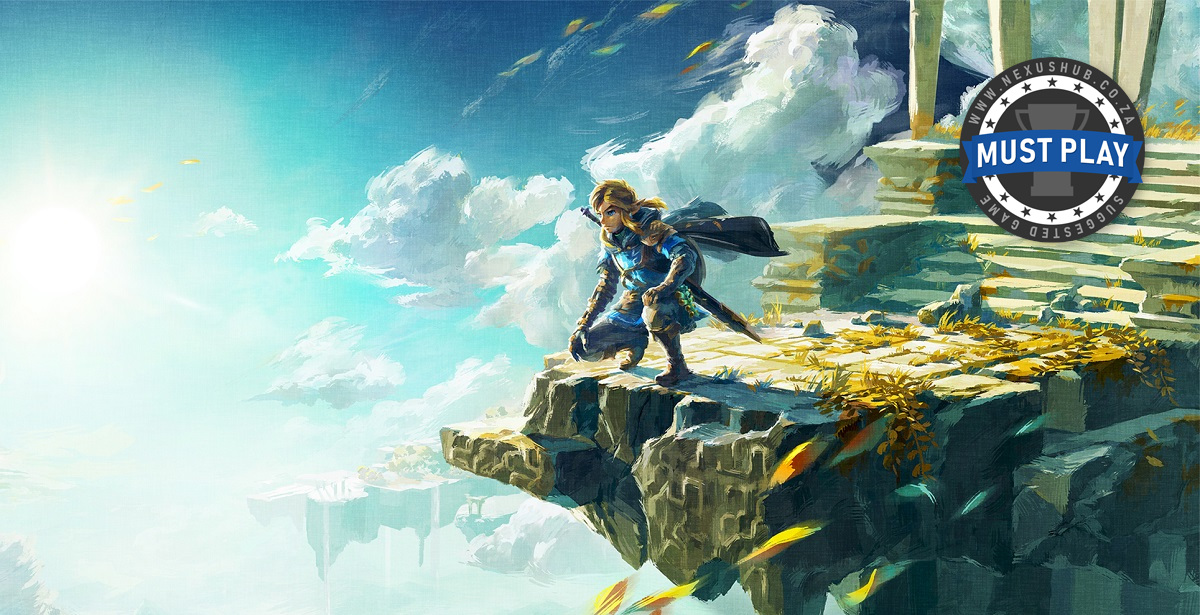
After the fifteenth time strapping a pleading Korok to a rocket and launching it off the side of a cliff, I came to really enjoy the beautiful simplicity and quiet serenity of The Legend of Zelda: Tears of the Kingdom. It's a game that, much like Breath of the Wild, demands your patience and generously rewards your sense of adventure, exploration and above all, imagination. Nintendo had a tall order to outdo its predecessor but while it's arguably more of the same - at least on the surface - the deeper mechanics of Tears of the Kingdom shine in what is possibly one of the best entries in the franchise.

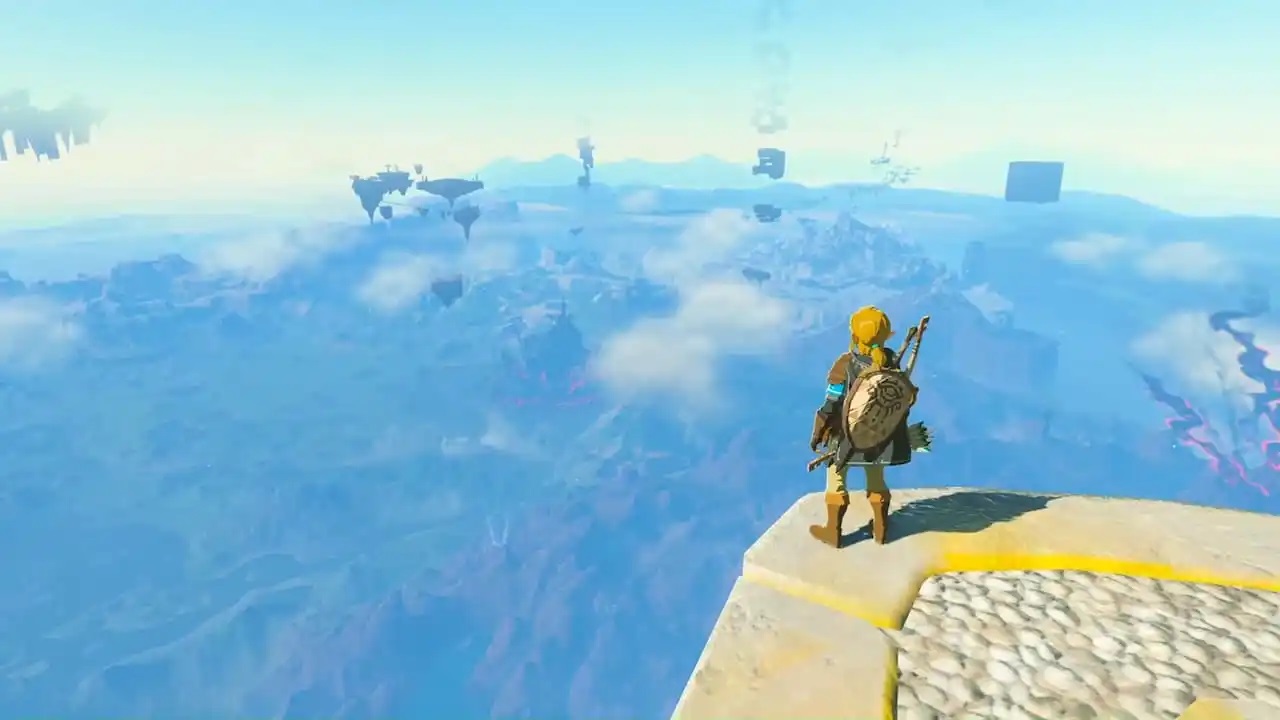
Tears of the Kingdom starts off walking before it runs. After a fairly lengthy tutorial section where you're presented with the game's unique new mechanics, you skydive into a Hyrule where the landscape is familiar, but ever so slightly changed due to story reasons. Floating islands now inhabit the skies over the land and there's more to uncover as you literally dig deeper. You once again play as Link and Hyrule is once again in peril, so story-wise it's very familiar and safe territory, though I do miss the Majora's Mask days of the series taking bold narrative leaps.
That said, you shouldn't go into Tears of the Kingdom expecting a radical departure from Breath of the Wild. In fact, the aesthetic, core gameplay, landscape, most locations and freeform storytelling all largely remain unchanged. What has been changed is significant enough to warrant its sequel status and it's evident from the moment you pick up a stick and learn the game's intricate mechanics.

There's a lot to unpack in terms of what's new and shockingly innovative in Tears of the Kingdom and I'll do my best to give a rundown of it all. Firstly, Link's Ultrahand ability allows him to pick up objects in the environments and piece them together to form, well, literally anything you can think of. I spent hours experimenting with this skill the most as it was surprisingly intuitive and easy to get into building horrendous and wonderful contraptions. Ultrahand can also be used to throw bomb barrels at enemies or solve puzzles, making it a versatile and handy tool.
You shouldn't go into Tears of the Kingdom expecting a radical departure from Breath of the Wild.
Working in tandem with Ultrahand is Fuse. This ability lets Link, uh, link and attach various objects together. While it can be used for pretty much anything in the world, you'll mainly want to use it for crafting more durable weapons and tools - achieved by fusing two unlikely objects together. Weapon degradation is still a thing from Breath of the Wild that I didn't particularly like and it's still a bit bothersome here, but Fuse at least makes it a bit more tolerable. You can put a boulder on a stick and call it a hammer if you want, or attach explosives to your spear. The possibilities are literally endless and I haven't even scratched the surface of its potential.
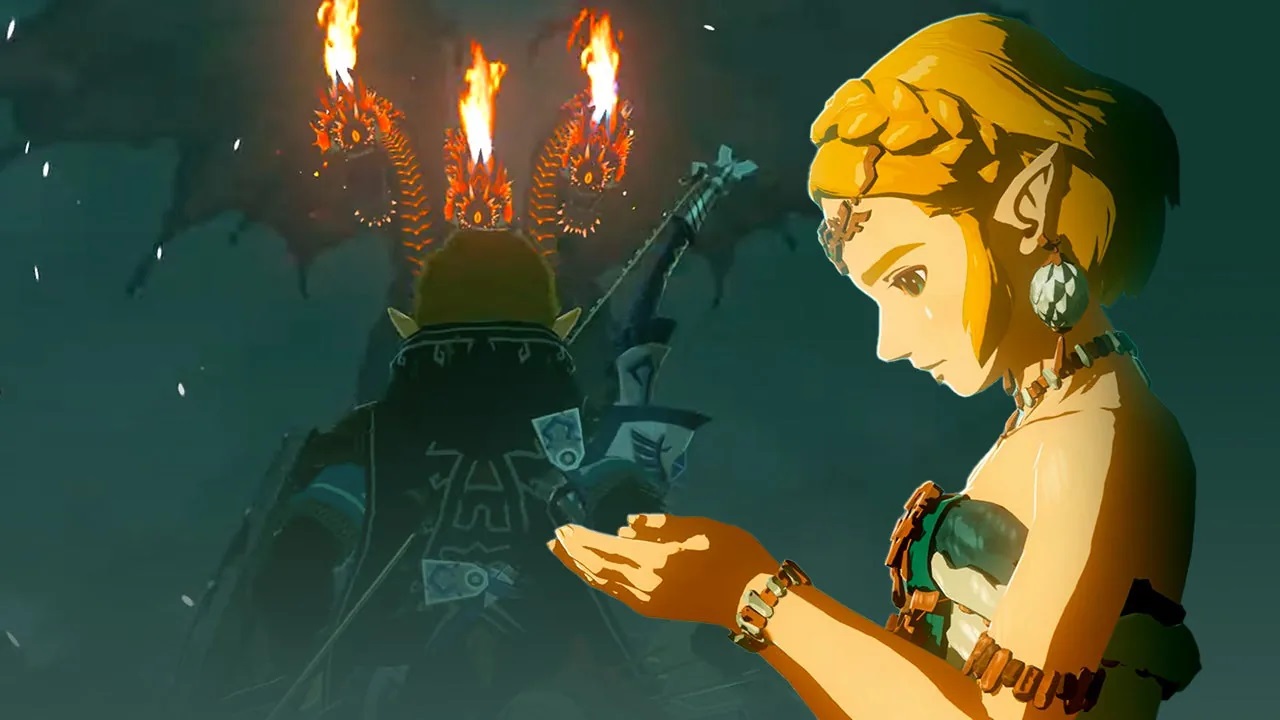
Then there's Ascend and Recall, awesome abilities that inadvertently encouraged me to break the game. Ascend lets Link rapidly rise or swim up to a surface above him, such as navigating up caves or structures. As long as the ceiling of entry is within reach, Link can use Ascend to vertically scale anything you imagine. I'm pretty sure I used Ascend enough times to bypass massive chunks of content and land masses. Piece of land are constantly falling from the sky structures above and this is where Recall comes into play. It's a handy way to rewind the trajectory of an object so that it returns to its original location. Of course, you can bend the laws of physics and engineering by using Recall on anything you can pick up, making combat a dance of levitating debris as it strikes enemies from every direction.
The open-world in Tears of the Kingdom is remarkably well-designed and almost seduces you into experimenting with these new mechanics and abilities. You can find materials scattered around the land that's clearly telling you (or rather begging you) to make something out of it - everything from makeshift boats to rocket-powered planes to wonky vehicles to wind-powered bikes, and all manner of torture devices for the Korok. Tears of the Kingdom is a marvel of game design that, even after 40 to 50 hours, constantly blew me away with just how much I was still learning and discovering.
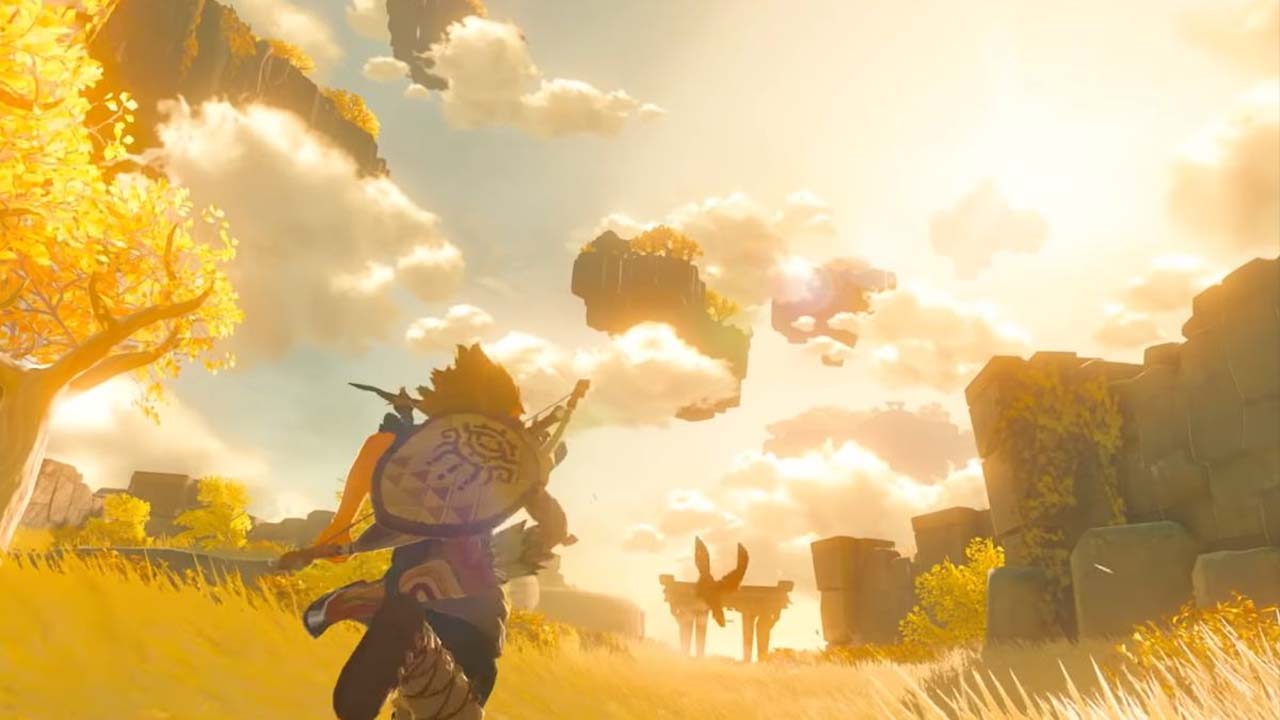
Navigating Hyrule is a multi-layered adventure in Tears of the Kingdom. The landscape is relatively unchanged from Breath of the Wild but I wouldn't call it a lazy rehash. In fact, even after exploring Hyrule to my hearts content in the last game, the world felt intimately familiar and personal to me here - though not without some surprises. Several locations are mostly the same but with key changes to its layout. Some places now have enemies that have taken control of the area, others have mysterious puzzles or objects to interact with, while most have been overhauled just enough to make your second serving of Breath of the Wild's Hyrule an appetising and fufilling new experience.
The landscape is relatively unchanged from Breath of the Wild but I wouldn't call it a lazy rehash. In fact, even after exploring Hyrule to my hearts content in the last game, the world felt intimately familiar and personal to me here.
The "new" comes in what's been added to the world of Hyrule this time. The sky islands are enormous, densely packed and explorable lumps of land oozing with a great sense of mystery and adventure. There are, of course, countless ways for Link to get up to these floating archipelagos - I personally took the time to build a trusty rocket-powered plane that I promptly flew into the side of a mountain - but once you're on them, you'll find just as much rewarding content here than on land. There's another sprawling "location" hidden on the map that I won't talk much about, but the first time I found it, my jaw dropped because of its scale. It gave me that same giddy feeling when I discovered a certain deep section of the map in Elden Ring for the first time.
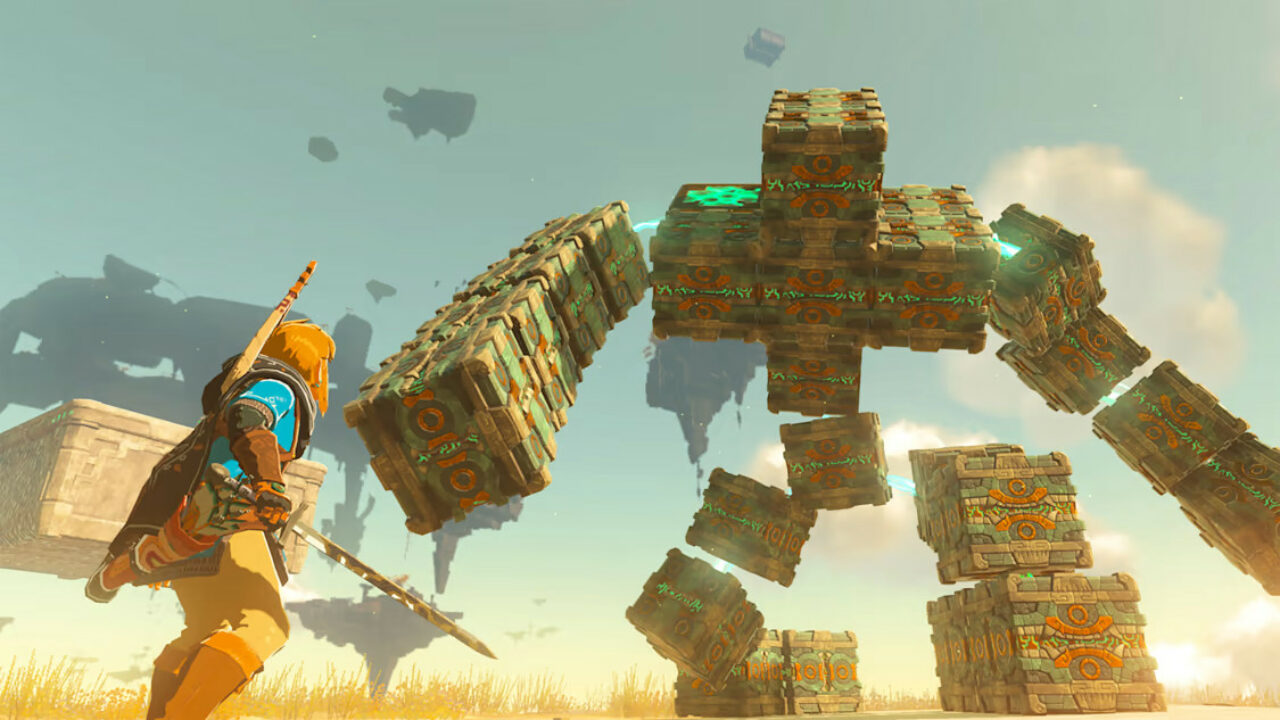
Crafting and trying to come up with the most ludicrous inventions known to mankind is only half of Tears of the Kingdom's excellent journey. The story, for as much as I could clear up to review, mostly follows a similar unfolding structure as Breath of the Wild. You basically have a straight-forward objective and your options are to either stop it or stop it 200 hours from now when you're done dropping boulders on Koroks. I never once felt like there was this overwhelming pressure to get to the next plot point or move the story along. The side content is plentiful and each NPC tells a tale worth investing in. More importantly, it never feels like you're straying off the path. Tears of the Kingdom rewarded my time simply exploring the world, talking to NPCs in very lengthy conversations, and generally taking things at my own pace which is its biggest strength.
Tears of the Kingdom isn't going to win everyone over, though, despite its overwhelmingly positive reviews. It goes without saying that if you didn't enjoy some things about Breath of the Wild, you aren't going to enjoy all that its sequel offers since it treads familiar ground, literally and figuratively. Like Breath of the Wild, Tears of the Kingdom takes a while to get going as the initial hours aren't very compelling and hold your hand through the various mechanics of the game. Once the shackles are off, though, it's a truly magnificent experience that unfortunately just takes a while to really sink its claws into you.

Combat can also feel fairly wonky at times. It hasn't really been fixed since the last game and players might encounter some clunkiness in the way it flows and controls. The bow is easily the best weapon to use in the game because it doesn't rely on melee combat as much and it's just an overall fun playstyle. If you didn't mind how combat worked in Breath of the Wild, you won't find any issues here but personally, I don't think it has really "clicked" with me as well as previous Zelda games.
It goes without saying that if you didn't enjoy some things about Breath of the Wild, you aren't going to enjoy all that its sequel offers since it treads familiar ground, literally and figuratively.
As for the technical aspects of Tears of the Kingdom, the inspired visuals and art direction are stellar. I've always admired Breath of the Wild's striking presentation and there's just more of that strong artistic vision here. Sure, it's not some graphical juggernaut but Nintendo clearly isn't trying to make it one. The focus is always on the gameplay and adventure. On that note, it doesn't hold a rock-steady 30fps on a good day and there are times where the framerate dips might be jarring, though on aging Switch hardware, it's kind of expected. I must reiterate that it never really stood out to me in a bad way as most of the game is very well-optimised.
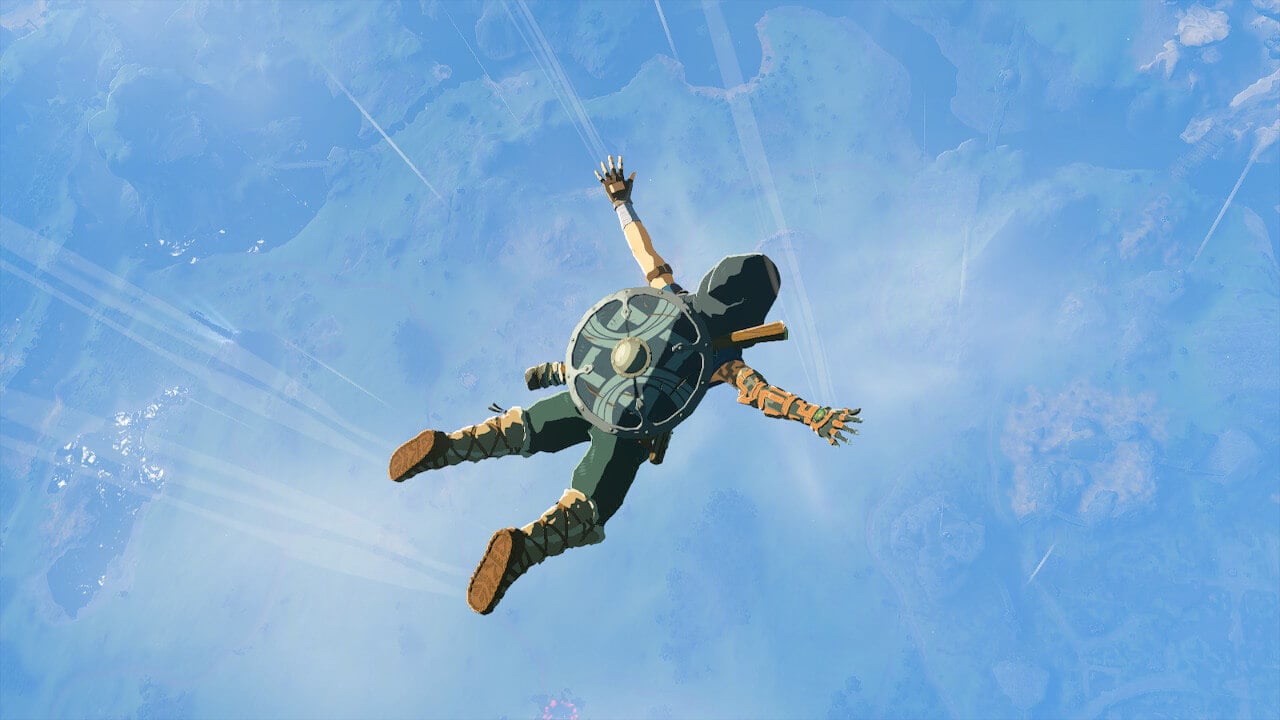
The Legend of Zelda: Tears of the Kingdom is a worthy successor to Breath of the Wild and one of the best games on Nintendo Switch. While it won't win over players who weren't swept away by its predecessor, the sequel does everything in its power to be a true evolution of the formula. Inventive gameplay, a gorgeous presentation, beautiful soundtrack, and incredibly immersive exploration all add up to create a near-masterpiece of endless possibilities.
*Nintendo Switch Review code provided by Nintendo


Please login to post comments.
More Reviews

Review: Spa Weekend
I was invited to attend an exclusive preview screening of the film Spa Weekend on August 20th at Sandton...
21-08-26 Read more
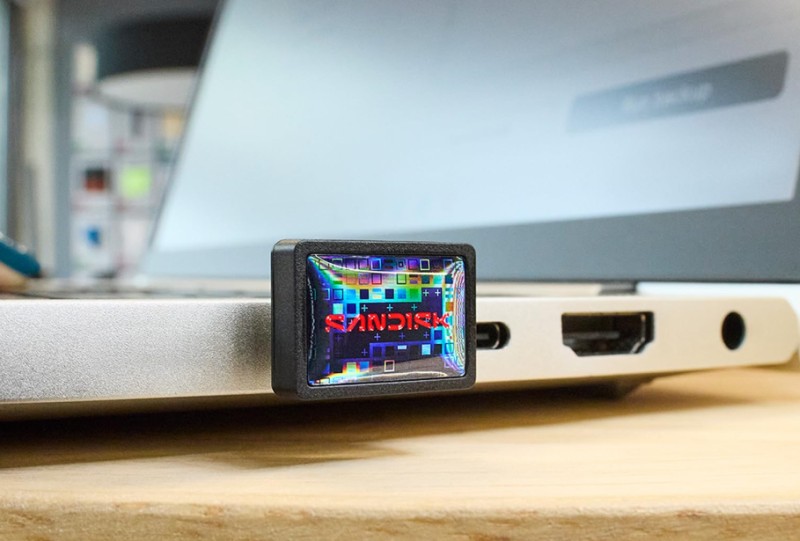
Review: SanDisk Extreme Fit USB-C Flash Drive (128GB)
The SANDISK Extreme Fit USB-C™ Flash Drive - 128GB is something that you might not even believe exists...
21-08-26 Read more
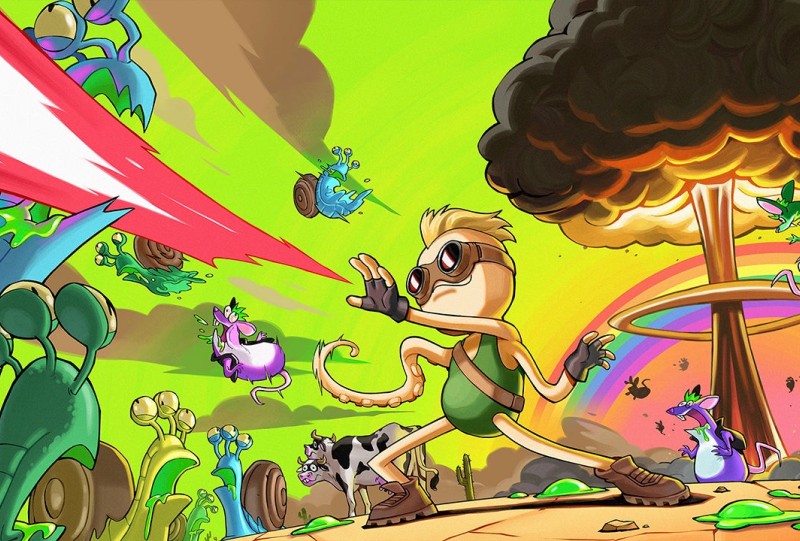
Review: Ground Zero Hero
It’s not often that a game comes around with the ability to grip you into a mindless cycle of absolute...
19-08-26 Read more
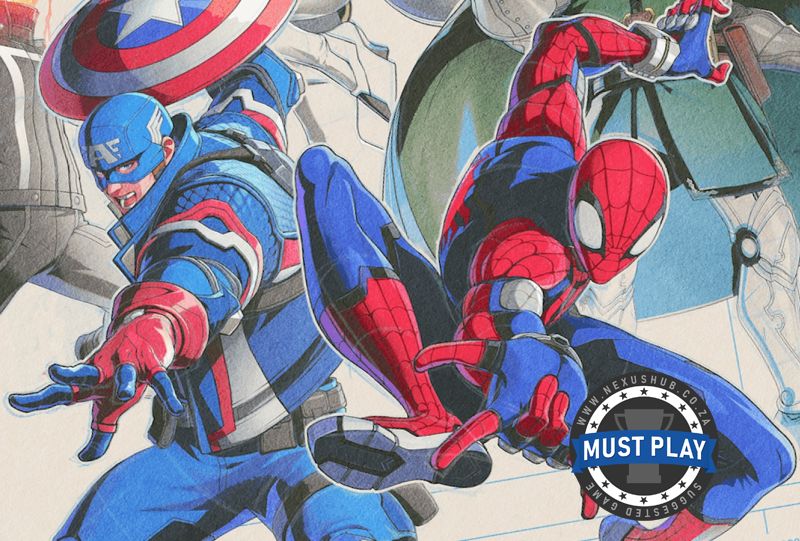
Review: Marvel Tokon: Fighting Souls
You know, if anybody was going to make a Marvel themed arcade fighting game in 2026, I’m glad Arc System...
18-08-26 Read more

Review: Mortal Shell 2
With the boom of Soulslike games, developers now have to find interesting ways to mix up the formula...
17-08-26 Read more
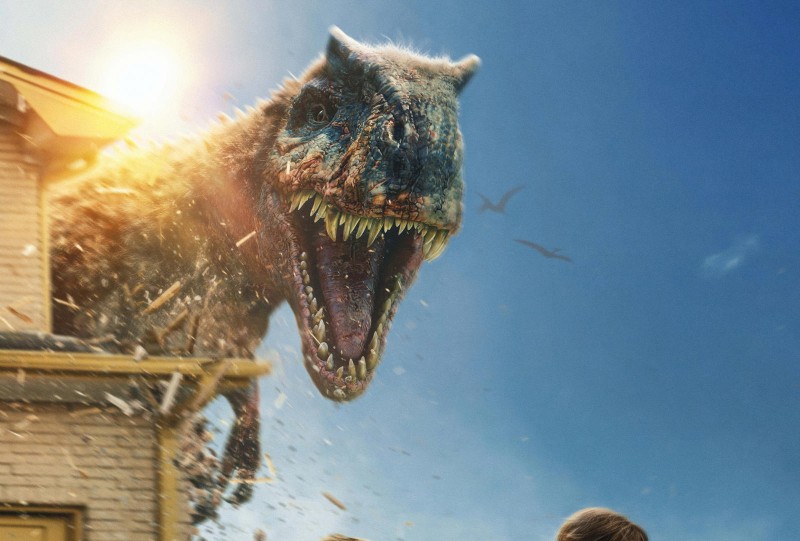
Review: The End of Oak Street
The End of Oak Street is not what you’d expect just from looking at the name. You would think it’s maybe...
14-08-26 Read more

Review: Halo: Campaign Evolved
Halo: Campaign Evolved is perhaps the greatest example of a remake that didn’t really need to happen...
29-07-26 Read more

Review: The Odyssey
Homer’s Odyssey is a story that has been told time and time again, going through several different iterations...
21-07-26 Read more

Review: MSI Modern 16S AI+
Finding the right notebook isn't nearly as simple as it used to be. Walk into any retailer today and...
20-07-26 Read more
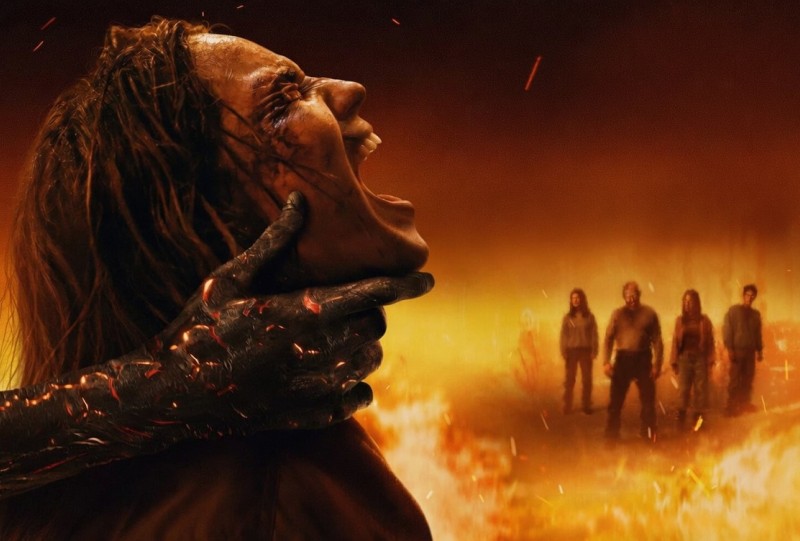
Review: Evil Dead Burn
The Evil Dead series is one horror franchise that always stayed in its own pocket, never bowing to industry...
13-07-26 Read more

Overview