Latest Updates
Who's Online

Please sign in to add comments


Cart Contents
| Item: | Price: | Qty: |
|---|---|---|
| Total: R 0.00 | ||
User Content
Latest Poll
Review
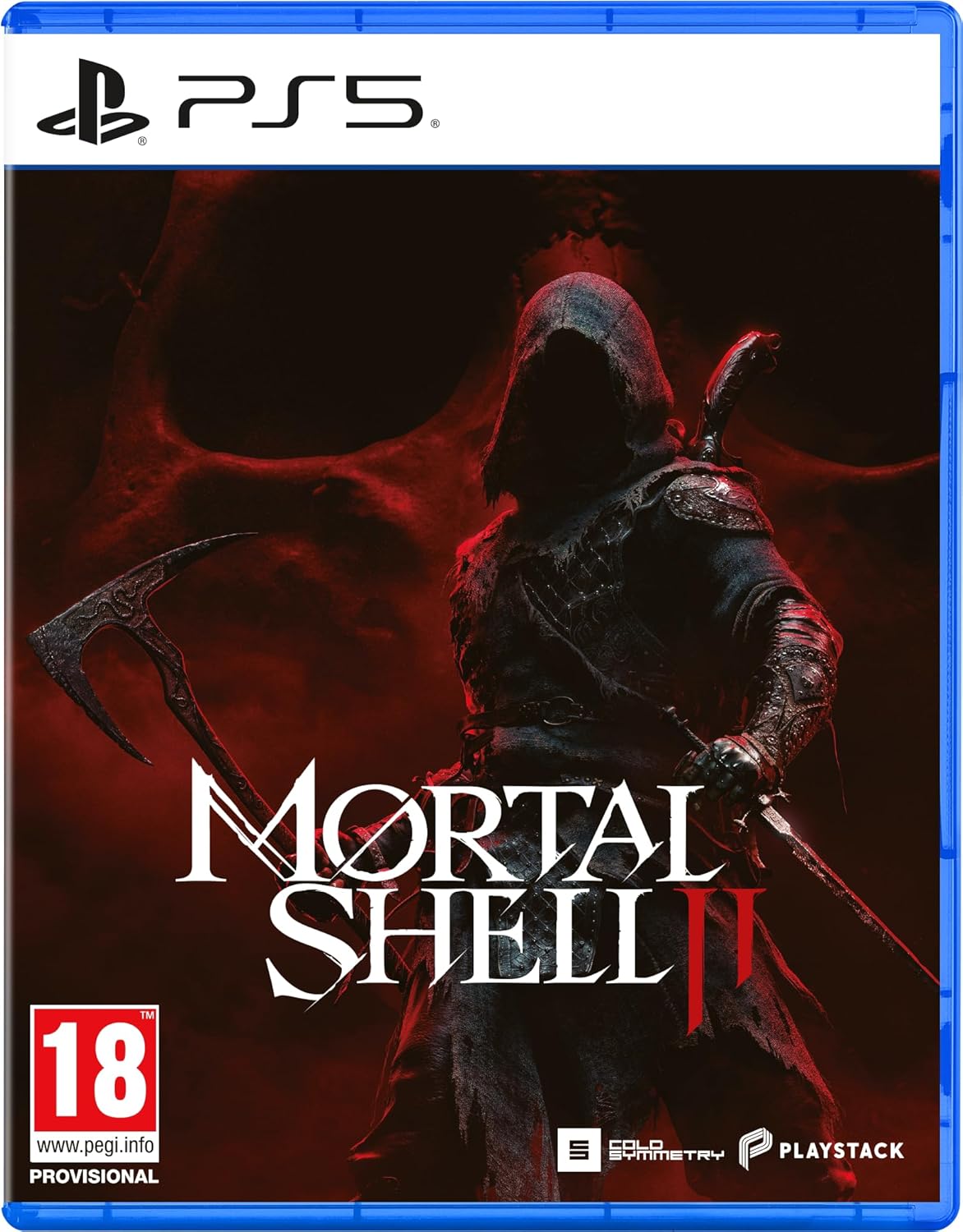
Review: Mortal Shell 2
Shell shocked.
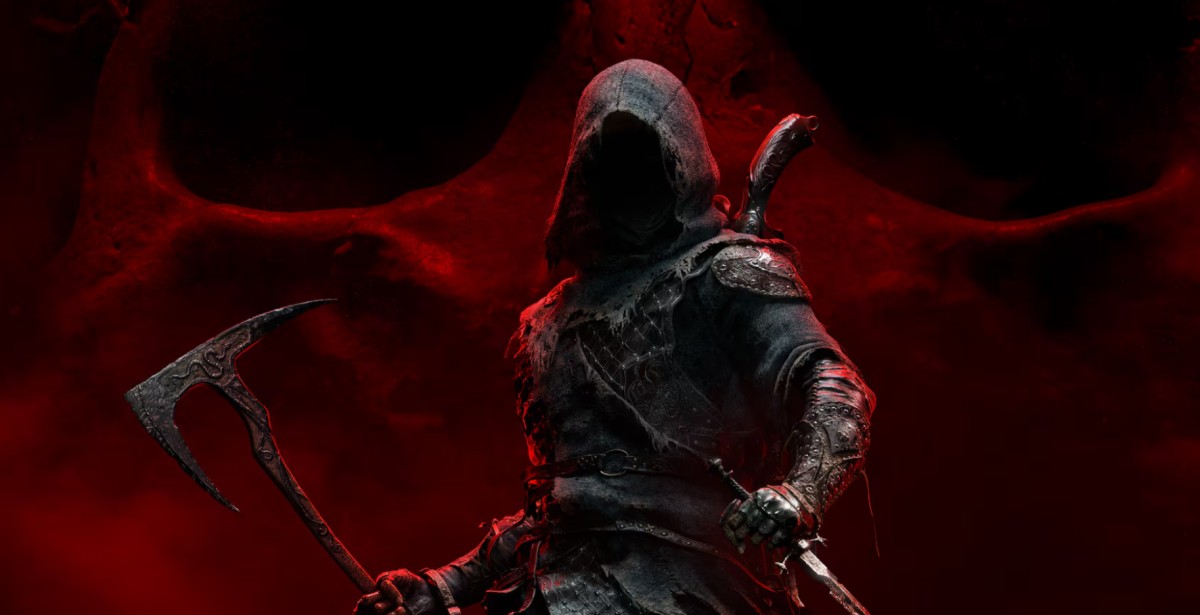
With the boom of Soulslike games, developers now have to find interesting ways to mix up the formula to stand out. We just saw Neowiz’s excellent Lies of P rejuvenate the Bloodborne blueprint with its gothic Victorian take on a twisted Pinocchio fairy tale. Before that, developer Cold Symmetry brought us 2020’s Mortal Shell, a small-scale action-RPG with the unique mechanic of entering “Shells” - humanoid flesh-suits of varying powers and skills - that could be used in-game. It was a cool concept, albeit one that felt half-baked and to the detriment of the game’s combat flow and pacing. Cold Symmetry not only seeks to right those wrongs with Mortal Shell 2, but it’s opting for the “bigger is better” approach with the sequel. For the most part, it worked.
Mortal Shell 2, much like its predecessor, is driven by its striking grim world design and beautiful art direction. Visually, it’s astonishing that such a small team like Cold Symmetry could conjure up a remarkably vivid, nightmarish world that would put most AAA developers to shame. With Mortal Shell 2, Cold Symmetry now greatly expands that world into a large, interconnected sandbox. It’s not quite “open-world” in the traditional sense - rather, there are several open, explorable zones that interconnect at various points by unlocking new paths and routes. That philosophy is very much synonymous with Dark Souls or Bloodborne. The opening area, for example, is massive and already puts the smaller scale of its predecessor to shame.

Cold Symmetry’s ambitions are well-realised. The ravaged world presented here is not just visually striking, with incredible use of darkly contrasted spaces and atmospheric shadows, it’s also terrifying to explore which I think was the intention. Enemies are scattered sparingly but when you run into a group of them, the battle for survival can be an intense one. It’s a big world but not overwhelmingly so. By the time you reach the 15 or 20-hour mark, you will have explored (and mastered) a number of areas so you can easily traverse or backtrack. The world design is clever, efficient, and well-thought out.
Visually, it’s astonishing that such a small team like Cold Symmetry could conjure up a remarkably vivid, nightmarish world that would put most AAA developers to shame.
Thankfully, Mortal Shell 2 also introduces one of its biggest changes: no stamina bar. This is a brave move for a Soulslike since the stamina bar is arguably integral to that sort of experience, depending on who you ask. This also means you can freely swing at enemies without worrying about depleting stamina, but that comes with another risk that’s lifted straight out of Sekiro: posture. Most enemies, including yourself, have a posture bar that needs to be broken in order to perform executions or temporarily incapacitate enemies to deal massive damage. It’s not as tightly-knit into the flow of gameplay as Sekiro, but it’s an option that makes the lack of a stamina bar feel a bit more balanced.

That said, by virtue of it being a Soulslike, the difficulty in Mortal Shell 2 is also attuned to this mechanic. Certain creatures move fast and hit faster, requiring you to be attentive and constantly on the backfoot. A yellow flash signals a parry opportunity, while a red flash shows an unblockable incoming attack. It’s not exactly original and we’ve seen this executed in other Soulslike games before, but Mortal Shell 2’s weightier, more deliberate combat makes each encounter a dance of patience and waiting for openings to counter. You’re not as fast as Sekiro, mind you, and that weighty combat from the first game is still present. Thankfully, Cold Symmetry fine-tuned the flow of the action so that you have a bit more agility than before, but it’s very easy to still get stunlocked if you aren’t paying attention to parry/deflect windows.
Certain creatures move fast and hit faster, requiring you to be attentive and constantly on the backfoot.
I think the difficulty is what really surprised me in Mortal Shell 2 - not that it’s hard, but that it’s a fair bit less challenging than I expected. Cold Symmetry gives you so many tools this time, that you now have options on how to approach combat apart from “hit it with your sword until it dies.” For example, ranged weapons are far more versatile and hard-hitting than any Soulslike I’ve played before. The big, punchy guns can do serious damage without getting in close proximity to foes, if you build towards something like that. On that note, build variety is another surprise in Mortal Shell 2.

The “Shells” remain at the core of the sequel’s gameplay and progression, this time offering eight Shells (double the amount players could unlock in the first game) that can be discovered out in the world. Each Shell offers a unique way to play, but Cold Symmetry has now left them flexible enough to hone and reshape to your preferred style. Every Shell comes with innate abilities that can be built upon or enhanced. Some offer speed and faster reflexes while others make you a walking tank. It’s how you choose to mix-and-match weapon upgrades with different Shell combinations to find that sweet spot, which encourages you to use every Shell you come across. A problem I had with the first game was that once you found the best Shell for you, the others became redundant. That’s no longer the case.
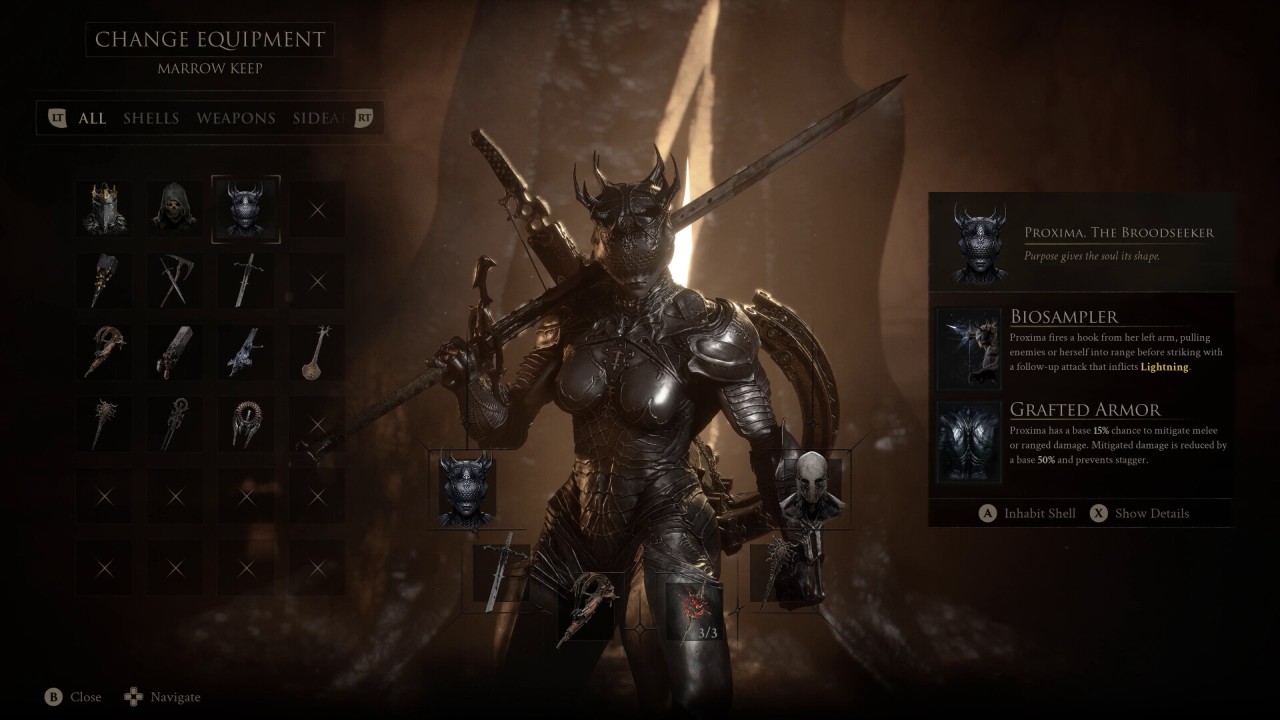
Like the first game, Mortal Shell 2 uses these Shells as more than just a mech-skinsuit gimmick to hop into. Besides granting you various abilities, they can also use Harden that, when executed at the right time, allows you to literally harden your Shell, deflect or take the brunt of a hit for another great defensive option. This time, Harden can even be used mid-animation, so if you find yourself swinging your weapon while an enemy winds up an attack, you can instantly Harden to take the hit then jump right back into your combo. Mastering this is no easy feat but once you pull it off, the surge of adrenaline is honestly unreal.
Harden can even be used mid-animation, so if you find yourself swinging your weapon while an enemy winds up an attack, you can instantly Harden to take the hit then jump right back into your combo.
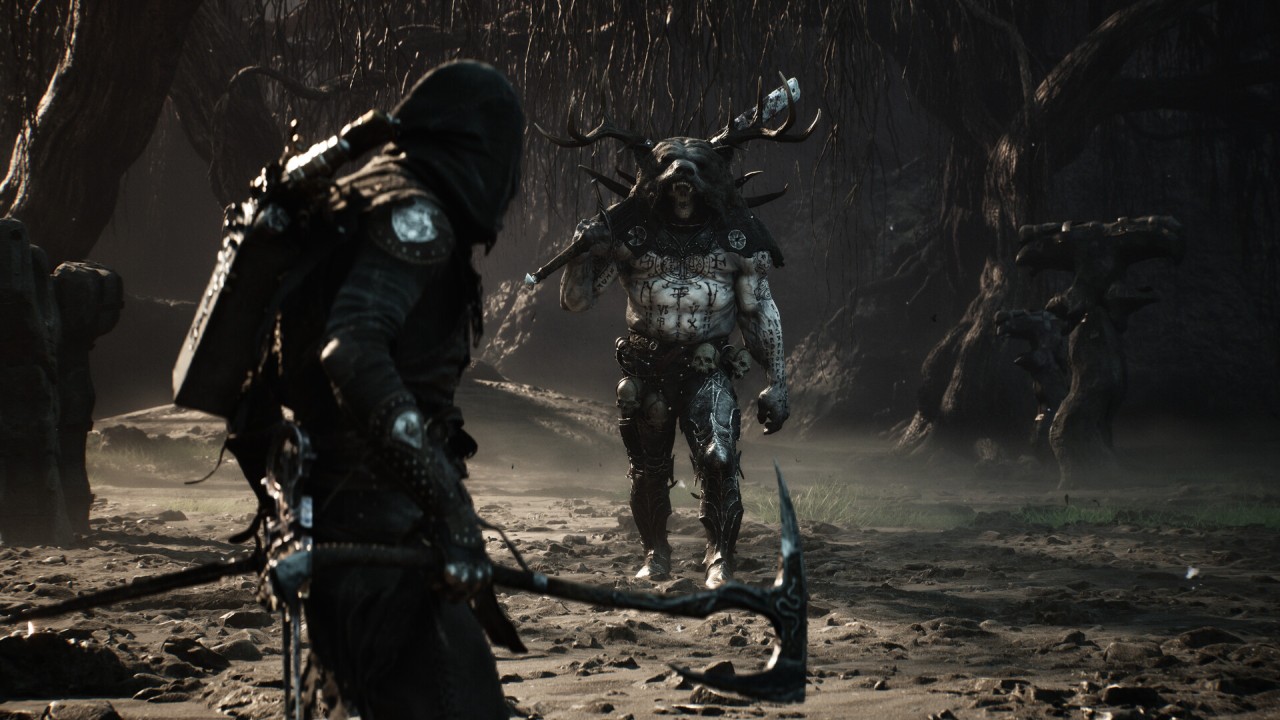
Now onto the fun stuff: boss fights. Mortal Shell 2 has no shortage of interesting bosses with designs reminiscent of From Software’s catalogue. Again, bosses can also abuse the fact that there’s no stamina bar, meaning you can expect faster flurries of combos to come your way. In fact, one early game boss practically forced me to get good at using Harden. On the player’s part, button-mashing isn’t as simple as it sounds. Most bosses can (and probably will) deflect as much as you do, breaking your combos and leaving you open and vulnerable. There’s still a level of strategy involved when approaching these tough fights, but now it’s less about stamina management and more about keeping your cool under pressure. My only gripe is I wish some bosses were more imaginatively designed than others, because you do feel like some of them got more attention than the rest.

On the negatives, Mortal Shell 2 is going to feel a bit too familiar to players already attuned to the Soulslike formula. I appreciate the efforts Cold Symmetry made to improve upon the first game while reigning in on its best qualities, but unfortunately it falls back on a safe gameplay loop that doesn’t raise the bar as much as it shifts it to one side. Soulslike veterans are going to undoubtedly get their fill of a solid dark fantasy action-RPG with a lot of heart and soul, but it remains a tough sell for casual players who might not be accustomed to its slower-paced, heavier combat or Shells in place of traditional armour and gear.
As far as the performance goes, I reviewed Mortal Shell 2 on a PC packing an RTX 5060 Ti 16GB and Ryzen 7 5700 so it’s a pretty modest rig. However, Mortal Shell 2, for the most part, ran exceptionally well while holding framerates that hovered between 60-70fps (again, modest rig). I only encountered weird stuttering that remained frequent throughout my playthrough, but rarely came across glitches worth noting. It’s well-optimised enough but it still needs some patchwork to get it up to scratch, especially when it comes to the stuttering that accidentally adds a bit of jank to everything.
Mortal Shell 2 is a solid step-up from its predecessor but a sidestep in the Soulslike genre. Fans who were left disappointed by the first game’s shortcomings might be pleasantly surprised to see that the sequel has addressed most, if not all of those grievances. Combat flows much better while still remaining weighty, Shells are more versatile with build opportunities opening up experimentation, and the world itself is larger and more densely packed. If “bigger is better” was the motto, Cold Symmetry nailed it. That said, Soulslike fatigue sinks its claws in eventually, and there isn’t much on offer here that feels new outside of refinements from the first game. Considering its price, you’ll probably get your money’s worth and then some if you’re in the market for a really inspired but safe Soulslike thrill ride.
PC Review code provided by Playstack | Mortal Shell 2 is currently available to order for R1,099


Please login to post comments.
More Reviews
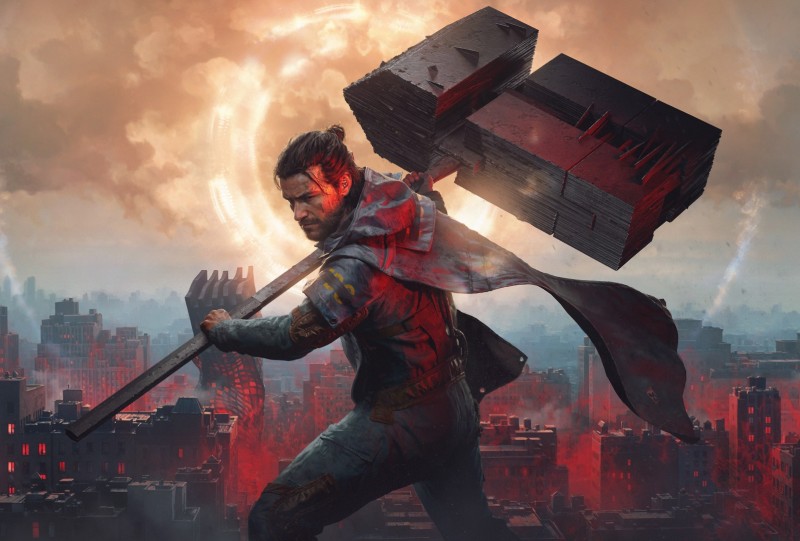
Review: Control Resonant
It’s been seven years since the events of developer Remedy Entertainment’s original 2019 Control title...
02-10-26 Read more

Review: Gears of War: E-Day
Xbox’s flagship Gears of War series has had a bit of an identity crisis over the last decade. After ...
01-10-26 Read more
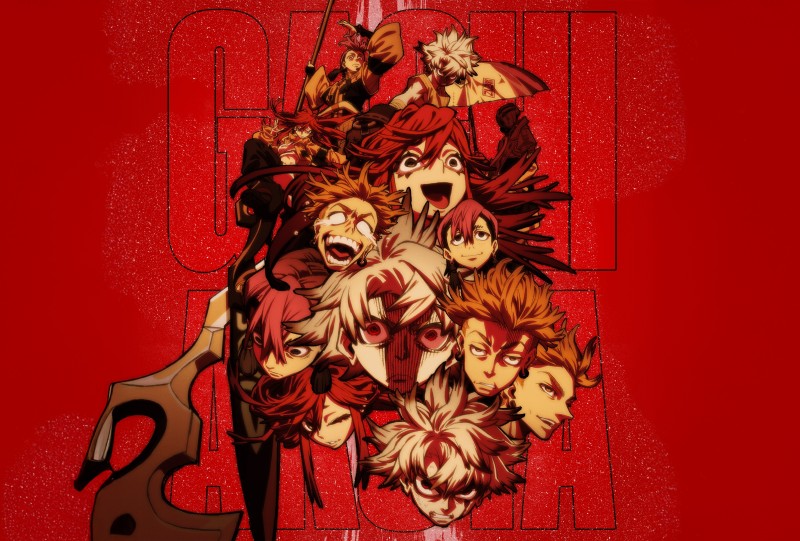
Review: Gachiakuta
Gachiakuta took the world by storm when it first aired from July to December 2025. With its gritty animation...
28-09-26 Read more

Review: Elden Ring: Tarnished Edition (Switch 2)
What can I say about Elden Ring that hasn’t already been said? From Software’s magnum opus originally...
21-09-26 Read more
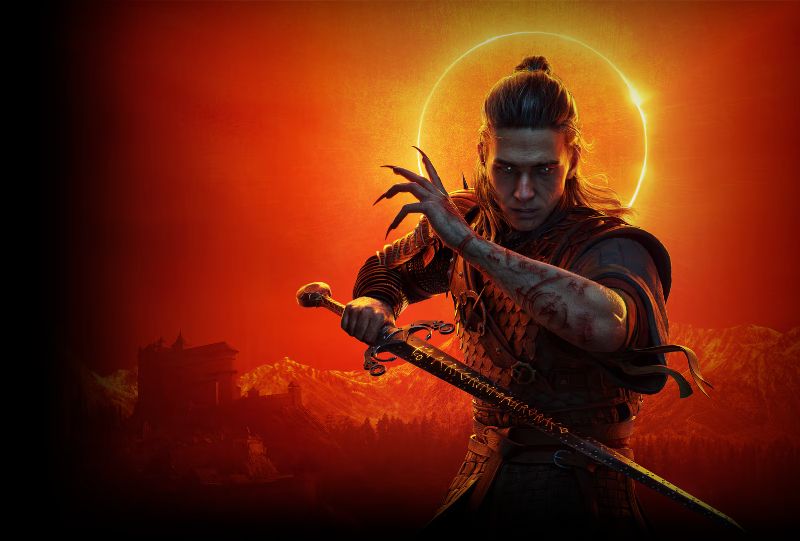
Review: The Blood Of Dawnwalker
Rebel Wolves’s The Blood of Dawnwalker has often been compared to The Witcher III: Wild Hunt from fellow...
15-09-26 Read more
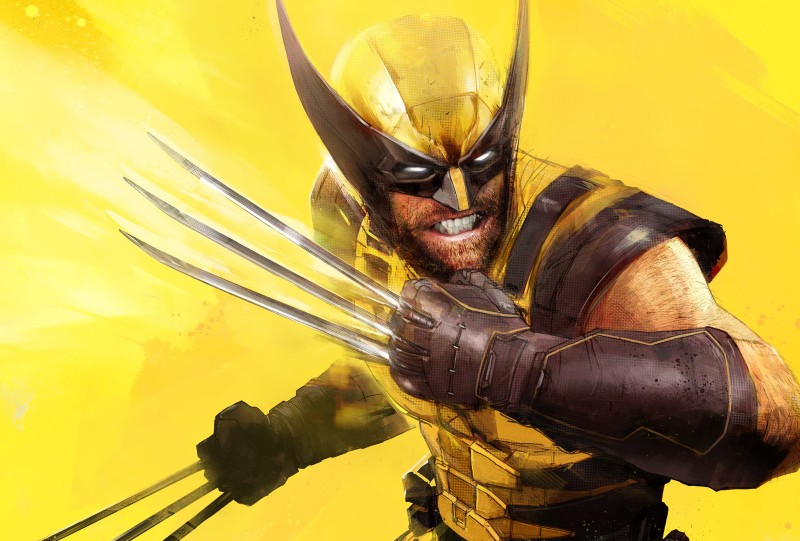
Review: Marvel's Wolverine
When I think about some of PlayStation Studios’ most consistent developers, Insomniac Games always ranks...
10-09-26 Read more
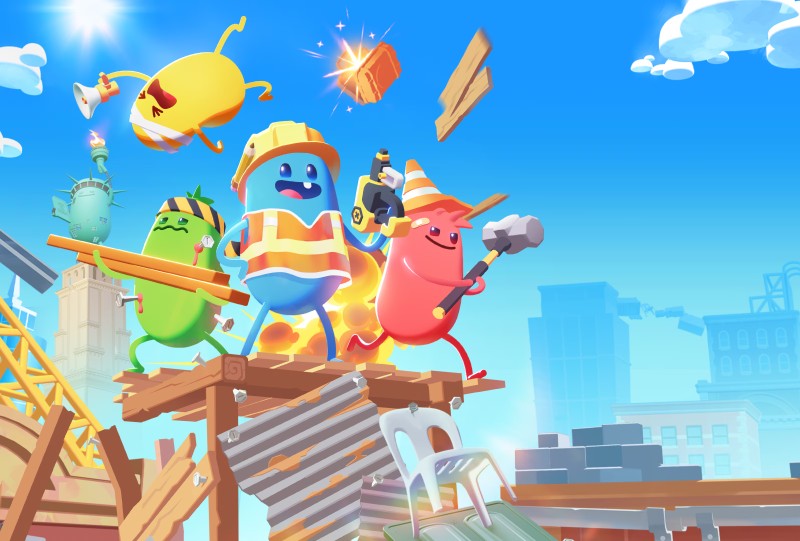
Review: Dumb Ways to Build
Originally a public service announcement which discouraged the Australian public from thoughtless activity...
09-09-26 Read more
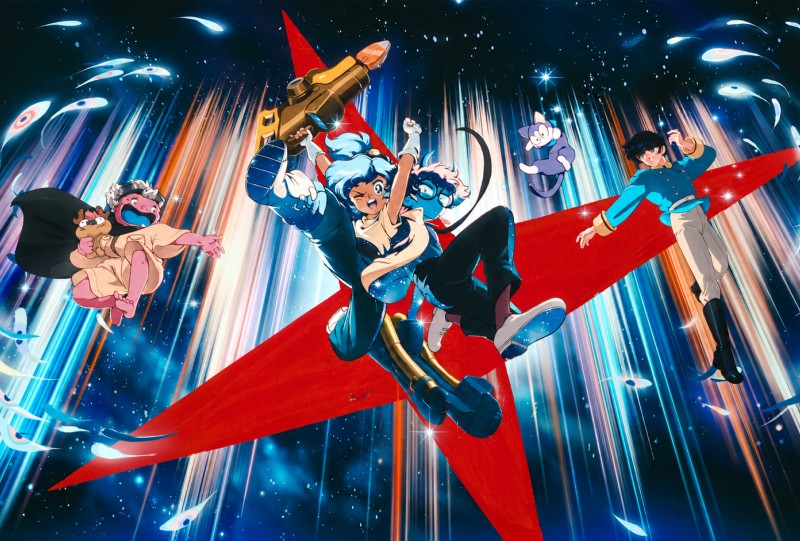
Review: Orbitals
Booting up Orbitals for the first time, I was immediately hit by a warm wave of nostalgia like the food...
08-09-26 Read more

Review: Onimusha: Way of the Sword
It’s a good year to be a fan of action games, and an even better year to be a fan of Capcom. After delivering...
31-08-26 Read more

Review: Spa Weekend
I was invited to attend an exclusive preview screening of the film Spa Weekend on August 20th at Sandton...
21-08-26 Read more

Overview
Add to cart
Developer
Cold Symmetry
Publisher
Playstack
Platform
PlayStation 5, Xbox Series
Release date
20 August 2026