Latest Updates
Who's Online

Please sign in to add comments

Cart Contents
| Item: | Price: | Qty: |
|---|---|---|
| Total: R 0.00 | ||
User Content
Latest Poll
Feature
Bright Memory Impressions (Xbox Series S)
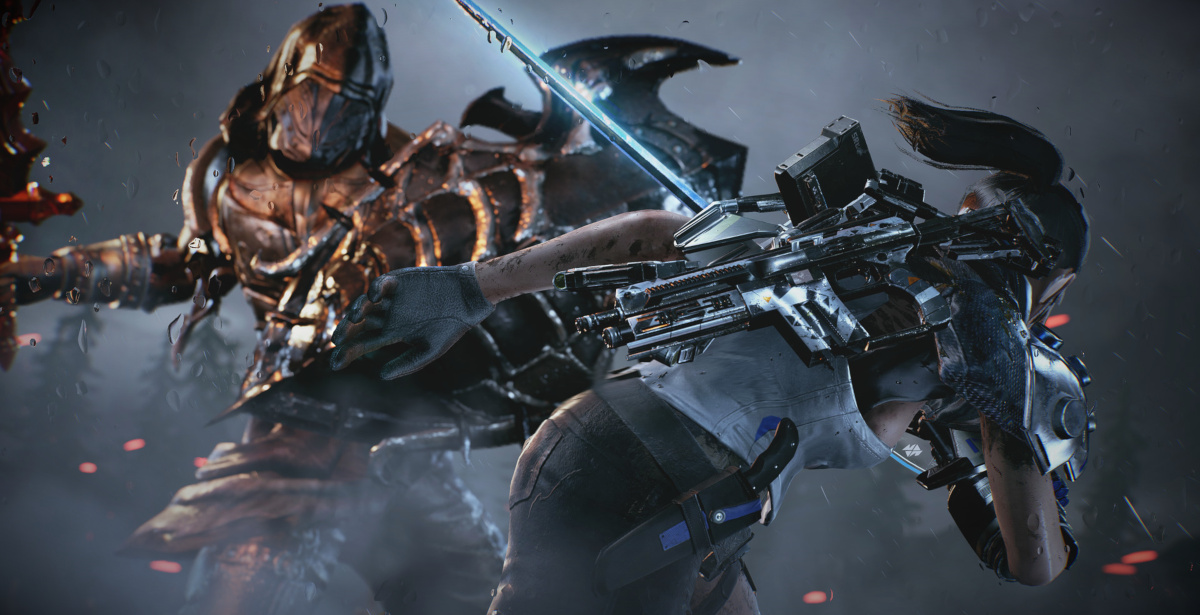
If there’s one thing I’ve enjoyed about the Xbox One/PlayStation 4 generation, it’s the sheer variety of gaming experiences available for console gamers. Mid-tier games have made a resurgence, while indie games - which started the transition from PC to consoles during the Xbox 360/PlayStation 3 generation - release daily. It’s easy to get fixated on highly-polished, mechanically-predictable, genre-creeping “AAA” titles, you might forget how many developers are out there vying for attention.
One such developer is FYQD-Studio, effectively a one-man outfit that garnered attention with his flashy trailers and the pilot episode for Bright Memory – a Chinese-mythology inspired first-person shooter that feels like a hybrid of Shadow Warrior 2 (the shooting and swordplay), Crysis (suit powers and upgrades), Devil May Cry (the combo system that ties into experience gain), and Tomb Raider (the setting, platforming, and puzzling). It’s one of Microsoft's rare “console exclusives” for the Xbox Series X|S at launch and, given its cheap pricing, I thought I’d give it a go.

The pilot episode of Bright Memory wastes little time on setting the scene as the protagonist – codename Shelia – breaks into a futuristic teleport facility, only to discovers her old nemesis – codename Carter – is also raiding the place. Everything goes wrong, they’re dragged into a portal, and deposited on a mythical floating island over the Arctic, inhabited by the undead and air serpents (i.e. dragons). It’s probably best you don’t think too hard about what’s going on as Bright Memory treats its plot like its gameplay loop, smashing together several ideas and seeing what sticks. The developer has also indicated the game will be reworked as Bright Memory Infinite, so it remains to be seen what plot elements in this pilot episode will be retained.
When it comes to gameplay, Bright Memory is fast, fluid, and encourages the player to use both weapons and sword combos to manage hordes of enemies and whittle down the health bar of larger foes. The guns – a pistol, assault rifle, and shotgun in this episode – are satisfying to use, dropping human enemies in a few well-placed hits and triggering a brief slowdown when an enemy falls, allowing you to savour the splash of gore and particle effects. However, they feel ineffectual against undead and mythical beasts, which is where the sword comes into play. You can trigger an initial powerful slash, followed by several unique moves that can stun or launch enemies into the air, setting them up for additional combo damage using a firearm or ranged energy slashes.
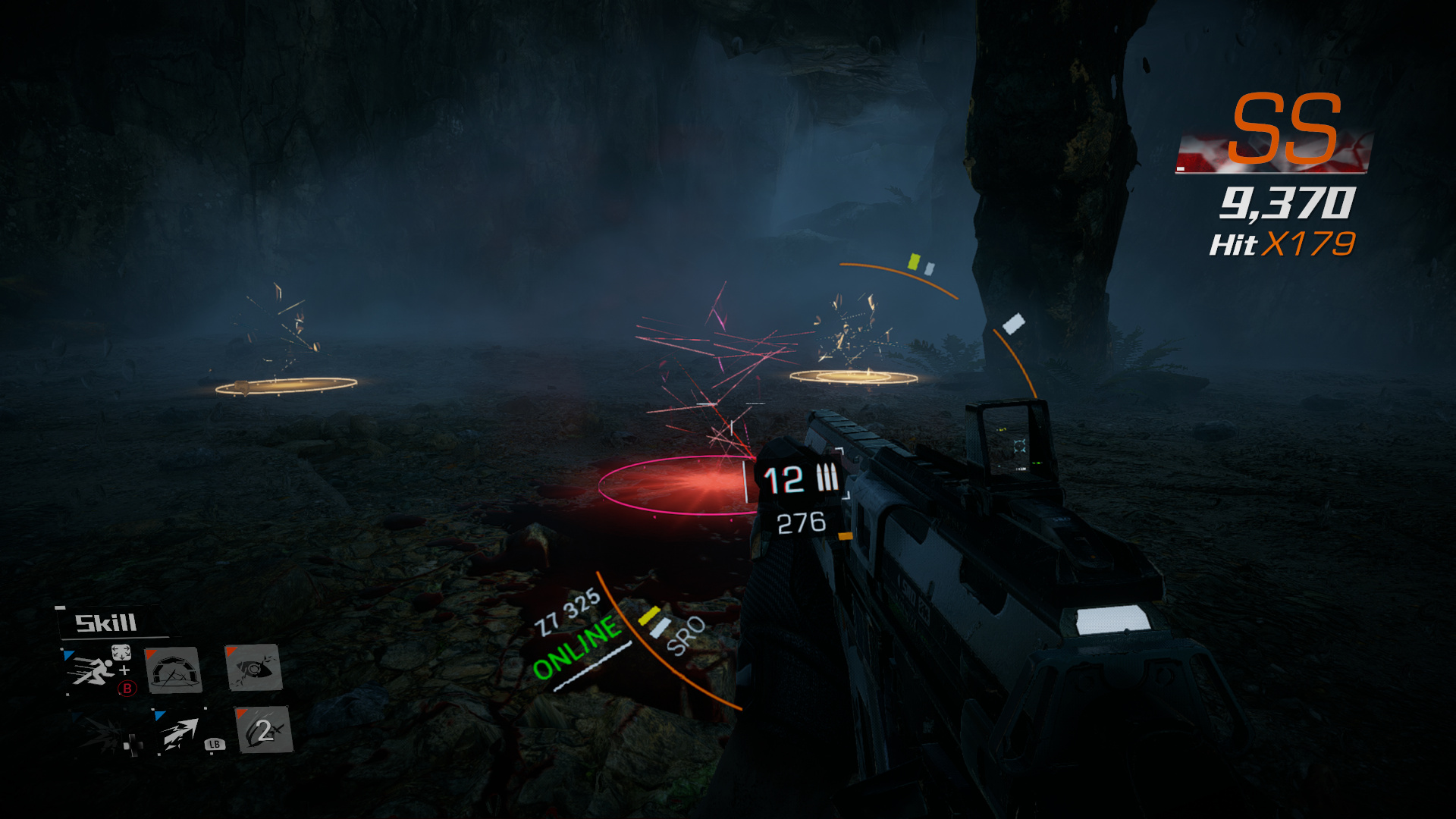
Shelia moves quickly, with a multi-directional dash to get you in and out of trouble. Time a dash just right and you trigger a perfect dodge, opening enemies for bonus damage. This basic move-set, modified by gear like a grappling hook, is also used extensively for traversal and a few puzzles (and the grapple can also be used to slam you forward into enemies, stunning them briefly). Shelia takes damage quickly but also regenerates health at a brisk pace. As a result, combat is all about dealing as much damage as fast as possible, withdrawing to shake off any damage, and then charging back into the fray. It’s a satisfying gameplay loop that, while not as refined as its peers, still feels great.
The flow of combat – avoiding hits, continuously dealing damage, and landing combos – all ties into a scoring system that ranks your performance and modifies the amount of XP gained from each encounter. That XP, in turn, goes into several suit upgrades that increase mobility, survivability, and combat effectiveness. The pilot episode doles out XP quickly, so you can play around with several suit upgrades and new sword skills.

When not in combat, you’ll be traversing narrow paths, jumping chasms, collecting several ancient artefacts, flicking switches, and solving basic puzzles. None of these elements are remarkable on their own – and Shelia will eventually start dropping hints if you’re stuck on a puzzle too long – but they work to break up the combat sequences and inject some variety into the level. It remains to be seen what the final combat/puzzle balance will be in Bright Memory Infinite, or if we’ll see more elaborate puzzle sequences.
The last aspect to touch on is the presentation, which formed a big part of the pre-release hype for both Bright Memory and now Bright Memory Infinite. It’s good. In fact, as a one-man endeavour demonstrating everything you can do with Unreal Engine 4, it’s hard not to be impressed. In reality, Bright Memory is a great example of how effective post-processing can be in enhancing the experience, just so long as players don’t get time to examine the rest of your assets too closely. Simple geometry, low-resolution alpha effects, and chunky enemy designs are hard to notice when the player is constantly in motion, dogging blows, firing off weapons, and filling the screen with particle effects. When it comes to other elements of presentation, the music is serviceable, gunfire and explosions impactful, and the voice-acting surprisingly good (though mostly as a consequence of the simple writing).
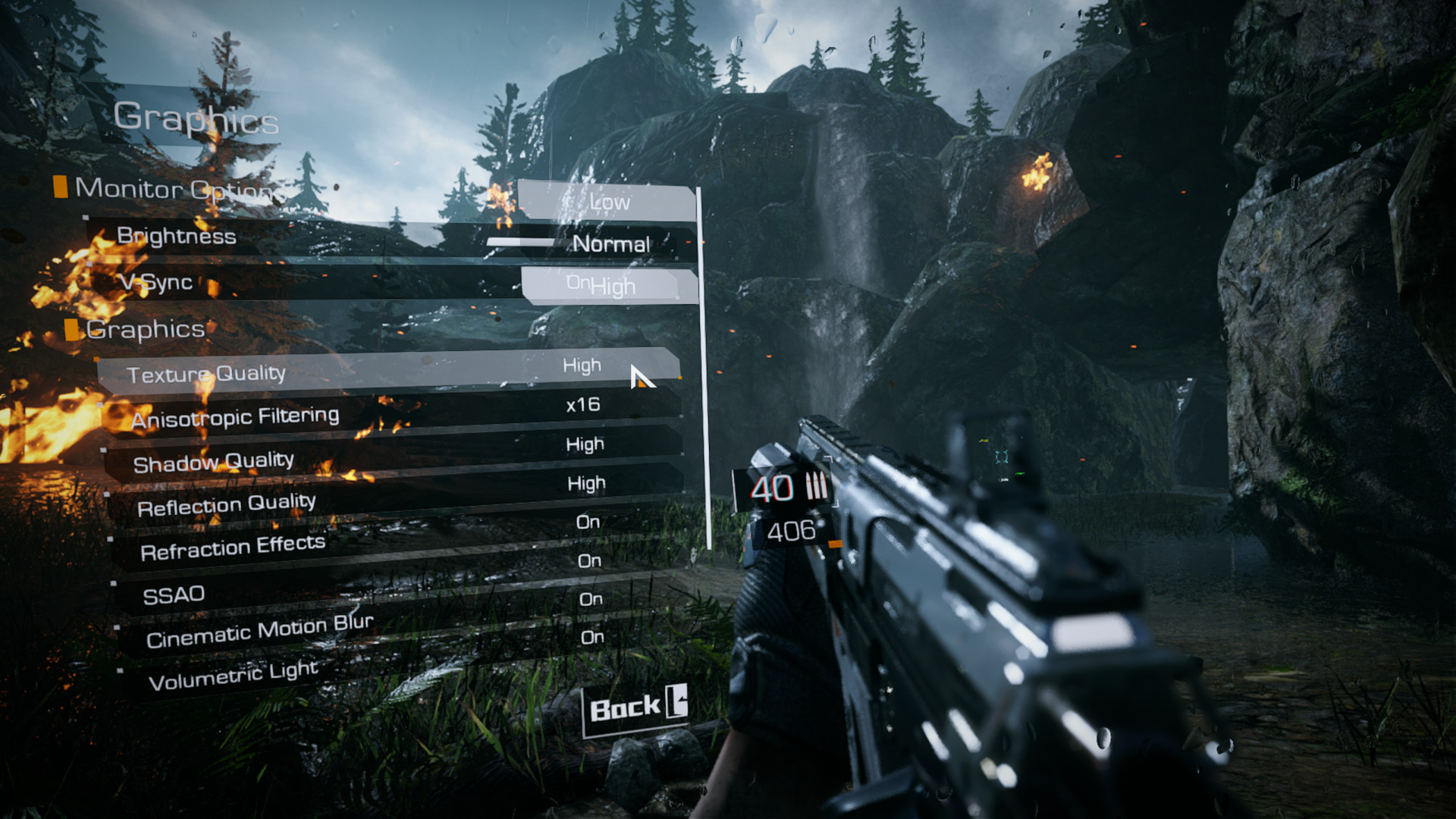
Given the low asking price and promise those that who pick up this episode will be upgraded to Bright Memory Infinite at no extra cost, it’s hard to fault the experience. My biggest is how basic a PC port this is. You use the analog as a clunky mouse cursor when navigating menus, and while there’s no resolution toggle, the graphics menu allows you to tweak the game in ways you won’t be used to as a console player. Enable or disable v-sync; adjust the texture, shadow, and reflection quality settings (yes, ray-traced reflections are available); and toggle several other post-processing effects. Thankfully, even playing on the budget Xbox Series S, it ran smoothly on my 4K/60 display maxed out (disabling v-sync simply introduced tearing with no apparent performance gain). The controls could also do with a rework as some of the button combinations – like triggering your sword attack with a bumper but then tapping the d-pad for follow-up attacks – doesn't work particularly well in the heat of battle.
All things considered, the pilot episode of Bright Memory is an impressive one-man effort that’ll provide about an hour of frantic exploration, puzzling, and combat (with each rerun upping the difficulty). It’s a short but enjoyable tease for the gameplay loop we can expect in Bright Memory Infinite, but despite the marketing, it’s not quite a technical powerhouse that highlights what the next-gen consoles can achieve. Instead, Bright Memory is a reminder that the console platforms have become more open than ever and, if you can draw your eyes away from the relentless marketing of “AAA” titles, there’s a ton of diverse experiences available.
You can watch the Bright Memory Infinite trailer below:

Please login to post comments.
More Features

Top 10 Things To Do at Comic Con Africa 2026
Comic Con Africa opens its doors this week as South Africa’s premier destination for all things geek...
23-09-26 Read more

Shoma Govender's Game Over Cancer Campaign Taps Into Tabletop & Board Gaming at Nexus Hub
Gaming communities are often at their best when they come together for something bigger than the games...
22-09-26 Read more

Comic Con Africa 2026 International Guests Roundup
With Comic Con Africa 2026 only a week away, the excitement and hype is slowly building towards the ...
15-09-26 Read more
BlizzCon 2026: All the Biggest Announcements
After taking a three-year break, BlizzCon has finally returned, and Blizzard had plenty to announce...
14-09-26 Read more

Cyberpunk 2077 Would Be Even Better If It Were More Deus Ex And Less Assassin's Creed
Five years, a dozen major patches, and one sizeable expansion have evolved, expanded, and improved Cyberpunk...
07-09-26 Read more

Mrs South Africa Finalist Shoma Govender Launches Game Over Cancer Fundraiser
For Mrs South Africa finalist, Shoma Govender, the journey towards the crown has become about far more...
05-09-26 Read more

Five Best Announcements From Gamescom Opening Night Live 2026
Gamescom Opening Night Live 2026 has passed, delivering yet another stacked show filled to the brim ...
26-08-26 Read more

The Witcher 3 Remastered Stole The Show at Gamescom – Here’s What to Expect
While we knew CD Projekt Red was going to debut its Songs of the Past expansion pack for The Witcher...
26-08-26 Read more
Here's How Long it Will Take to Watch These Modern Anime
We've recently been exploring how long it would take you to watch certain anime, if your'e curious about...
21-08-26 Read more

GTA: Vice City Revisited - What Made It So Good?
2002’s Grand Theft Auto: Vice City holds nothing but pleasant memories for both myself and the many ...
20-08-26 Read more