Latest Updates
Who's Online

Please sign in to add comments

Cart Contents
| Item: | Price: | Qty: |
|---|---|---|
| Total: R 0.00 | ||
User Content
Latest Poll
Review
Review: Gears Tactics (PC)
X-DOM

Ten hours into Gears Tactics, about halfway through the second act, it was clear the Gears universe is a great fit for an isometric, squad-based, turn-based, tactical game. Despite the third-person perspective, prior Gears of War games always emphasized the need to move between cover, draw the attention of your foes, and allow a teammate the ability to flank and land a killing blow (and if they ever got too close, you always had the iconic Lancer chainsaw on standby). All elements that are commonplace in this genre.
Despite the change in perspective and shift to turn-based actions, Gears Tactics incorporates almost every gameplay element seen in the prior games, while expanding on the squad and inventory management aspects you would expect in this genre. That said, if you’re not a fan of XCOM-style games, Gears Tactics isn’t going to change your mind – it’s perhaps the most complex variant I’ve played when you consider minute-to-minute gameplay. However, if you’re a fan of both, you’ll find this a near-perfect union.

Gears Tactics' leading man is Gabe Diaz, yet another Gear veteran burnt out from running too many dubious missions for the Coalition of Governments (the only type of Gear that exists in the lore). Those who’ve played Gears of War 4 and Gears 5, will recognize him as Kait Diaz’s estranged father. This adds a narrative link to the current trilogy while delving more into the Locust lore and the actions of the COG after their fruitless attempt at turning the Hammer of Dawn superweapons on their own cities. He is initially accompanied by Sid Redburn – who has his own close ties to the Locust origin story – but soon gathers a diverse team of survivors.
Despite the prior Gears games explaining away most of the mystery surrounding the Locust, Gears Tactics still fleshes out the lore by filling in some missing pieces...
Gabe and co. are on the hunt for the new antagonist, Ukkon – the Locust bioengineer responsible for “domesticating” and mutating native Hollow creatures, such as the Corpser and Brumak, to serve as war machines for the Horde (and, of course, boss encounters). Despite the prior Gears games explaining away most of the mystery surrounding the Locust, Gears Tactics still fleshes out the lore by filling in some missing pieces, hinting at the early exposure of Locust to Imulsion, and proving that Prescott has always been an a**hole.

When it comes to gameplay, Gears Tactics doesn’t deviate wildly from genre norms but does inject some distinctive Gears flavour. Character classes will be familiar to anyone who has spent time playing the Gears multiplayer PvE or PvP modes, and each has a skill-tree that branches in four directions, offering several specializations that can make it worth running a mission with two of the same class.
Scouts wield shotguns and excel at mobility and inflicting damage on flanked enemies; Heavies wield mulchers and are your best bet hunkered down and providing overwatch; Vanguards can self-repair or give squad mates the ability to leech health while packing the Retro Lancer for mid-range surprise-stabbings; Support wields the iconic Lancer and has several abilities that boost team effectiveness, like granting the squad bonus turns every time you execute an enemy and flinging Stim grenades to heal and/or revive.

Unlike its contemporaries, Gears Tactics does away with the "one-move, one-shot" turn and this makes for a liberating experience. Each gear under your command has three actions per turn by default, and these can be used for any movement or ability. You can use all three actions for movement, covering a lot of ground to collect supply chests or flank enemies; set up overwatch on your first turn, allowing for three successive shots on targets that cross your field-of-fire; or toss a powerful grenade (which operate on a cooldown), move into a defensible position, and still fire on a straggler. When you combine the Gears-flavoured mechanics – planting grenades as traps, executing downed enemies, Lancer chainsaw/bayonet charges, and as Stub pistol that can disrupt enemy overwatch – with a partial/full cover system that both reduces the chance-to-hit and total damage received, Gears Tactics gives you a lot to think about.
A favourite strategy of mine was downing several enemies in close proximity to my frontline Vanguard, executing them in quick succession at the start of his turn...
An optimal battle plan does not only involve defensive positioning and priority targeting, but also the synergy of several class skills that grant extra turns. A favourite strategy of mine was downing several enemies in close proximity to my frontline Vanguard, executing them in quick succession at the start of his turn (the gloriously-gory weapon-specific animations return), granting the rest of my team a devastating number of actions to mop up the stragglers. However, this freedom of action works both ways. I’ve had Gears swarmed by several wretches (who have an annoying attack-of-opportunity ability at close range) and, on several occasions, watched a grenadier run across the map, mantle-kick my Gear out of cover, then down them with a close-range shotgun blast.

The freedom you’re given each turn comes into play most when tackling the several “boss” encounters. These giant creatures often have weak points that require you to split your team to fire from several angles; area-of-effect attacks that force you out of cover; and are accompanied by common enemies you’ll need to thin out, lest they overwhelm your Gears mid-fight. These encounters require you to be both aggressive in damage-dealing but also adaptable as they move through different phases.
Thankfully, Gears are a hardy bunch and far more survivable than you’d expect in this genre; every Gear has a “second wind” ability, allowing them to self-revive once per battle with a good chunk of health restored. Should they go down again, and you're not able to pick them up before the end of the turn, they’re permanently dead. If they’re a “hero unit” – many of which are mandatory for main missions – it’s game over. This leads to a careful balancing act as while these Gears have better stats than their disposable counterparts, there’s little room for error if you fill your squad with heroes.

Unfortunately, Gears Tactics shares two problems common in the genre: simple mission progression that makes progress feel formulaic and detached from the world; and finicky inventory management that becomes increasingly cumbersome as you recruit more Gears. Maybe I’ve been spoilt by the map and freeform exploration in Mutant Year Zero: Road to Eden, but each mission in Gears tactics is simply a combat encounter from beginning to end; even if your objective does not involve clearing out all Locust. I never had more than a single turn out of combat to move and explore freely before more enemies spawned in. Even with fantastic cutscenes and changing backdrops, you’re still just selecting a mission from a list, dropping into a fight, and loading back into the management screen. Gears Tactics would benefit from an overworld map, giving the player a sense of where they are in relation to the rest of Sera.
When it comes to inventory management, I initially enjoyed the extensive customization options for armour, weapons, and even cosmetics. By completing missions, side objectives, or recovering supply chests mid-mission, you’ll slowly unlock different armour pieces that offer a range of passive benefits, along with a myriad of mods for class-specific and secondary weapons. However, the interface is several layers deep, and trying to quickly move between characters or inventory/skill tabs becomes a pain as your roster grows. Ultimately, I stuck to optimizing and running missions with my core team of heroes whenever possible and only sent out my recruits for the infrequent side-missions.

Gears Tactics is only launching on PC for the moment, but the requirements are modest if you have a semi-recent rig, and customization is granular, with every element clearly indicating the relative CPU/GPU burden. As a console player primarily, I reviewed Gears Tactics on an entry-level gaming laptop (i5-8300H (@2.3 GHz) CPU, GTX1050 4GB GPU, 8 GB RAM, SSD) and had no issues getting stable performance with medium to high visual settings. As a turn-based game, performance is almost entirely GPU-bound, so on my primary display, playing with mouse and keyboard, medium visual settings got me 1080p/60 with only rare drops.
However, my preferred experience was sitting on the couch and playing on my 4K TV with an Xbox One gamepad. On high visuals settings, with resolution-scaling set to a lower limit of 1800p, I could get a stable 30fps, something I’d not suggest when using a mouse but barely noticeable with a gamepad. That said, gamepad support needs a bit of work – a few more shortcuts wouldn’t go amiss, and the lack of grid-based movement means you’ll sometime fight with the movement cursor – but I quickly got familiar with the scheme and it bodes well for the inevitable console port.

Despite my gripes with the simple mission progression and ungainly inventory management, these aspects only slightly detract from the deep, tactical gameplay and high production values throughout. Gears Tactics is a great fit for the IP and its gameplay complexity matches – and sometimes surpasses – that of other long-established IPs in the genre. It’s not going to convert hardcore Gears players into turn-based strategy fans if they don’t already like the genre, but those that do should consider this a must-buy. Better still, you can pick it up at launch on the Xbox Game Pass for PC (Beta) service.
*Review code provided by Microsoft


Please login to post comments.
More Reviews

Review: Elden Ring: Tarnished Edition (Switch 2)
What can I say about Elden Ring that hasn’t already been said? From Software’s magnum opus originally...
21-09-26 Read more
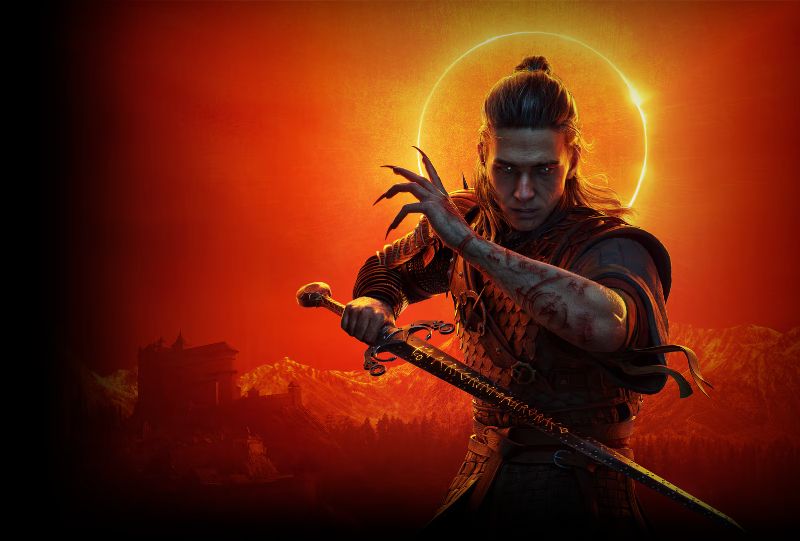
Review: The Blood Of Dawnwalker
Rebel Wolves’s The Blood of Dawnwalker has often been compared to The Witcher III: Wild Hunt from fellow...
15-09-26 Read more
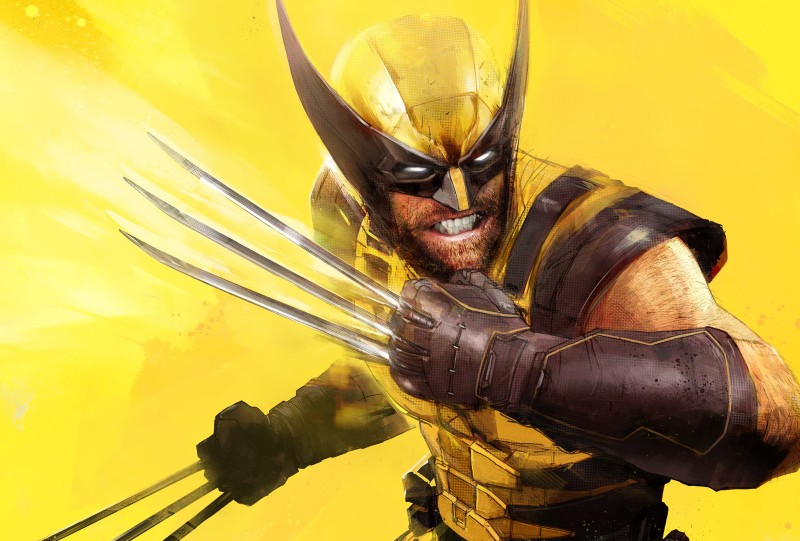
Review: Marvel's Wolverine
When I think about some of PlayStation Studios’ most consistent developers, Insomniac Games always ranks...
10-09-26 Read more
Review: Dumb Ways to Build
Originally a public service announcement which discouraged the Australian public from thoughtless activity...
09-09-26 Read more
Review: Orbitals
Booting up Orbitals for the first time, I was immediately hit by a warm wave of nostalgia like the food...
08-09-26 Read more

Review: Onimusha: Way of the Sword
It’s a good year to be a fan of action games, and an even better year to be a fan of Capcom. After delivering...
31-08-26 Read more

Review: Spa Weekend
I was invited to attend an exclusive preview screening of the film Spa Weekend on August 20th at Sandton...
21-08-26 Read more
Review: SanDisk Extreme Fit USB-C Flash Drive (128GB)
The SANDISK Extreme Fit USB-C™ Flash Drive - 128GB is something that you might not even believe exists...
21-08-26 Read more
Review: Ground Zero Hero
It’s not often that a game comes around with the ability to grip you into a mindless cycle of absolute...
19-08-26 Read more
Review: Marvel Tokon: Fighting Souls
You know, if anybody was going to make a Marvel themed arcade fighting game in 2026, I’m glad Arc System...
18-08-26 Read more

Overview

Add to cart
Developer
Splash Damage, The Coalition
Publisher
Xbox Game Studios
Platform
PC
Release date
27 April 2020