Latest Updates
Who's Online

Please sign in to add comments

Cart Contents
| Item: | Price: | Qty: |
|---|---|---|
| Total: R 0.00 | ||
User Content
Latest Poll
Review
State of Decay 2
Zombie apocalypse simulator

There’s no doubt Microsoft has an exclusives problem or, at the very least, a quality exclusives problem. State of Decay 2 is not going change that impression but it would be a shame to dismiss it as another low-key exclusive as it’s one of the most enjoyable sim-style games I’ve played either solo or cooperatively in years.
For those who’ve played the first game, you’ll discover a lot of familiar mechanics, with some new additions that increase the scope and complexity of the experience. Once again, the third-person exploration, melee combat, shooting, and driving are all secondary elements that serve the core gameplay loop of building and maintaining a community in a zombie-infested apocalypse. That said, all elements feel more refined this time around and the game is less of a technical mess… 95% of the time anyway.
A short tutorial kicks off proceedings, offering up several starting pairs of protagonists this time, each with a bit of backstory to get you invested in their fates (or at least their unique skills). Once you’re done, escaping with your newly-formed four-man crew, you pick one of three massive maps, offering up visually and geographically different settings – Plateau, Foothills, and Valley, albeit all still variants of rural America. The opening hour is a flurry of tutorial prompts, tentative exploration, clunky combat, and achievements popping up every other minute as you succeed and mess up, hopefully not losing anyone in the process.

If was to be cynical, this is a great example of the core gameplay loop! Scavenging remains vital throughout the game, even once you've got your home base suitably jacked up.
Introduced from the get-go is another new feature/potentially lethal complication, “plague zeds” and “plague hearts”. With red glowing eyes and pulsating flesh, these zombies can infect a player character with the “blood plague” if they take too many blows, sending that character to the med-bay to halt disease progression while you hunt for plague tissue samples to craft a cure. This requires taking down more plague zombies or destroying a plague heart, a tough organic mass that infects several structures across any given map, summoning plague zombies when attacked, but also instantly cleansing the area of them when destroyed.
As you move away from your home base or interact with other survivors, it becomes essential to clear out these infestations and establish safe zones. Clearing the map of these zombie-spawning hives is also one of the new end-game objectives. To complicate the issue, every plague heart you destroy toughens up others in the region, ensuring careful planning is essential as you progress (pro-tip: fireworks to distract and explosives).
State of Decay 2 has an overall story arc but the missions are not character-specific. Aside from a linear string of “primary” missions, which are identical regardless of your starting pair or who dies, each character has an individual quest related to their own interests, often necessary to gain enough influence to promote them to a community leader (with a ton of benefits as a result). Equally important are quests to aid other survivor communities, which now play a more important role as they offer substantial rewards – such as calling in backup over the radio – and can even turn against your group if ignored or attacked. Although a rare occurrence – most communities will simply depart from the region if you repeatedly ignore them – hostile survivors are far worse than any zombie threat, especially when firearms are involved. Time-limited sidequests to save survivors in danger or meet with wondering traders – who pack some of the best gear – pop up frequently but can be safely ignored if you have more pressing concerns.
Honestly, I’d recommend sticking to one map for your first playthrough and not over-investing yourself. Managing your own community needs and individual quests, coupled with more than one or two other communities (plus random sidequests), turns the game into an absolute nightmare of never ending tasks. However, if you’re feeling ambitious and don’t feel like playing out the main story on a single map, you can “scout” to reveal the other maps and move your community between them, albeit at the cost of dismantling and rebuilding your facilities on arrival.

From humble beginnings, you can build up a sizeable community with sufficient supplies and recruits.
Quickly delving into the core gameplay loop for those who skipped the first game, you’ll be scavenging far and wide for satchels of basic supplies – think construction material, food or meds – to keep your community happy and, with the right location and community skillset, expand to be self-sufficient by building facilities such as farms, water stills, or workshops. Upgrades allow you to establish distant outposts, ideally locations such as gun stores or pharmacies that’ll provide daily resources, and provide drop-off points for scavenged gear while in the field, all of which goes into a Resident Evil style storage chest.
Deciding where and how to expand, relative to your home base or allied communities, is key to surviving in the mid- to late-game. Almost every choice, from home base location to recruiting new community members to building facilities, comes with pros and cons. A huge base with a large community and facilities that keep you self-sufficient is also going to be a noisy base, drawing more frequent zombie attacks; balance is everything. When played solo, you can take one companion with you into the field but missions often come with temporary companions that bulk up your team to a maximum of four. One quirk that I have to mention is the lack of a simple “quick switch” button when you’ve teamed up with another AI character. At the very least, they could have made the first highlighted dialogue option “Take control of this character” rather than “dismiss follower”!
In combat, melee involves mashing "X" until you or the zombies are in pieces, with blunt weapons more efficient at knocking them down for finishing moves and blades able to instantly dismember. Stealth is a viable option and surprise shankings are great for preserving your weapon durability. Firearms are effective at popping zombie heads and all but vital for some larger special zombie types (you'll recognise them all from other zombie games). Aiming is simple and the auto-aim can be set to high but guns make a lot of noise and you can burn through ammo quickly.
A stamina and fatigue meter keeps your ambitions in check, forcing you to play more tactical during melee brawls, resting up and switching characters periodically. As you play, each character will level up their mostly commonly used skills, providing specialization bonuses that'll keep them exploring or fighting for longer. Cars become essential as you push further out, reducing travel time and providing a trunk that can act as a mobile stash (or a transfer stash in coop), just remember to bring spare gas cans and repair kits. They’re also an excellent offensive weapon against most zombie types. With a full crew of AI or online partners, you’ll be swinging open car doors to bash zombies in a rhythmic fashion not unlike an OK Go music video.

You'll learn to love and cherish the first car you find and upgrade it over time (and even repair it after it's burst into flames?!). Aside from transport, storage, and zombie-slaying, cars never despawn so you can use them as barricades around your base.
By far the best addition to State of Decay 2 is the ability to play cooperatively with up to four players. Given the more methodical pacing of the game, this is structured in a way that coop players are simply supporting the host player’s community, the main benefits being the gear they obtain – everyone gets their own containers to loot but you can share afterwards – and upgrades to your characters skills they'll take back to their own community. You accept the invite, pick a character, and you’re off to assist a mate (or even random). In an age where multiplayer, both competitive and cooperative, has become increasingly unbalanced and frustrating for new players, this a great way to give a new player a leg-up, and set them on the path to bringing a high-level character into you own game later when you need help.
There are some oddities in coop play that need to be patched, such as not being able to drop supply satchels directly into the host’s storage or use their facilities like the med-bay. This can see you having to swap between your own community members frequently than is necessary. Thankfully, the interface is simple and joining a game, or having someone join yours, usually takes less than a minute. In several hours of coop play, the connection remained stable and completing quests, clearing plague hearts, or simply cruising around in several vehicles crushing zombies was a joy.

Slaughtering hordes and helping out on quests is great fun in coop and, as a guest, you get to help a someone build up their own community while not having to worry about your own for a while.
The original State of Decay was a technical and glitchy mess that fans would always have to make excuses for whenever promoting the game. Thankfully, the sequel has never crashed on me after hours of solo and coop play, no quests have spontaneously completed or failed, while animation and spawning glitches have been rare, never impacting gameplay.
The visuals are, at least on the Xbox One S, no worse than many similarly-priced mid-tier games but far from spectacular. Interiors look great and richly detailed but the exteriors are unremarkable, with pop-in, simple texture filtering, and some repeated structures making the world look bland in the distance. The dynamic lighting is a high point however, especially if you have an HDR display, and combat animations feel brutally satisfying as wail away at a zombie with a pipe wrench and watch them stagger under repeated blows, gore splattering the scenery. The game looks its best when you’re exploring by night, a weak flashlight casting dynamic shadows, and zombie eyes glowing in the darkness ahead. I'm hoping it'll be patched soon but while the framerate stays above 30FPS, even on base hardware, there's no cap, resulting in stuttering in some scenes.
On the other hand, sound design is excellent, with groaning and shrieking zombies taken apart with suitable meaty-sounding blows, slashes, and bullet impacts. Dialogue consists primarily of short quips and brief responses – at least outside of frequent radio broadcasts that give you some background into the state of the world and factions within it – coming across as forced in the tutorial section but improving dramatically in the main campaign; just don’t expect a masterfully narrated story.
You’ll often be too busy to notice the music but there’s a great selection of acoustic guitar tracks that vary based on time-of-day and threat-level. Moody pieces reminded me of Silent Hill and Dead Island, tense tracks felt ripped straight from Left 4 Dead, whereas peaceful exploration tracks were reminiscent of Borderlands and Darksiders 2. It’s an odd and eclectic mix but excellent when you stop to notice it.

Sure, it doesn't have the best visuals but the variety between each location is a plus and it feels suitably atmospheric when paired with the audio and music.
This is a title that thrives on interconnected systems that serve the core sim-style community management gameplay. Considered individually, some mechanics and aspects of the presentation are average but, when taken as a whole, come together to form a cohesive and engrossing experience that’s builds on and expands the original concept. For fans of the first game, this is a must-buy. For those that skipped it because of the technical glitches, the sequel is hugely improved. As a AA-style game, going for half the usual cost or free on the Xbox Game Pass service, there’s a ton of value here for both solo and coop players. A few patches are needed to smooth out the coop experience but it’s still easy to recommend in its current state.
- You can read my first impressions piece here.
- State of Decay 2 was reviewed on an Xbox One S and Samsung HDR UHD TV
- State of Decay 2 is a Play Anywhere title so you'll unlock on both the Xbox One and Windows 10.


Please login to post comments.
More Reviews

Review: Elden Ring: Tarnished Edition (Switch 2)
What can I say about Elden Ring that hasn’t already been said? From Software’s magnum opus originally...
21-09-26 Read more

Review: The Blood Of Dawnwalker
Rebel Wolves’s The Blood of Dawnwalker has often been compared to The Witcher III: Wild Hunt from fellow...
15-09-26 Read more

Review: Marvel's Wolverine
When I think about some of PlayStation Studios’ most consistent developers, Insomniac Games always ranks...
10-09-26 Read more
Review: Dumb Ways to Build
Originally a public service announcement which discouraged the Australian public from thoughtless activity...
09-09-26 Read more

Review: Orbitals
Booting up Orbitals for the first time, I was immediately hit by a warm wave of nostalgia like the food...
08-09-26 Read more

Review: Onimusha: Way of the Sword
It’s a good year to be a fan of action games, and an even better year to be a fan of Capcom. After delivering...
31-08-26 Read more

Review: Spa Weekend
I was invited to attend an exclusive preview screening of the film Spa Weekend on August 20th at Sandton...
21-08-26 Read more
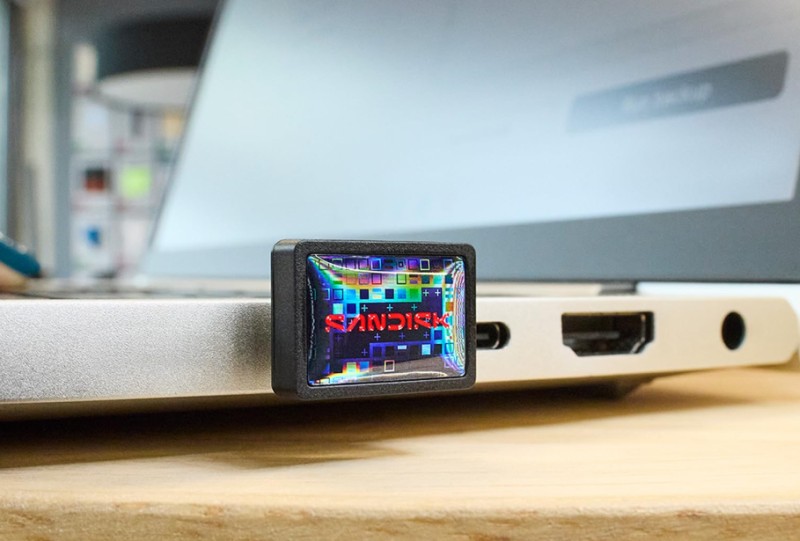
Review: SanDisk Extreme Fit USB-C Flash Drive (128GB)
The SANDISK Extreme Fit USB-C™ Flash Drive - 128GB is something that you might not even believe exists...
21-08-26 Read more
Review: Ground Zero Hero
It’s not often that a game comes around with the ability to grip you into a mindless cycle of absolute...
19-08-26 Read more

Review: Marvel Tokon: Fighting Souls
You know, if anybody was going to make a Marvel themed arcade fighting game in 2026, I’m glad Arc System...
18-08-26 Read more

Overview

Add to cart
Developer
Undead Labs
Publisher
Microsoft Studios
Platform
PC, Xbox One
Release date
22 May 2018