Latest Updates
Who's Online
Please sign in to add comments


Cart Contents
| Item: | Price: | Qty: |
|---|---|---|
| Total: R 0.00 | ||
User Content
Latest Poll
Review
Review: Metroid Prime 4: Beyond
A room with a Viewros.
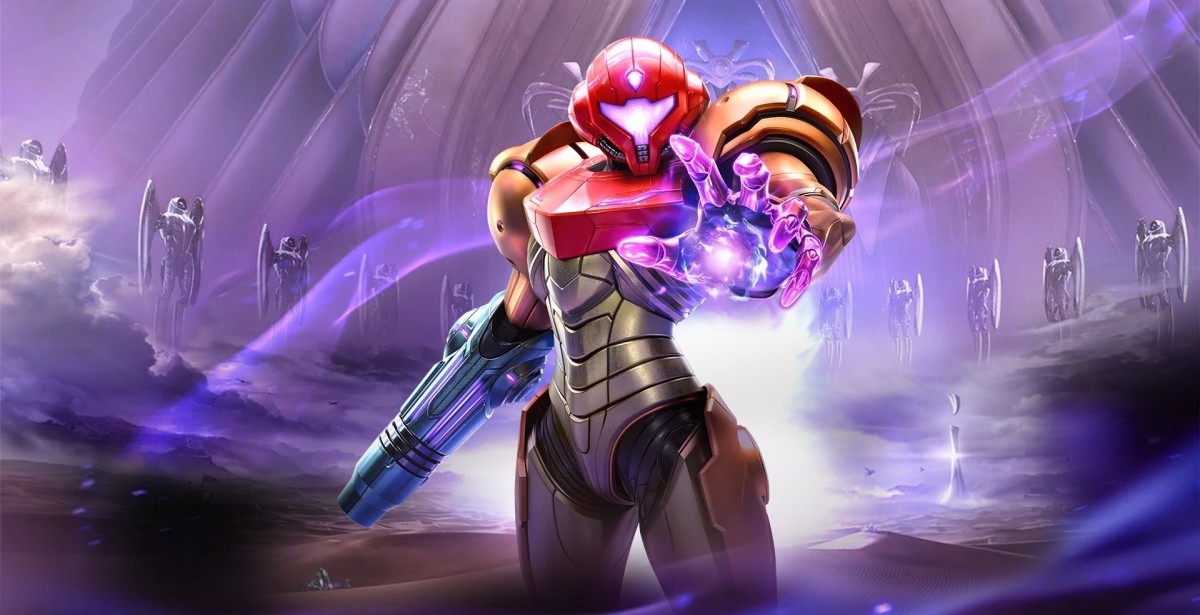
Metroid Prime 4: Beyond has been a long, long time coming. After going through a lengthy development reboot, fans eagerly anticipated the return of the Prime series with Retro Studios back at the helm. It all sounded promising leading up to its arrival, but after years of waiting, the end product is not what I expected. For better or worse, Metroid Prime 4 delivers exactly what fans wanted in doses amidst new ideas that threaten to derail that nostalgic excitement. For every two steps it took forward, it took one back.

Metroid Prime 4: Beyond’s story kicks off on a very exciting note. After an incredible opening cinematic that reels you into its world and plights, our silent protagonist Samus Aren crash lands on the alien planet of Viewros, a mostly desolate world sparsely inhabited by members of the Galactic Federation that you’ll stumble into (more on that later). Samus has lost all of her powers – big surprise there – and must navigate Viewros using some interesting telekinetic variations of her tried and tested abilities to defeat bosses, solve puzzles, clear five massive dungeons, obtain keys, and find her way off the planet.

That’s the gist of Metroid Prime 4’s story because it’s not a complicated one. Being mostly alone on a hostile alien planet is kind of Samus’ M.O. at this point, and there’s a lot of lore to unpack here that enriches the environment you’re in. Most of that lore comes from the remnants of a long-lost alien civilisation that would prefer to just be left alone, and scanning objects, of which you do a lot in the game. The problem is the story is never quite as good as where it starts. All that intrigue is slowly lost as you attempt to get over Metroid Prime 4’s inspired but ultimately hollow idea of exploration.
The problem is the story is never quite as good as where it starts.
All of the checkboxes for a Metroidvania are ticked in Metroid Prime 4. The game contains a handful of major dungeons where Samus needs to acquire keys to progress. True to formula, progression is often blocked by abilities or tools that you may or may not have at your disposal at the time, either to solve puzzles, unlock doors or defeat specific enemies with. This requires further exploration and quite a bit of backtracking – enough to the point where it becomes tedious towards the late game. All of these dungeons are spread out in zones across a large desert hub area called Sol Valley that’s, well, kind of just deserted and lifeless.

Samus gets access to a nifty bike called “Vi-0-La” (I’ll just call it Viola from here on) that lets you traverse Sol Valley quicker. It sounds cool and feels great to control, but it’s very rarely used outside of getting from point A to point B or smashing crystals around the desert that give you valuable resources. There are a couple of instances where it’s cleverly used in combat but other than that, Viola feels like a big missed opportunity.
I’ve seen Metroid Prime 4’s desert hub frequently compared to Ocarina of Time’s Hyrule Field, and while it is a fittingly inspired idea, it dangles that Zelda nostalgia in your face without really understanding what made Hyrule Field work in the first place. Metroid Prime 4’s Sol Valley delivers the same beats – the sparse landmarks and locations that lead you to shrines or detours, the anticipation of exploration – but it lacks any of the charm, the wandering NPCs, or the allure of Ocarina of Time’s world to leave any sort of lasting impact. Instead, it’s a big, mostly bland stretch of space that does very little to invoke that same sense of wonder.
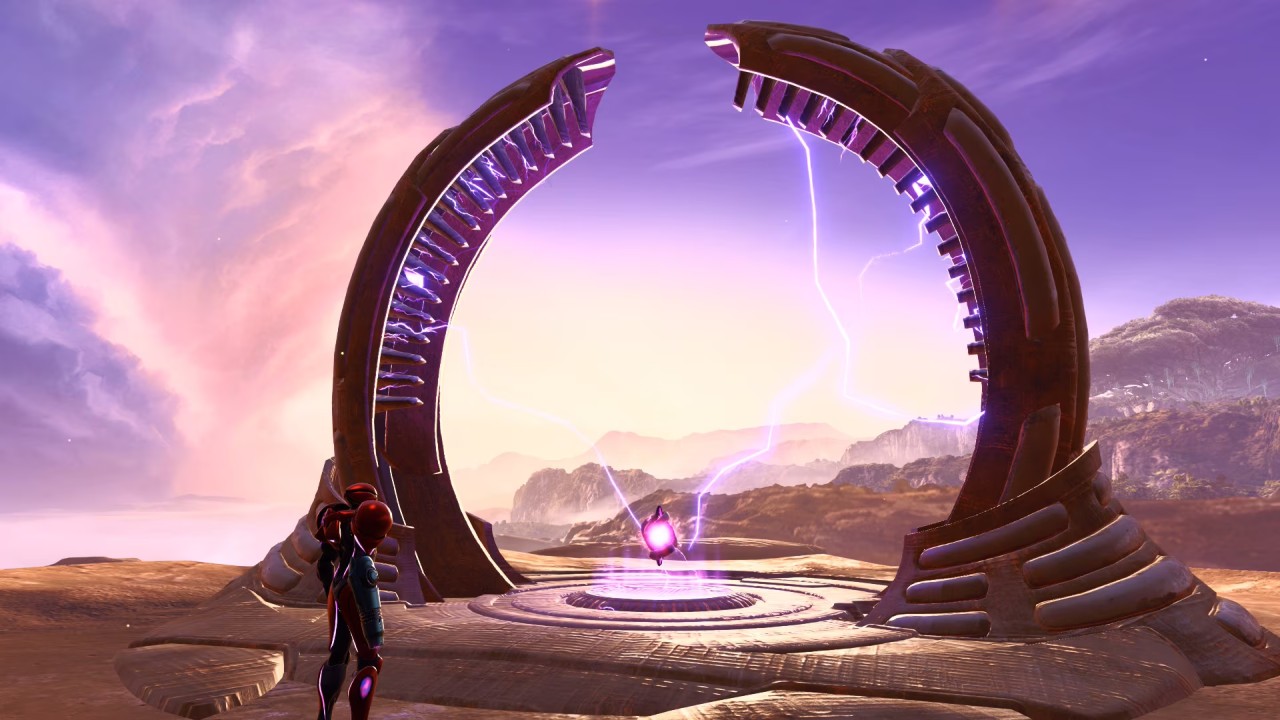
Metroid Prime 4 leans back on its formula quite a bit in this regard. All of its best aspects come from how it successfully captures the same gameplay, atmosphere and Metroidvania thrills of its predecessors. To that end, I think fans are really going to enjoy what it offers. It’s more of the same, it works, and it’s still solid all these years later. Shooting from the more immersive perspective of Samus’ helmet feels excellent and finally figuring out the right way forward is its own satisfying reward. Most of the Prime franchise’s building blocks are present and on full display here, and for what it’s worth, I did end up really enjoying the moments where it felt like old-school Prime.
I think fans are really going to enjoy what it offers. It’s more of the same, it works, and it’s still solid all these years later.
New to Metroid Prime 4 are psychic powers that Samus can tap into. These offer her an assortment of abilities like double jump, guided shots, and pulling missiles out of the air (which is actually pretty damn cool). A sort of telekinetic lasso lets Samus pull objects around the environment, mainly used to solve puzzles or create new paths. It’s all familiar and fans will feel right at home with these abilities considering they’re mostly carried over from past entries, but they’re barely used in any creative ways which is disappointing.
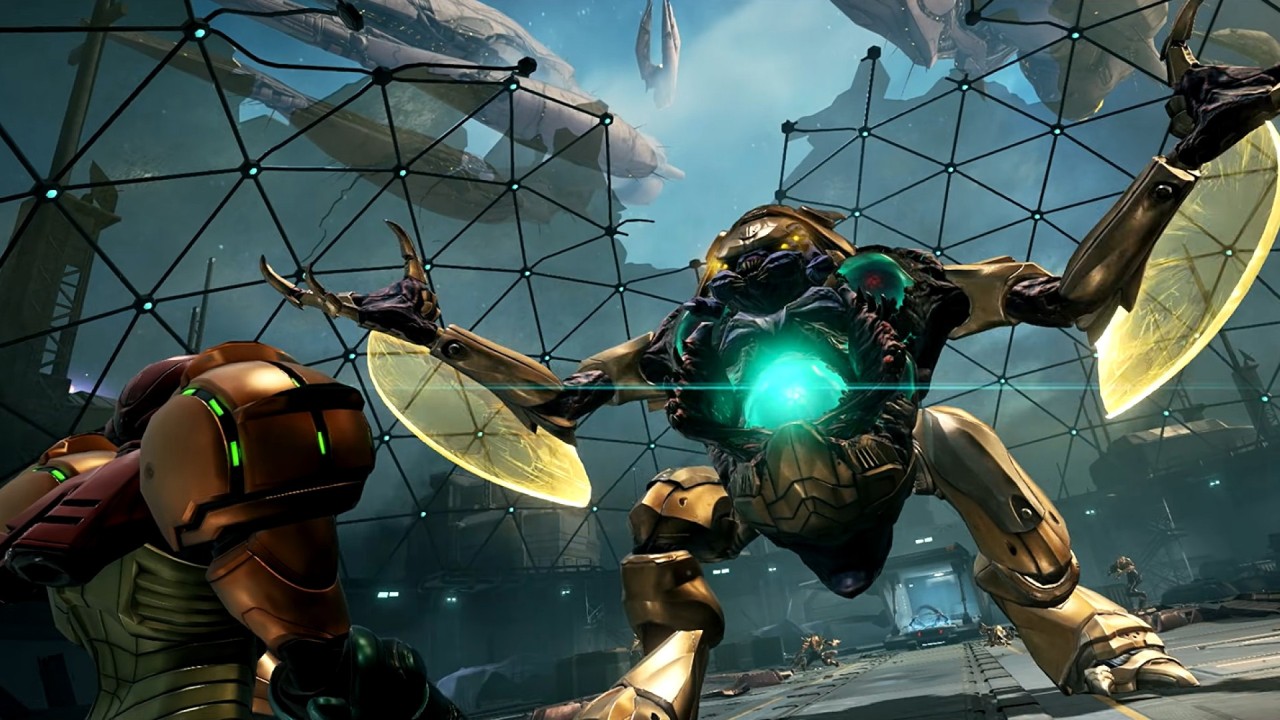
One element that kind of blew me away in Metroid Prime 4 is the art direction and visuals. The game’s skyboxes are truly breathtaking at times and there are moments in areas where I had to stop just to soak in these grand vistas. It’s equally impressive that the game manages to evoke those same awe-inspiring feelings on the Switch 1, even if the Switch 2 is still the more technically ideal platform to really appreciate it all. I’d argue that Metroid Prime 4 is the most immersive game in the series to date, helped by its strong atmosphere and terrific music and ambience. You end up really getting swept up in this alien world… when you aren’t being interrupted by Myles MacKenzie for the hundredth time.
The game introduces a new companion in each zone and MacKenzie sort of acts as the introductory NPC and go-to person for tool upgrades. You’ll stumble across more companions from the Galactic Federation, each a little quirkier than the last, but your enjoyment of these characters really depends on how much you can tolerate them. I will say that MacKenzie sort of grew on me after a while, but others seem to solely exist to spout exposition or fanboy over Samus, who silently nods or stares blankly in long awkward pauses to their remarks. It honestly reminded me of those edited clips from The Big Bang Theory without the laugh track.
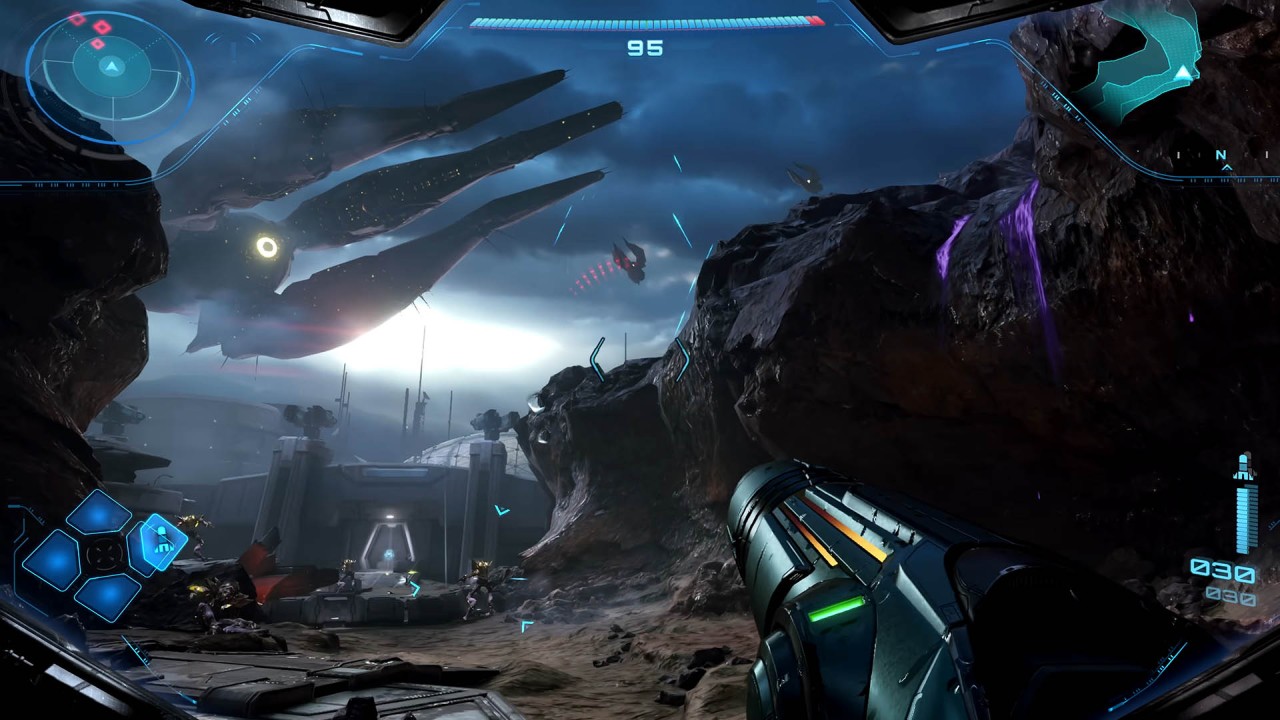
I think the biggest complement I can give Metroid Prime 4 might also be what holds it back from standing out in any remarkable way. In recent years, the Metroidvania genre has made leaps and strides to improve its familiar gameplay mechanics, design more intricate exploration and puzzles, and find creative ways to utilise all of its tools and abilities to infuse the gameplay with new and exciting options (see Hollow Knight: Silksong, for example). For as much as Metroid Prime 4 tries to stick to its own formula of the past, it risks feeling outdated in the very genre it helped pioneer.
I will say that MacKenzie sort of grew on me after a while, but others seem to solely exist to spout exposition or fanboy over Samus, who silently nods or stares blankly in long awkward pauses to their remarks.
Over on the technical side, Metroid Prime 4: Beyond is pretty polished on Switch 2. I rarely encountered any technical problems worth mentioning. While the visuals more often than not impress, there are some instances where textures can appear a bit murky or flat. I imagine this was one of the caveats of launching on both Switch 1 and 2 as graphical compromises needed to be made in certain areas and it shows. That said, the game packs in some stunning locations and it’s easily one of the most gorgeous games on Switch 2 from an art direction perspective.
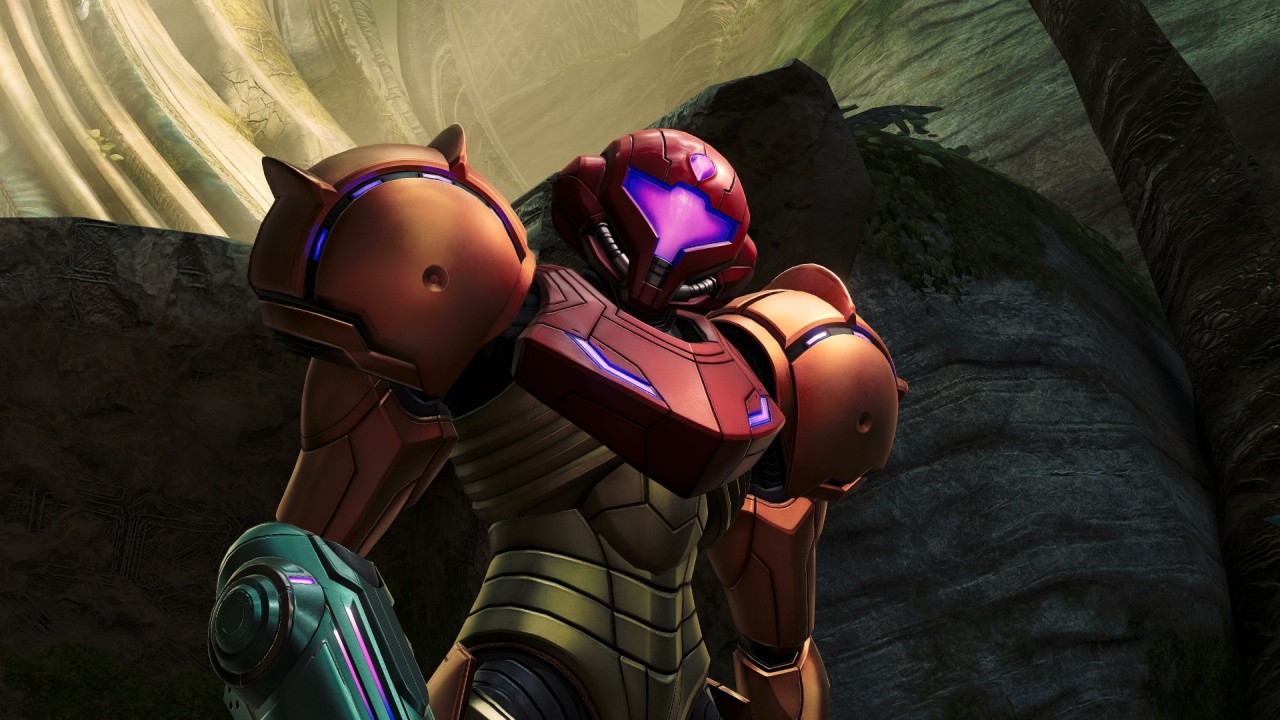
It’s difficult not to recommend Metroid Prime 4: Beyond to die-hard fans of the franchise. It delivers those same exciting highs of playing the older titles but it requires you to deal with some of its more underwhelming elements at the same time – the lack of enemy variety, an uninteresting desert hub, cool inclusions like Samus’ psychic powers and Viola aren’t used to their full potential, etc. It’s not the triumphant return of Metroid Prime that players, including myself, were expecting but if you don’t mind its flaws, you’ll probably have a good time stepping back into the shoes of Samus Aren.
Nintendo Switch 2 Review code provided by Nintendo | Metroid Prime 4: Beyond is available to purchase at Nexus Hub for R1,575


Please login to post comments.
More Reviews

Review: Marvel's Wolverine
When I think about some of PlayStation Studios’ most consistent developers, Insomniac Games always ranks...
10-09-26 Read more

Review: Dumb Ways to Build
Originally a public service announcement which discouraged the Australian public from thoughtless activity...
09-09-26 Read more

Review: Orbitals
Booting up Orbitals for the first time, I was immediately hit by a warm wave of nostalgia like the food...
08-09-26 Read more

Review: Onimusha: Way of the Sword
It’s a good year to be a fan of action games, and an even better year to be a fan of Capcom. After delivering...
31-08-26 Read more

Review: Spa Weekend
I was invited to attend an exclusive preview screening of the film Spa Weekend on August 20th at Sandton...
21-08-26 Read more
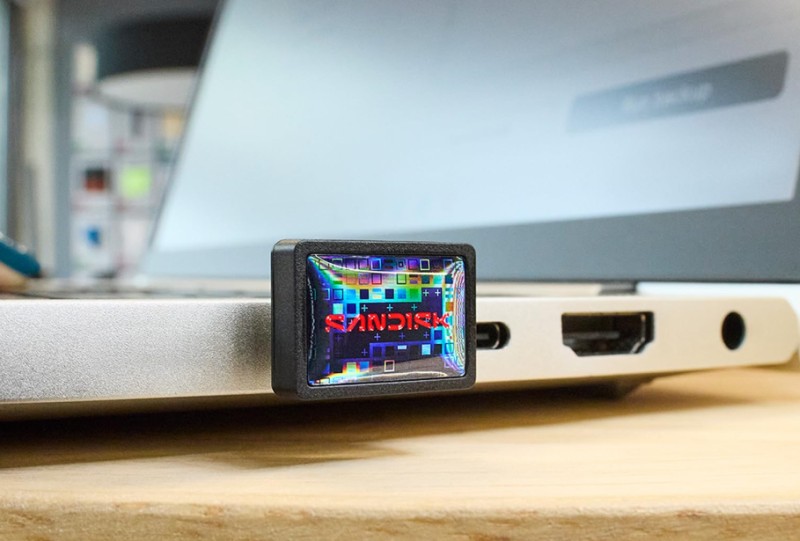
Review: SanDisk Extreme Fit USB-C Flash Drive (128GB)
The SANDISK Extreme Fit USB-C™ Flash Drive - 128GB is something that you might not even believe exists...
21-08-26 Read more
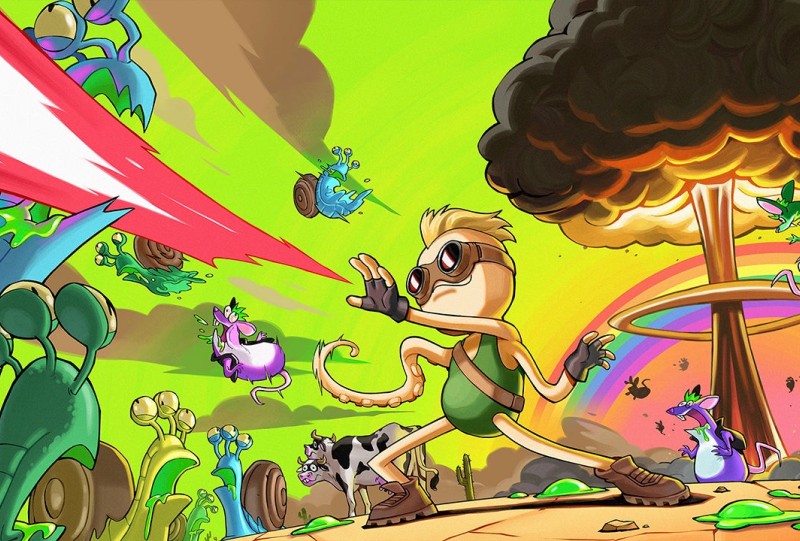
Review: Ground Zero Hero
It’s not often that a game comes around with the ability to grip you into a mindless cycle of absolute...
19-08-26 Read more

Review: Marvel Tokon: Fighting Souls
You know, if anybody was going to make a Marvel themed arcade fighting game in 2026, I’m glad Arc System...
18-08-26 Read more

Review: Mortal Shell 2
With the boom of Soulslike games, developers now have to find interesting ways to mix up the formula...
17-08-26 Read more

Review: The End of Oak Street
The End of Oak Street is not what you’d expect just from looking at the name. You would think it’s maybe...
14-08-26 Read more

Overview