Latest Updates
Who's Online

Please sign in to add comments


Cart Contents
| Item: | Price: | Qty: |
|---|---|---|
| Total: R 0.00 | ||
User Content
Latest Poll
Review
Review: Hades II
The roguelike summit.
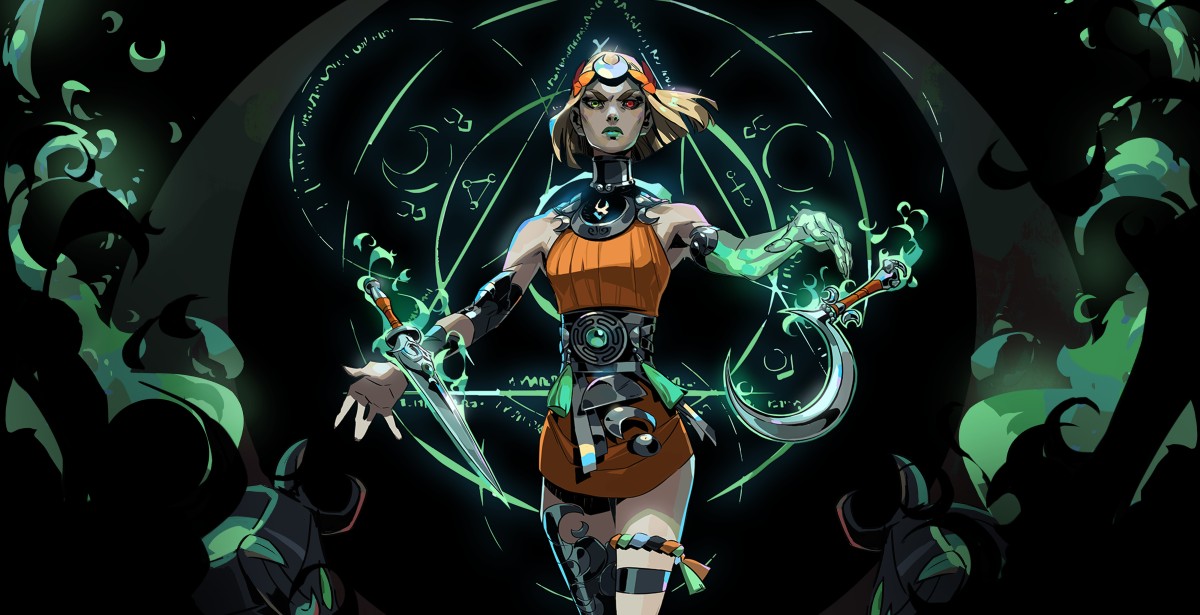
When we talk about roguelike action-RPGs that have fundamentally moved the needle in the gaming industry, I’m willing to bet that 2020’s Hades comes up a lot in those conversations. So there was quite a bit of pressure for developer Supergiant Games to not only deliver, but surpass expectations for the long-awaited sequel, Hades II. Our trip back into Supergiant’s vision of Greek mythology has blown those expectations out of the water and then some – and I firmly believe we’re now looking at the pinnacle of what the roguelike genre has to offer.
Hades II shifts perspectives from former protagonist Zagreus to his sister and Princess of the Underworld, Melinoë. Up against the Titan of Time, Chronos, who holds a cataclysmic grudge against gods and mortals - a storied history that goes much deeper than I expected – Melinoë is placed in the middle of this terrifying conflict. She must now seek the aid of the Gods of Olympus and battle through more than just the depths of the Underworld.
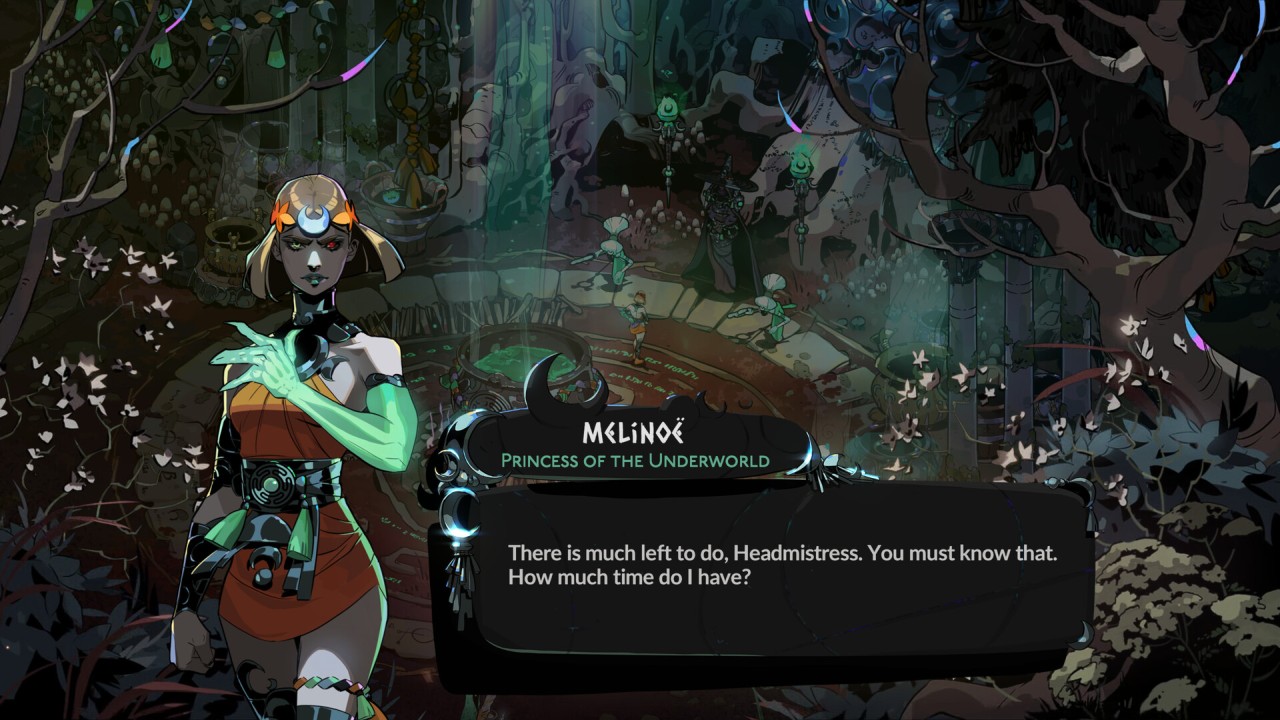
The original Hades had incredible storytelling backed up by phenomenal voice acting and art, so it’s amazing that Hades II confidently outdoes its predecessor at every turn. Through Melinoe being a much more compelling protagonist to follow than Zagreus and her various relationships with the gods, the narrative in the sequel flows naturally between interactions with its colourful, wonderful cast of characters. Through the trial-and-error resets of the roguelike formula, we come to understand not only Melinoe along the journey but every single character either rooting for us, wanting us to fail spectacularly (of which you will), and those who are kind of neutral on the matter but end having depths of complexity that took me by surprise.
The original Hades had incredible storytelling backed up by phenomenal voice acting and art, so it’s amazing that Hades II confidently outdoes its predecessor at every turn.
Hades II doesn’t have an elaborate web of a story but it really doesn’t need to. In service to the gameplay and dialogue, the narrative absolutely works and reels you in. It’s really the outstanding character writing that keeps you engaged once you’re reeled in, and boy does Hades II offer some of the most well-rounded, beautifully designed misfits of mythology I’ve ever seen. I can’t praise the game’s masterful art and visuals enough. It’s simply some of the best in gaming, period. Stylish, thoughtfully designed, and mostly extremely likeable, every single character you meet has layers upon layers of rich characterisation (some of my favourites being Nemesis and Icarus, in addition to Melinoe of course). The series’ signature art style is its most outstanding feature once again.
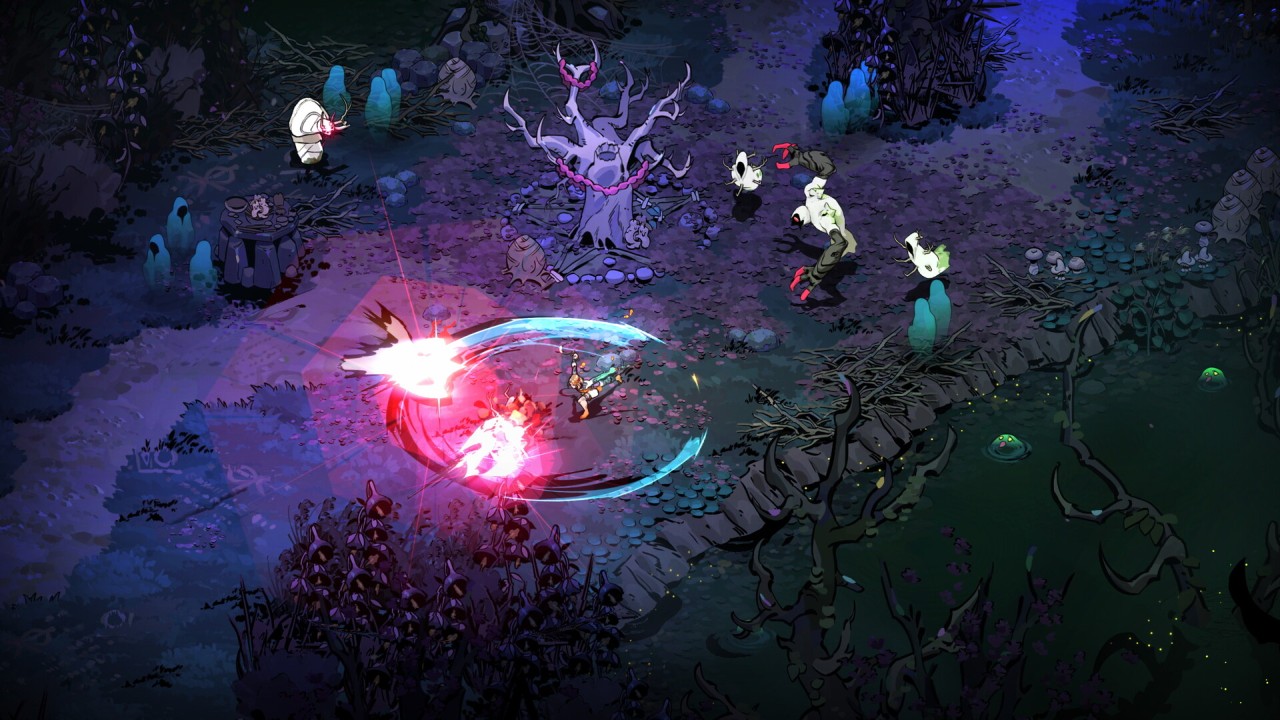
However, Melinoe is the heart and soul of Hades II, brought to life by an incredibly underrated performance from Judy Alice Lee, who effortlessly conveys the character’s unique quirks, flaws, and sometimes egotistical tendencies remarkably well. I have no qualms in admitting that Melinoe instantly won me over, while I might’ve taken a little more time to warm up to Zagreus.
The gameplay of Hades II presents a similar ebb and flow to the first game. Through trial and error (a lot of error, to be frank), Melinoe must carve paths through not only Tartarus but several new locations, split off into two diverging paths between the Underworld and regions above the surface. This includes new diverse areas soaked in stylish Greek mythos and detail – many of which I won’t spoil here.
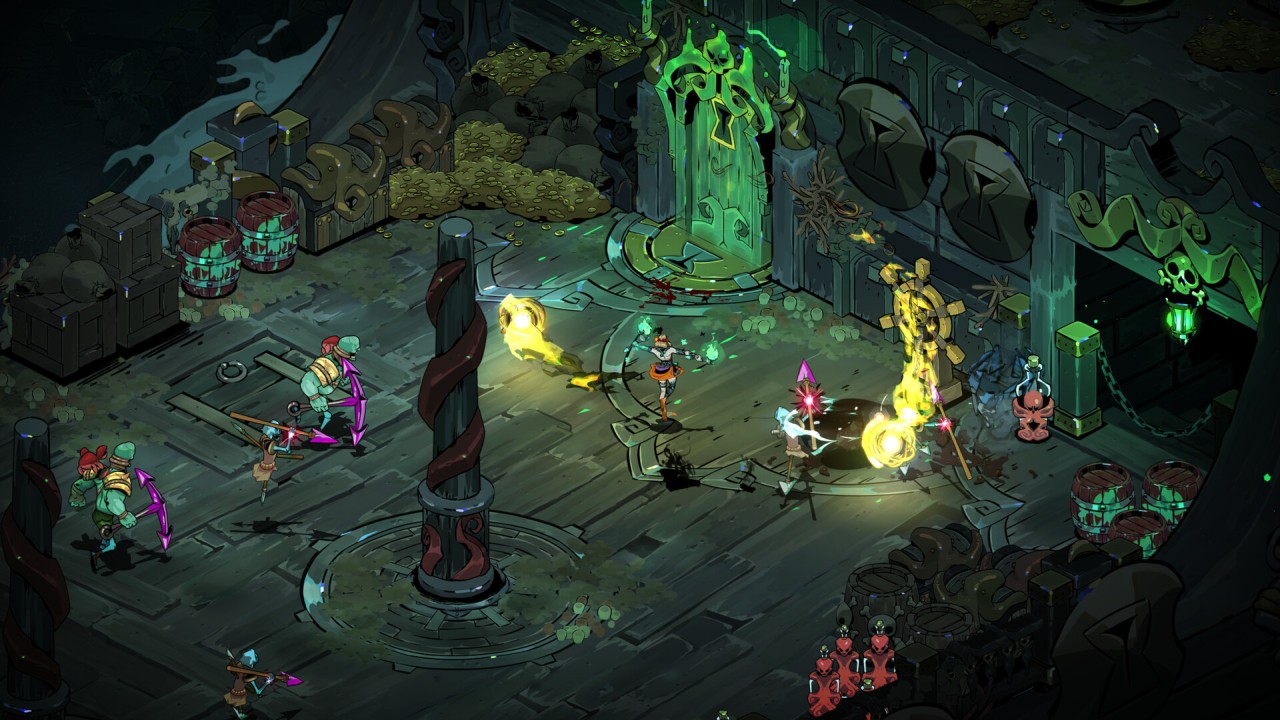
Like any great roguelike, the game incentivises players to attempt repeated runs in order to level up, gain new gear, figure out the best paths forward, and engage with the aforementioned godly denizens in the Crossroads who have thoroughly entertaining and sometimes hilarious dialogue thanks to smart, sharp writing and striking designs. New to the sequel is a “Magick Bar” that Melinoe gradually builds up in combat while slaying enemies, allowing players to tap into special powerful moves. Olympians will also reward you with Boons, which essentially give you a handful of boosts and effects for that specific run; some prioritise combat buffs while others might keep you alive longer. The amount of build flexibility here is staggering, and it makes each run feel vastly different from the next if you’re willing to experiment and find your groove.
I believe this freeform style of progression gives Hades II almost endless replay value.
As you gradually ascend through the Underworld, you’re also given rewards after clearing rooms that come in the form of new items, stat boosts and more to help you along your run. After clearing a certain amount of rooms, you’re pitted against a challenging regional boss who blocks your progression to the next region. If you loved Hades, you’re going to feel right at home with Hades II, but more importantly, you’re going to be given a lot more choices in how you move forward. I believe this freeform style of progression gives Hades II almost endless replay value. Even during my repeated successful runs, I never knew what to expect because of how much paths tended to diverge or throw you into new territory.
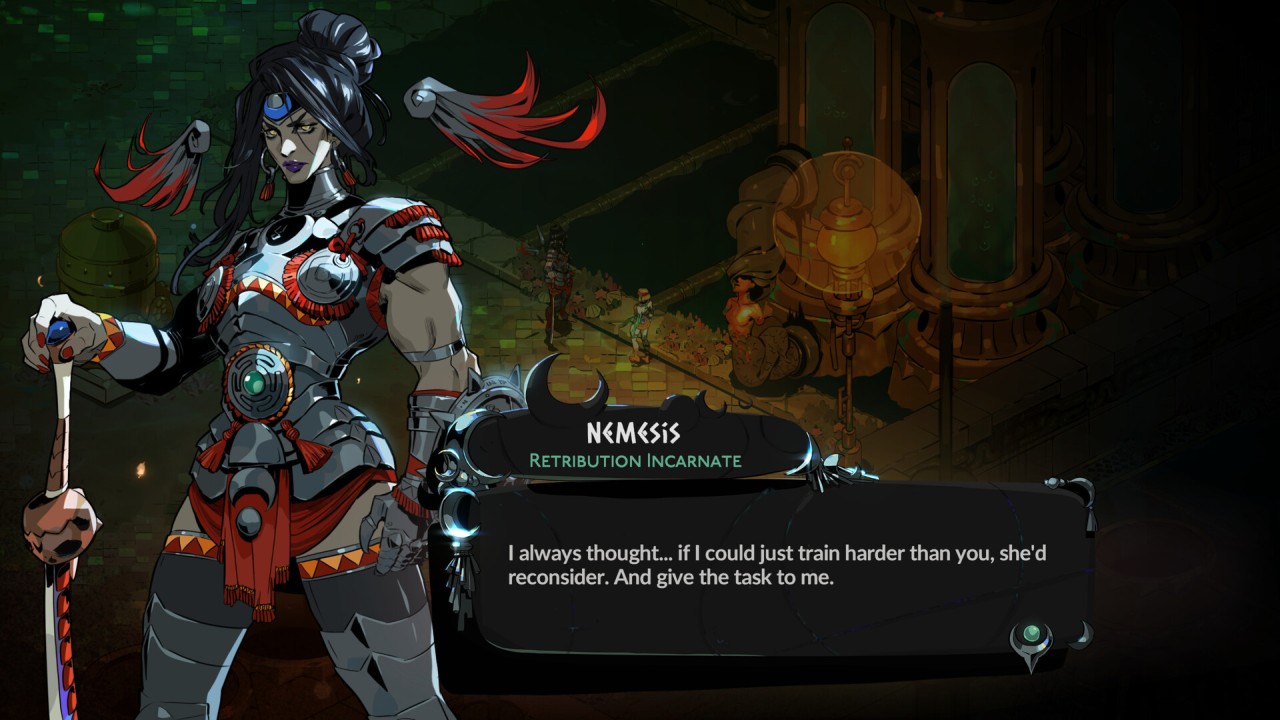
On that note, Hades II doesn’t short-change players on difficulty. That’s not to say that both games are hard as nails, but the learning curve is pretty steep for players who don’t embrace failure. In Hades II, these marked my favourite moments in the game when I could return to the Crossroads, reflect on where I went wrong, and formulate new strategies to progress. More importantly, you’ll have new interactions with characters there – some might offer tips, some might ridicule you, while others may give you something that will aid you on your next run. In one case, an unexpected conversation with a certain visitor gave me something that I used on my next run to a successful completion. This is just one of many possibilities – or rather, opportunities – that can easily be missed if you aren’t stopping to engage with the world and its inhabitants. Therein lies the true beauty of Hades II.
On a technical front, I reviewed Hades II on Nintendo Switch 2 and it’s pristinely polished. The visuals, particle effects, intensity of combat, hypnotic sound design and spray of colours exploded on screen. It’s a stunning game to look at from beginning to end, made better by 120fps while docked. Unfortunately, you’ll have to settle for a bit less in handheld mode, but it’s barely noticeable since it runs at a rock-solid consistent framerate either way. I’d like to give a special mention to Darren Korb’s amazing soundtrack. It will permanently stay on my playlist.
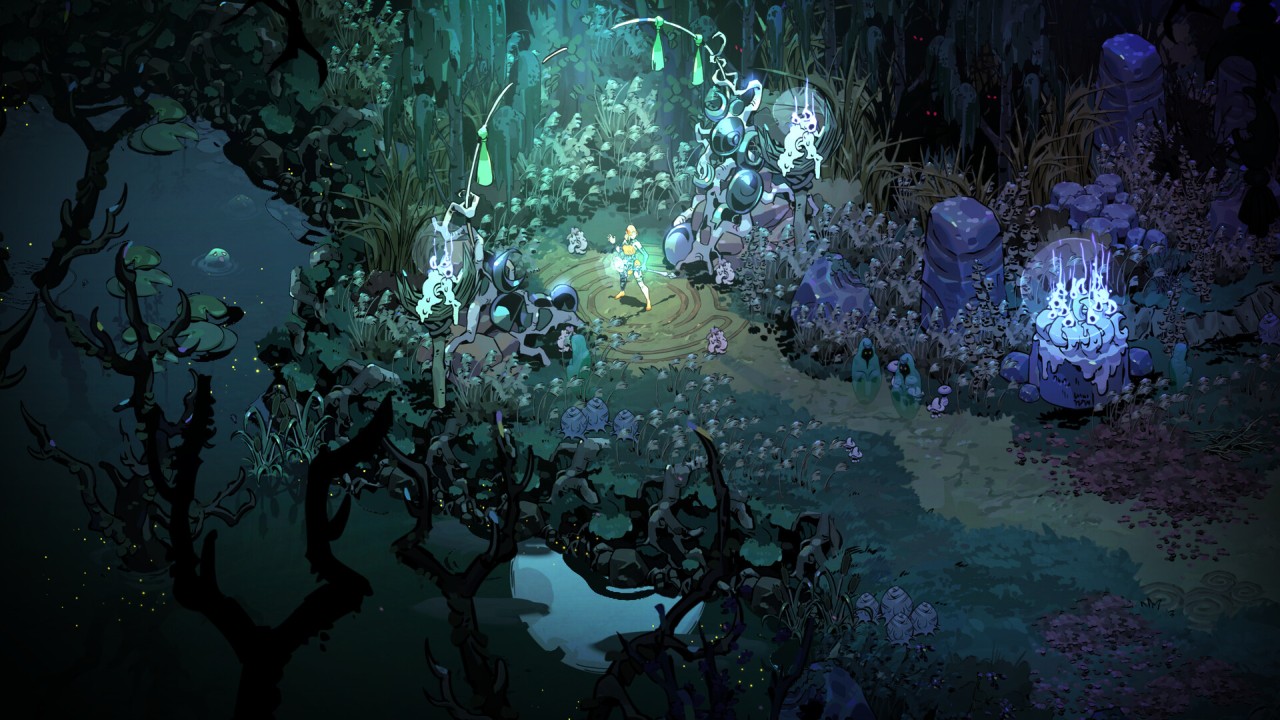
Hades II is a bravura sequel that succeeds on basically every front. Honestly, it’s hard to call out any flaws without resorting to nitpicking and even then, everything it does well completely overshadows those flaws. Supergiant Games have created the perfect roguelike action-RPG that undoubtedly outshines its predecessor and will be talked about for decades to come.
Hades II is available to purchase at Nexus Hub for R999


Please login to post comments.
More Reviews
Review: Final Fantasy Resonance
I love a good JRPG as much as the next guy, but I tend to draw the line at mobile spin-offs, even if...
02-11-26 Read more

Review: Forever Ago
Forever Ago is the kind of compact, uplifting indie palate-cleanser I need between an endless supply...
29-10-26 Read more

Review: Clayface
The DCU started off on a decent note. We had a good Superman movie from James Gunn, The Penguin was ...
27-10-26 Read more
Review: Star Wars: Galactic Racer
It’s been a really long time since we’ve got a new Star Wars racing game so you can just imagine the...
27-10-26 Read more

Review: Phantom Blade Zero
It’s been a while since I’ve played an action game with combat as good as Phantom Blade Zero. Unlike...
26-10-26 Read more
Review: Wildwood
The creators and studio behind hit film Coraline (2009), Laika Studios, have done it again, this time...
22-10-26 Read more

Review: Valor Mortis
Now here’s an interesting combination. Developer One More Level’s (of Ghostrunner fame) Valor Mortis...
16-10-26 Read more

Review: Pixel Washer (Early Access)
There’s always something uniquely satisfying about games that’s sole focus is on making something that...
14-10-26 Read more
Review: Hellraiser: Revival
I’ve been a fan of the Hellraiser movies ever since I snuck a VHS rental (yeah, remember those?) of ...
13-10-26 Read more
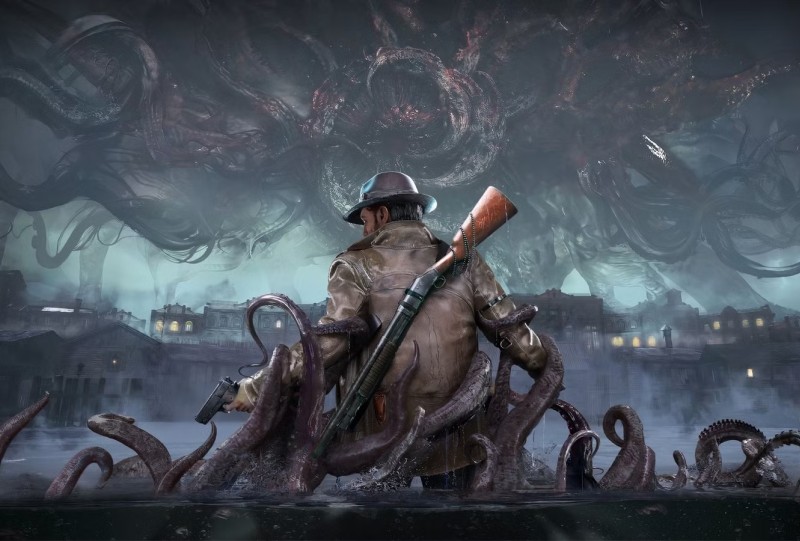
Review: The Sinking City 2
The Sinking City 2, from Ukrainian developer Frogwares, is less of a sequel than it is a Lovecraftian...
12-10-26 Read more

Overview

Add to cart
Developer
Supergiant Games
Publisher
Supergiant Games
Platform
PC, Switch
Release date
25 September 2025