Latest Updates
Who's Online

Please sign in to add comments

Cart Contents
| Item: | Price: | Qty: |
|---|---|---|
| Total: R 0.00 | ||
User Content
Latest Poll
Review
Review: Valor Mortis
Soldier side.
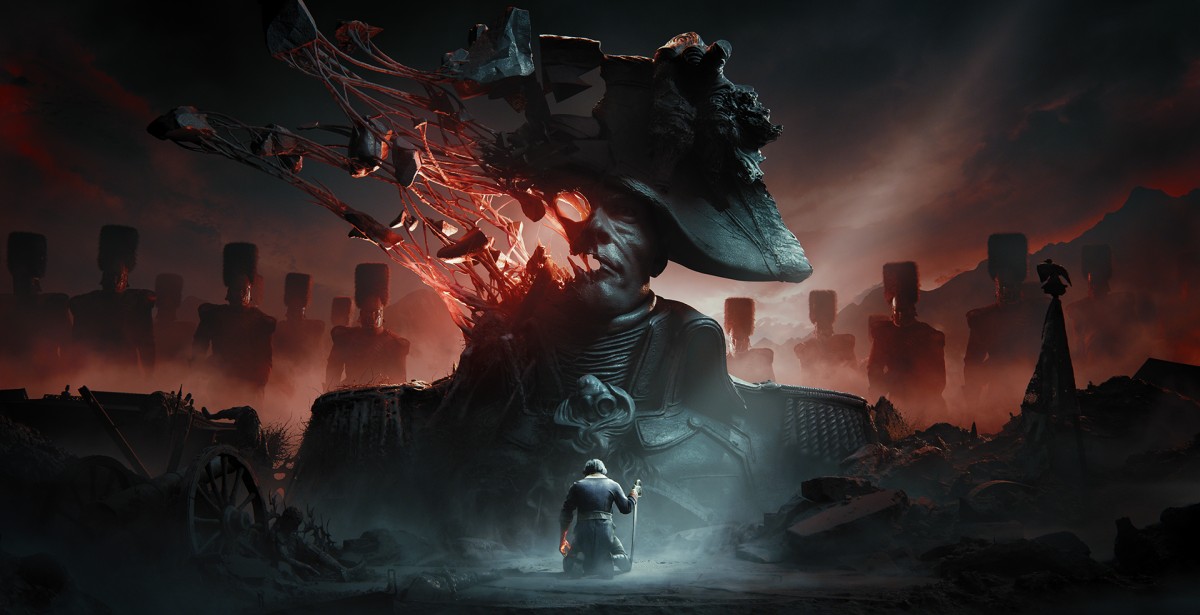
Now here’s an interesting combination. Developer One More Level’s (of Ghostrunner fame) Valor Mortis takes the alternate history/Soulslike genres and slaps a first-person perspective on it, before topping it all off with some blood-spattered, horror-themed gift wrapping. And it’s kind of amazing how well everything comes together as a whole, in all honesty. I wasn’t expecting to walk away from Valor Mortis feeling anywhere near as impressed as I did, and the entire experience came across far fresher than it had any right to.
The story here is short and sweet, dropping you right into the action as one William, a soldier in Napoleon’s army out to discover the truth behind the Crimson Plague – an event that has brought his once-dead allies back from the grave in grotesque fashion, now violent shadows of their former selves wandering the battlefields and beyond. Valor Mortis is not exactly what I’d call a story-rich title, and it doesn’t need to be. Action is at the forefront of the experience, with brief interruptions popping up now and again in the form of cutscenes or short exchanges of dialogue (with mixed delivery quality), before once again letting go of your hand and sending you off into the nearest corpse-riddled field.
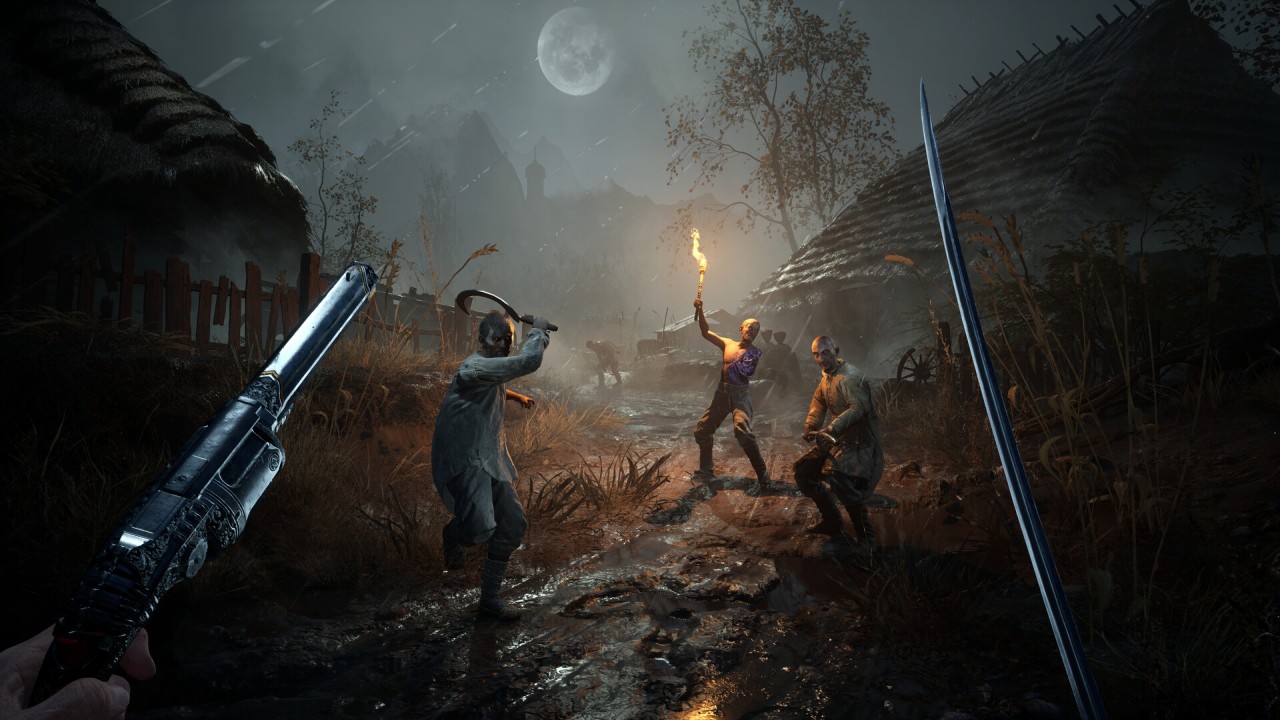
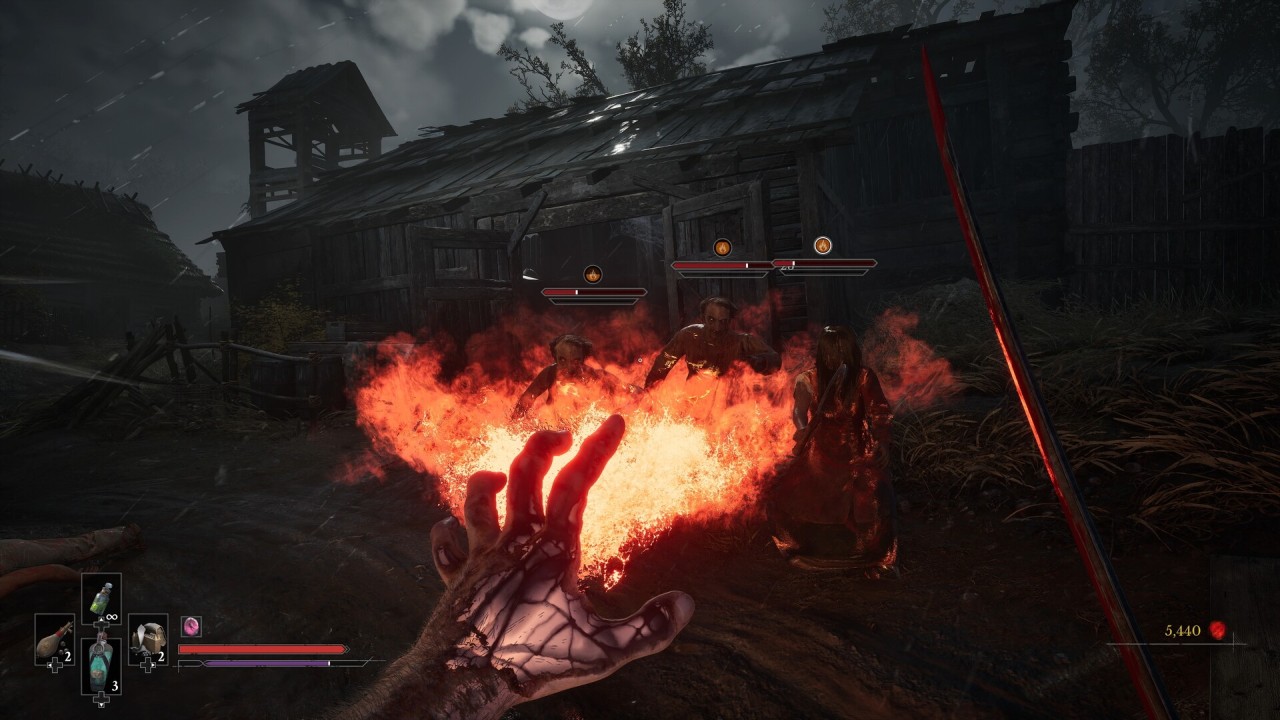
Valor Mortis’ gameplay primarily revolves around exploration, combat, and platforming (a rare instance where first-person platforming manages to not feel clunky or annoying in the slightest). The multitude of offensive tools unlocked as you progress through the storyline are almost all incredibly satisfying to utilise - whether you’re closing in on an undead soldier before blasting them to smithereens with a blunderbuss, setting an approaching horde ablaze with your Fire Transmutation (like spells or BioShock’s Plasmids) or slicing up a frenzied infected villager with a saber, you’re very likely going to be having a good time engaging in combat.
The multitude of offensive tools unlocked as you progress through the storyline are almost all incredibly satisfying to utilise.
Having said that, don’t expect the legions of the ex-deceased to go down without putting up a decent fight. Some enemy encounters and placement will absolutely test your patience, particularly those of the ranged persuasion. The numbers can start to add up very quickly - having to deal with merely two enemies at the same time is bad enough, let alone three or more. Environmental awareness is important here as well, as enemies can and will back you up into a near-inescapable corner if you let them. Thankfully, most foes will have at least one weak point on their body (glowing pustules, for example) that can be taken out for serious damage – sometimes permanently taking away an attack of theirs or disarming them as a bonus. And if you’re paying even the slightest bit of attention, you’ll notice that some parts of the map will have ways of thinning out the enemies ahead – whether it’s firing off a cannon or sending a wagon rolling into an undead crowd.
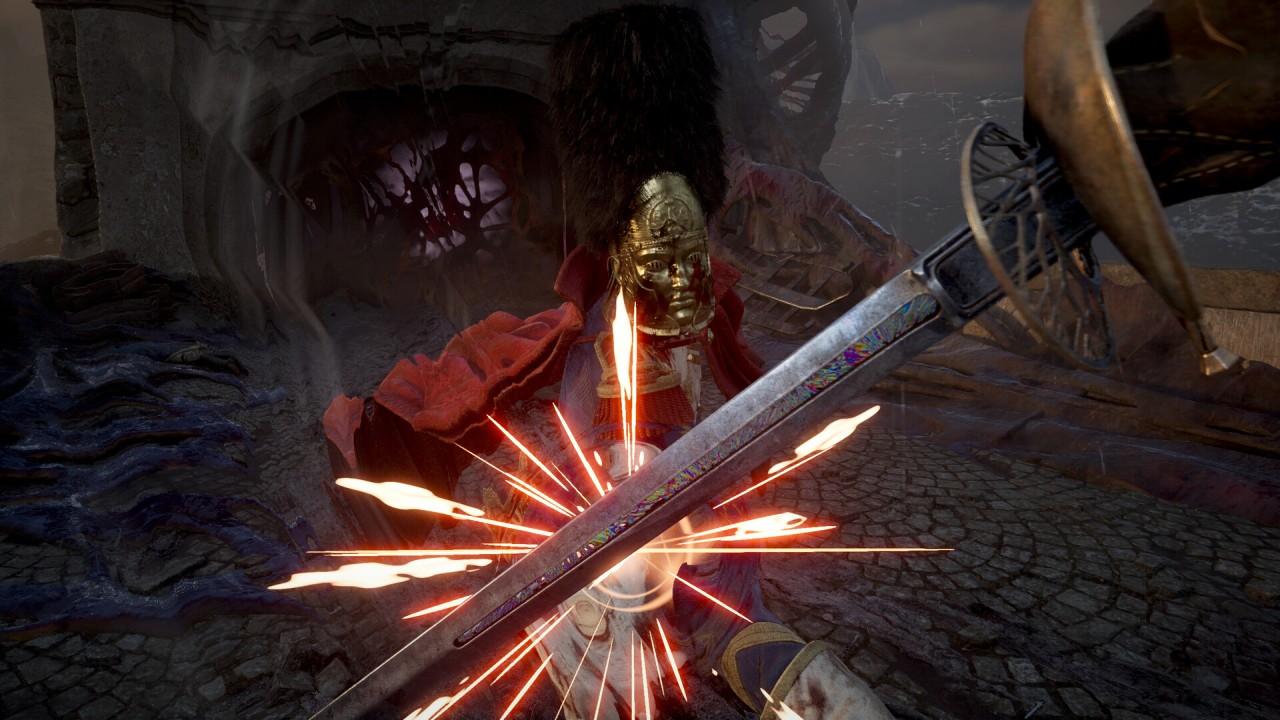
Standard enemies aside (of which there is a surprisingly decent variety), the first big boss arena also serves as a massive skill check early on, ensuring you both understand and have become somewhat competent at the parrying system. Hitting the block button right before an attack lands sounds easy enough on paper, but actually mastering the timing is another story entirely (especially for some of the faster foes down the line). It’s extremely important to note here that simply ignoring parrying and opting for a forceful/rash attack style will not always cut it in Valor Mortis, as opposed to other games out there that might offer the feature but not necessarily enforce it to this extent – especially earlier on.
Once you’ve got the hang of things, though, it starts to become second nature and adds yet another layer of satisfaction to the combat flow (the resulting “critical” attack animations are also deliciously brutal, accompanied by huge chunks of damage). Not all incoming attacks can be parried, obviously, and these will be telegraphed by the enemy glowing as they wind up for their strike. This is when dodging and managing your stamina bar comes into play. Some of these enemy attacks have insane reach, and you certainly don’t want to be caught with zero energy in a tight spot.
Every enemy defeated grants William a number of Catalysts, the souls-esque resource that serves as both in-game currency and experience points. As you’d expect, all Catalysts are dropped upon death and will need to be picked up after respawning – another death will result in these dropped resources disappearing forever. Resting at any one of the lantern points scattered around the world allows our hero to spend an increasingly substantial number of Catalysts to raise their level and unlock/upgrade various abilities and stats (lanterns also refill/replenish health, Nephtoglobin/Transmutation mana and weapon ammunition, while additionally reviving all non-boss enemies).
It’s extremely important to note here that simply ignoring parrying and opting for a forceful/rash attack style will not always cut it in Valor Mortis.
Ambers (skill or buff-granting gems found through exploration) can also be equipped here, with additional gem slots and character upgrades locked behind an overarching progress bar. Think of it this way - the more you level up, the more upgrades you earn. The more upgrades you earn, the more Ambers you’re allowed to equip. I promise this makes more sense when you’ve got the game up in front of you. It’s much easier to understand than I’m making it sound.
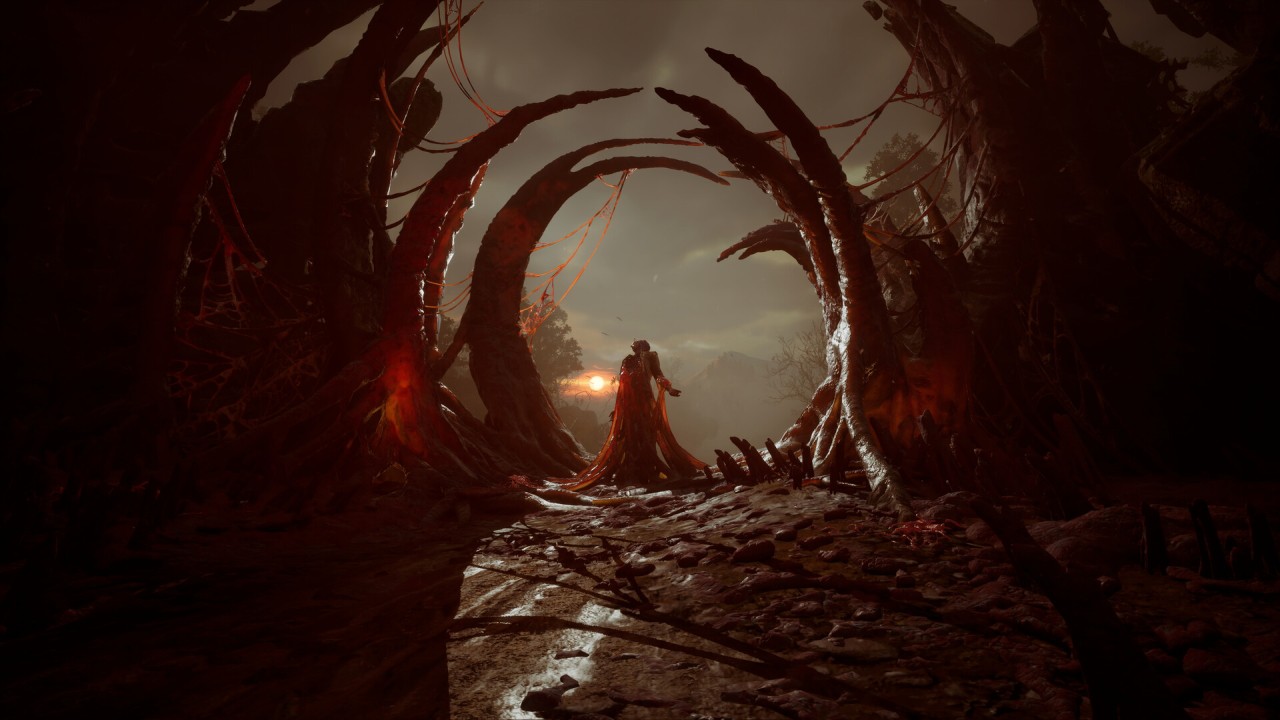
While Valor Mortis certainly does nothing to shy away from its overt Souls-style influence/similarities, it does not quite share the open world nature of those games. Instead, William’s exploration is split between multiple large, somewhat complex (usually disturbingly detailed) themed zones, separated by loading screens (and brief shader compilation sequences on PC, naturally). Once you’ve reached a specific story point, lanterns can also be used to fast travel between each other. Although (as already stated) the map is fairly linear in design, wandering off the beaten path is usually well worth your time – with weapon upgrade materials and concentrated Catalyst clots (awarding Catalysts when activated) being just some of the rewards waiting to be found.
If you’ve ever played a FromSoft title before, you’ll be happy to know the familiar routine of fighting your way through an enemy encampment, opening a door at the end and revealing you’ve somehow circled right back around to the beginning of the area is very much present here. Valor Mortis also seems to adore utilizing the old “floor falling away as you approach an enemy or object ahead” trope, so expect plenty of that as you go about your business.
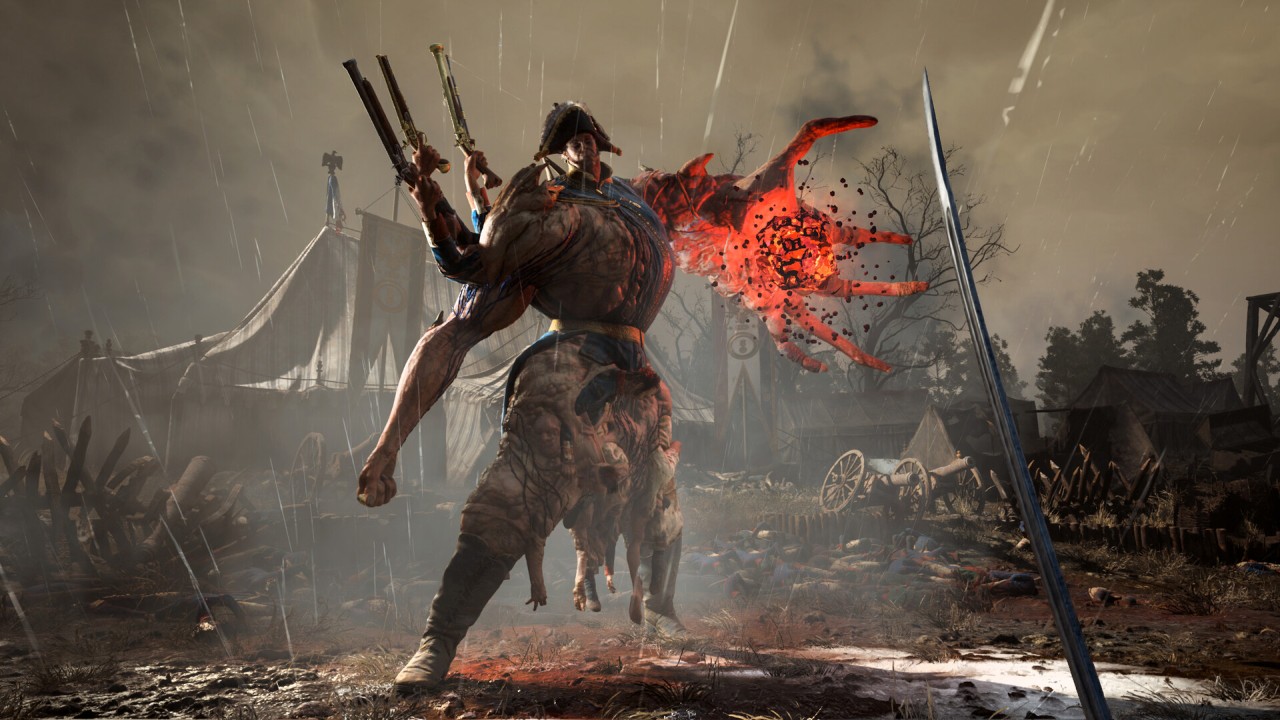
Technically speaking, Valor Mortis ran consistently smoothly for the most part (and looked damn fine doing so) with only a few instances of frame rate dips. Sure, you’ll inevitably run into some strange object physics here and there, an enemy might get somewhat lodged into a wall, and a bit of debris might freak out after somehow ending up in a larger stationary object, but these aren’t super common and are easily overlooked.
One More Level’s Valor Mortis is an excellent fusion of first-person action and the classic tried and true Soulslike formula – featuring surprisingly satisfying combat, excellent level design and a healthy pool of undead abominations to eradicate. Once you’ve overcome the initial perspective shift and gotten to grips with the combat/parrying mechanics, the game truly begins to shine. It’s not going to win any awards on the story or gameplay depth front, but Valor Mortis knows exactly what it’s trying to be and the kind of playerbase it’s gunning for.
PC Review code provided by Lyrical Games


There are 1 comments
 ElderofSmoke
Please login to post comments.
More Reviews

Review: Valor Mortis
Now here’s an interesting combination. Developer One More Level’s (of Ghostrunner fame) Valor Mortis...
16-10-26 Read more

Review: Pixel Washer (Early Access)
There’s always something uniquely satisfying about games that’s sole focus is on making something that...
14-10-26 Read more

Review: Hellraiser: Revival
I’ve been a fan of the Hellraiser movies ever since I snuck a VHS rental (yeah, remember those?) of ...
13-10-26 Read more
Review: The Sinking City 2
The Sinking City 2, from Ukrainian developer Frogwares, is less of a sequel than it is a Lovecraftian...
12-10-26 Read more

Review: Fire Emblem: Fortune's Weave
It’s legitimately very hard to believe that it’s been seven whole years since Fire Emblem: Three Houses...
05-10-26 Read more
Review: Control Resonant
It’s been seven years since the events of developer Remedy Entertainment’s original 2019 Control title...
02-10-26 Read more

Review: Gears of War: E-Day
Xbox’s flagship Gears of War series has had a bit of an identity crisis over the last decade. After ...
01-10-26 Read more

Review: Gachiakuta
Gachiakuta took the world by storm when it first aired from July to December 2025. With its gritty animation...
28-09-26 Read more

Review: Elden Ring: Tarnished Edition (Switch 2)
What can I say about Elden Ring that hasn’t already been said? From Software’s magnum opus originally...
21-09-26 Read more
Review: The Blood Of Dawnwalker
Rebel Wolves’s The Blood of Dawnwalker has often been compared to The Witcher III: Wild Hunt from fellow...
15-09-26 Read more

Overview
Add to cart
Developer
One More Level
Publisher
Lyrical Games
Platform
PlayStation 5, Xbox Series
Release date
13 October 2026