Latest Updates
Who's Online

Please sign in to add comments

Cart Contents
| Item: | Price: | Qty: |
|---|---|---|
| Total: R 0.00 | ||
User Content
Latest Poll
Review
Review: Darksiders 2: Deathinitive Edition
Another brush with Death
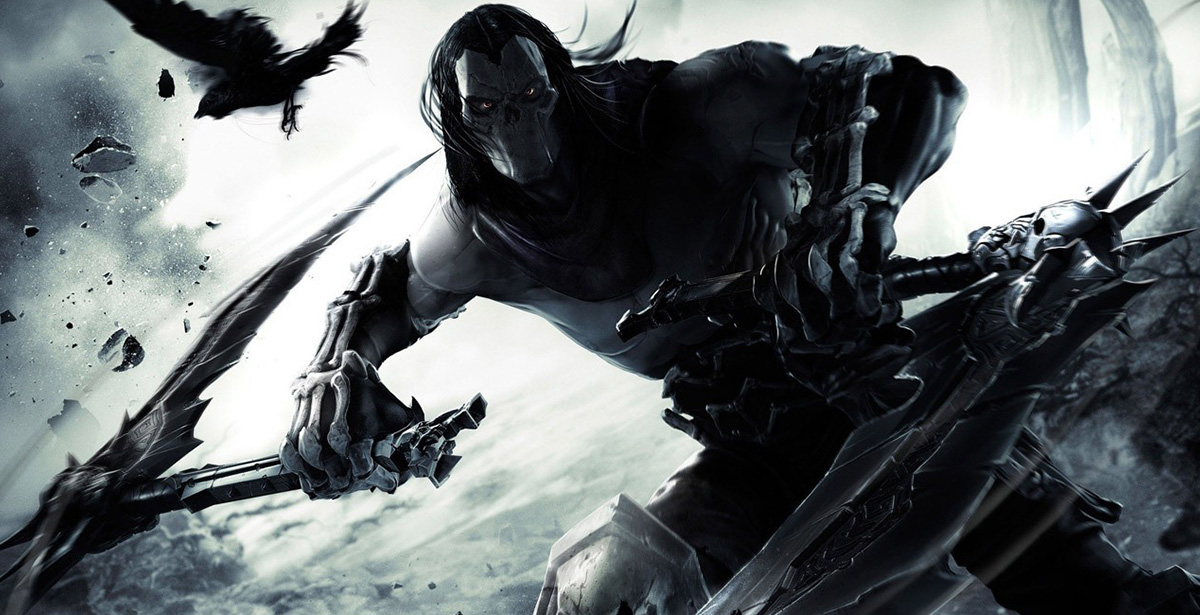
The awfully named Deathinitive Edition gives players the best way to experience Darksiders 2 on console and has given Gunfire Games - consisting primarily of staff from the original developers - another chance to touch up a game which suffered as a consequence of its publisher (THQ) collapsing during the final months of development. Gunfire Games have made a considerable number of graphical changes that improve the look of the game. They have also integrated the previous DLC and updated the engine to provide more consistent performance. While the game’s last-gen origin is still apparent, the increased resolution, new texture and object details, and new lighting engine all help improve upon the stylized comic-book visuals. All the DLC, consisting of 3 new quest locations, additional mini-quests, and numerous pre-order weapons, which have been thoughtfully integrated into the game and serve to bulk out the latter-half of the game, which previously felt underdeveloped and rushed.
This review is in two parts: 1) a brief overview of the game for newcomers, and 2) a review of the “remastered” content for those familiar with the original game.

From the ancient temples of the Forge Lands, through The Kingdom of the Dead, the angelic realm of Lostlight, and finally to the demonic realm of Shadow’s Edge; Darksiders 2 offers a great variety of fantastic looking locations to explore.
What is Darksiders 2?
For those new to the series, the decision to remaster only the 2nd game is questionable from a narrative standpoint. Thankfully, as a parallel story to the original title, it is still enjoyable without prior knowledge of the series. As “Death”, one of the four horsemen of the apocalypse, your character serves the ancient “Charred Council”, responsible for maintaining balance in the universe between the forces of Heaven, Hell, and the young Kingdom of Man.
The game picks up right after the prologue of the first game, in which the horseman “War” is summoned to Earth for the “end war”, only to find the seventh seal was not broken - a literal interpretation of Christianity’s “Book of Revelation” - and a demonic horde has preemptively overrun Earth, dooming mankind to extinction. Without the power of the seals, War is quickly defeated, blamed for triggering the invasion, and sentenced to damnation for destroying the balance. In an attempt to save his brother, Death sets out to “erase the crime” by finding a way to resurrect humanity, setting the stage for Darksiders 2.
Playing as a relatively neutral yet fear-inducing character in the game’s lore, the player will interact with a range of diverse characters over the course of the story, from angel to demonkind and everything in between.
Playing as a relatively neutral yet fear-inducing character in the game’s lore, the player will interact with a range of diverse characters over the course of the story, from angel to demonkind and everything in between. Dialogue often boils down to basic responses for more information or the choice to pick up secondary quests; however, the quality of voice-work and fantastic soundtrack elevate what would otherwise be a fairly average aspect of the game.
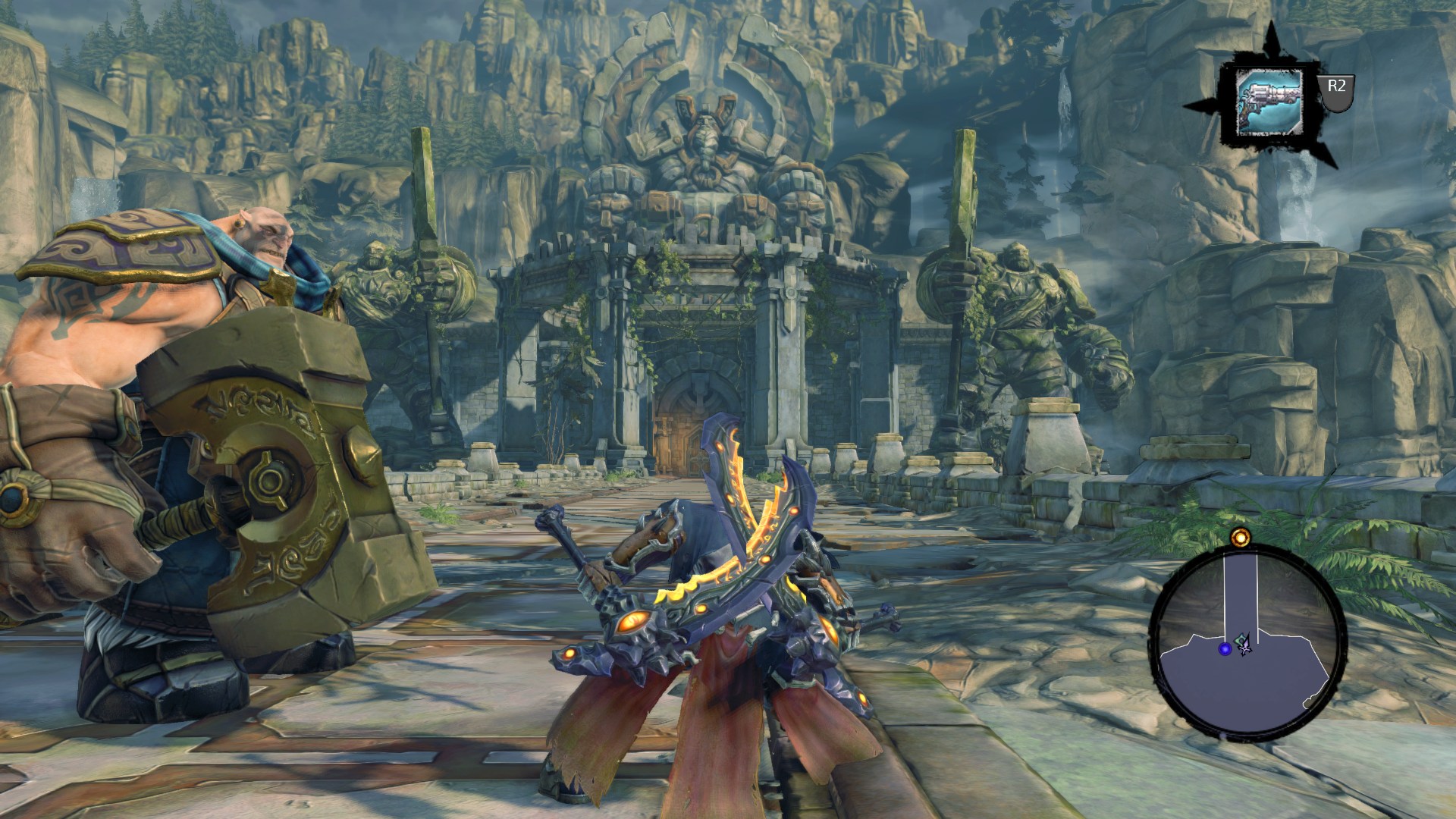
Across the four acts, you’ll meet a range of interesting characters and creatures, some of whom you will ally with for short sections. Voice work is fantastic with some big names listed in the credits. In dialogue, Death is fantastically sardonic and threatening at the same time.
The Darksiders franchise has always been described as derivative, with mechanics lifted straight from other action-adventure games. To an extent that is true. However, while elements of the game (such as combat, traversal and puzzles) may not necessarily improve on their source material, the developers have successfully combined these varied gameplay mechanics into one cohesive and entertaining package. The core gameplay revolves around exploring “dungeons”, accessed from an over-world zone, to unlock new traversal abilities which in turn drive the plot forward by enabling access to new areas, a design borrowed from Nintendo’s Zelda franchise. Death’s traversal move-set for navigating the environment comes straight from the Prince of Persia series. An incredibly nimble Death is capable of scrambling up (and along) walls, moving swiftly across narrow beams, making great leaps or swimming through murky depths. In the more open areas, you can summon your trusty steed "Despair", or use fast-travel to move quickly between discovered locations.

Navigating the game’s many dungeons will see you scrambling up and along walls while dodging hazards, swimming through sunken ruins and occasionally commandeering a ride. The complexity of each dungeon varies, but most will require a bit of thought and timing to get through, especially when searching for secrets.
Combat borrows heavily from the God of War series, with primary and secondary weapon attacks chained together into combos, along with the ability to dodge and counterattack enemies. A pair of upgradable skill-trees further modifies your combat abilities with one focusing on direct combat moves, the other on summoning minions and magical attacks. Dungeons look fantastic and appropriate for the setting, but are themselves designed as environmental puzzles. Navigating them requires a combination of traversal moves and unlocked skills such as the “Deathgrip” (a grapple hook) or the “Voidwalker” (essentially a portal gun). The RPG elements of the game are kept simple with a basic leveling system - granting points to put the skill-tree described above - and a loot system similar to those found in any Diablo-esque ARPG. Both chests and slain enemies have the chance to drop a range of weapons and armour pieces, which tend to buff specific play styles, such as direct combat or magic use. The most versatile of these items are “possessed weapons”, upgraded by sacrificing other items. A careful selection of sacrificed enchanted items allows the player to imbue up to four selected attributes to these possessed weapons, which can result in some very powerful - and at times overpowered - gear. As with many open-world titles, there is an abundance of collectibles and secret chests to discover within the game world; rewards for exploring the environment and swinging a scythe at any object that can be destroyed.

What starts as simple traversal and switch puzzles, quickly escalates in complexity as your repertoire of skills increases. A brief segment of time-travelling in the last act of the game changes the appearance of the environment you need to navigate.
The player needs to master all of the above mechanics to progress and challenge the game’s many bosses. These encounters range from small sub-bosses in dungeons, to the massive opponents at the end of each act. The constant shift between skillful combat, careful traversal, and head-scratching puzzles during minute-to-minute gameplay ensures the player is always kept engaged. All the gameplay elements are combined with an intriguing - if at times poorly-paced - story which takes place across visually-striking locations.
The core gameplay revolves around exploring “dungeons”, accessed from an over-world zone, to unlock new traversal abilities which in turn drive the plot forward by enabling access to new areas, a design borrowed from Nintendo’s Zelda franchise.
Unfortunately, while the ending of the game brings a conclusion to Death’s conflict with the primary antagonist, it feels somewhat abrupt in context of the overarching plot of resurrecting humanity and saving his brother War. To some extent, the ending of the first game provides a more satisfying conclusion regarding the fate of the Horsemen, sets up future games, and would be well worth playing to compliment the 2nd game.
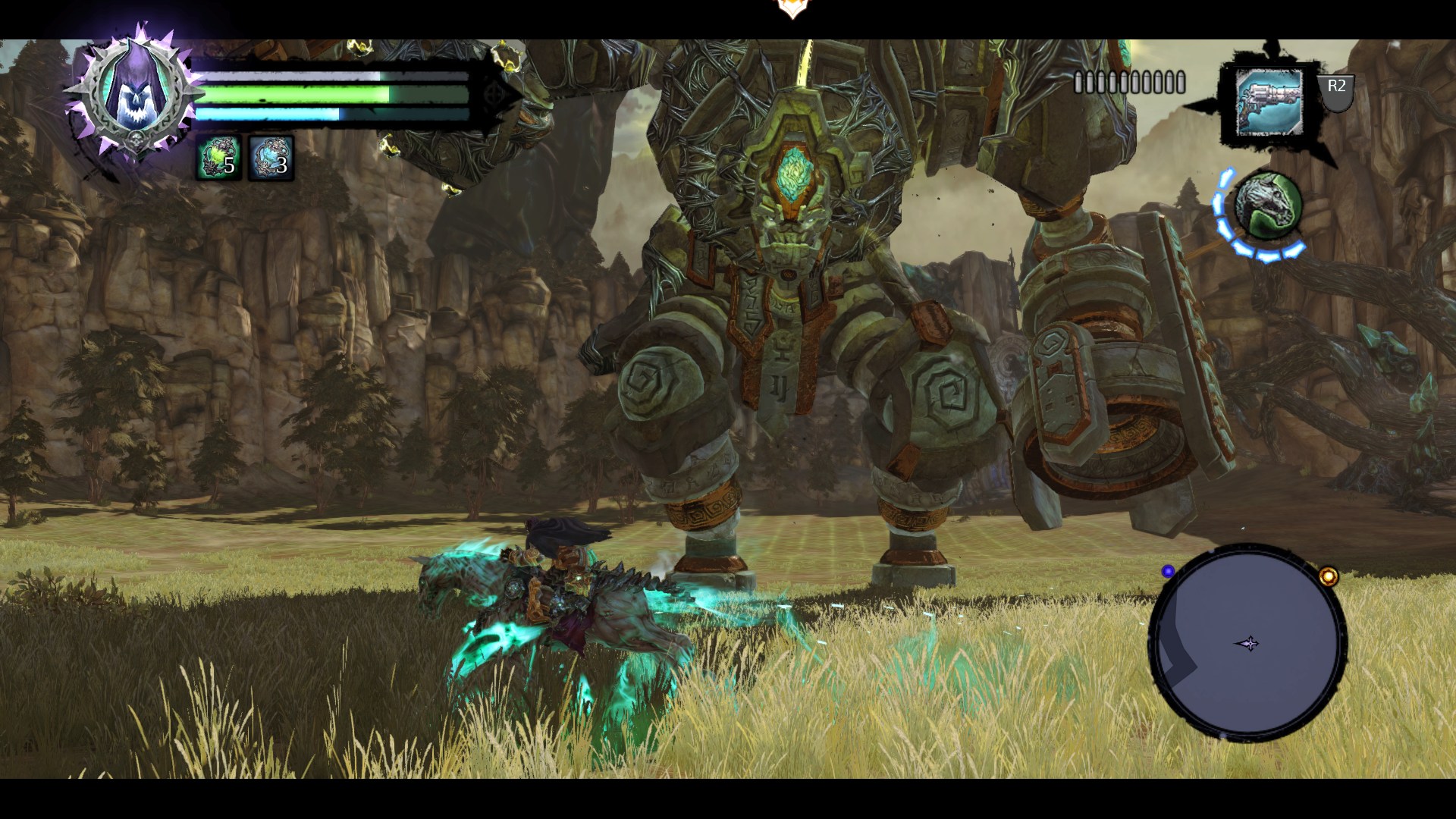
While some boss battles simply involve inflicting sufficient damage, many require careful observation and a combination skills to defeat.
What is the Deathinitive Edition?
For those considering playing this for this first time, those who’ve never played the DLC content, or just fans of the series looking to re-experience the game, the Deathinitive Edition has a host of changes that improve upon the original. The bulk of the changes have gone into improving the presentation and the game now runs at a native 1080p at a fairly consistent 30 FPS with none of the consistent screen-tearing found in the original. Along with the bump in resolution, the environment and character models have all seen added details and improved textures. While the stylized artwork of Darksiders 2 still holds up, the increase in resolution ensures finer details are more apparent in the environment and on character models. The increase in texture detail and new objects added to the game world, such as trees and grass in the opening act, make the open-world sections feel more vibrant and detailed, rather than appearing as barren expanses of flat textures. There’s also been a bump in the quality and density of environmental effects such as smoke, mist, snow and rain which really improve the atmosphere. Unfortunately there are some inconsistencies, such as the inclusion of a heat shimmer in areas of molten rock, but the removal of a radiant bloom effect which was present in the last-gen versions.

Improvements made to the original game include the addition of more complex environment geometry, new textures and more foliage in open-world areas; all coupled with an increase in the quality of effects such as mist and heat shimmer. Character models have also received a considerable amount of attention, best seen in the dialogue or cutscenes.
The most striking upgrade to the Deathinitive Edition is the new lighting engine which generates more realistic illumination on both the environment and character models, and includes higher quality shadows. Shadows are now dynamically generated based on available light sources (be it sunlight or a flaming brazier), and more light sources have been added to many scenes. Whether swinging a glowing pair of scythes, casting magic, or walking past a light source, the environment and character models are accurately lit and it looks fantastic in the middle of combat. However, there are times when the new lighting technique can reduce the impact of previous design choices. The radiant orange glow of the fiery “Cauldron” and blue glow of the water-based “Drenchfort” dungeons seem muted when compared to the last-gen version. Overall, the new lighting improves most areas of the game and brings the visuals closer to that of current-gen titles.
While the stylized artwork of Darksiders 2 still holds up, the increase in resolution ensures finer details are more apparent in the environment and on character models.
These improvements do come at a price, however. The game is running at a locked 30FPS rather than the 60FPS that we want form most remasters. The opening act also suffers from minor stuttering and screen tear in a few location. From Act 2 onward, there were only rare performance issues, and the game stuck to a solid v-synced 30FPS.

Whether in dimly-lit catacombs or fiery trap-filled dungeons, the new lighting engine allows for far more realistically lit surfaces and character models. An increased number of light sources cast dynamic shadows and higher quality effects are introduced, such as the lightning storms when you visit a ruined Earth in Act 3.
The Deathinitive Edition also claims that all DLC has been integrated into the original game and rebalanced. This is true to a point, but not as “integrated” as I’d hoped for. The first inclusion, which I originally dismissed as inessential, was the distribution of pre-order weapons and armour throughout the game. This ended up making a considerable difference to my playthrough as instead of being accessible from the beginning as basic level-5 items - as was the case with the original game - they are level-scaled and allocated to sub-bosses or secret treasure chests that would have previously dropped random loot. This lead to me actively searching for these items and defeating optional bosses, as many items were useful up until the end of the game.
The biggest additions are the three mini-campaigns, each of which add around 2 hours of gameplay and take place in a unique location. Unfortunately, these are not “integrated” in the sense of being accessible from the main game. They are unlocked at the end of Acts 2, 3 and 4; you then have to save, quit, and load up the mini-campaign. They are introduced after receiving the appropriate skill, scaled according to the expected player-level, and are a great way of expanding the final acts which feel considerably shorter and less developed than the previous two. All three mini-campaigns have received the same attention as the rest of the game; they look improved and run smoothly. The Abyssal Forge and Demon Lord Belial DLC were both known to have numerous glitches, performance issues and could both lock up consoles and affect save files. In the Deathinitive Edition, both these quests have been patched and played out without issue. It should also be noted that any performance issues and crashes that were associated with Act 3 and 4 of the base game have also been patched.
The biggest additions are the three mini-campaigns, each of which add around 2 hours of gameplay and take place in a unique location.
Finally, a new “Deathinitive” difficulty mode has been added, which is a great way to challenge veteran players or encourage another playthrough in the NG+ mode. For seasoned players, “Apocalyptic” was a good starting point for a new character, but difficulty in the NG+ mode became trivial with a well-equipped and high-level Death.

The Abyssal Forge sends Death to a hellish swamp to assist the Mad Smith in destroying an army of self-replicating constructs. This DLC focuses on the “Soul Splitter” ability and requires the player to frequently alternate between two locations to solve puzzles.

Argul’s Tomb sends Death into a wind-swept mountain tomb to discover the source of deposed King Argul’s power. The portal-generating “Voidwalker” is the focus of this DLC’s puzzles.

Short, yet tough; The Demon Lord Belial DLC sends you back to a ruined Earth to find evidence of surviving humans and defeat the titular demon lord. The mission strips you of all but the basic “Deathgrip” ability and focuses on navigating the ruined streets and subways with tough combat against hordes of demons.
Conclusion
Worked on by a small team consisting of some of the original developers, the Darksiders 2 Deathinitive Edition is a great value remaster given its low price point. While not running at 60FPS, considerably more effort has been put into the remaster than first impressions suggest. The increase in resolution and texture detail make the stylized visuals, for both environments and character models, considerably sharper. An increase in environment geometry and new assets greatly improve the appearance of areas that looked bland and empty in the last-gen release. The new lighting system results in some fantastic looking scenes that give the game an appearance more in line with current-gen titles. Outside of the opening areas of Act 1, performance remains at a solid 30FPS; a massive improvement over the inconsistent performance and constant screen-tearing in the original. The integration of all the previous DLC has been done well, changing up the standard loot progression by making weapons and armour useful throughout the game. The 3 DLC mini-campaigns are unlocked at logical points - which help bulk up the final two acts - and are scaled to the expected player level. Whether one is a long-time fan of the series, or a newcomer looking for a great action-adventure-RPG hybrid, Darksiders 2 tells an epic story while successfully blending the gameplay mechanics of multiple other games. The Deathinitive Edition is a great entry point into the franchise and considerably improves the last-gen experience.


Please login to post comments.
More Reviews

Review: Elden Ring: Tarnished Edition (Switch 2)
What can I say about Elden Ring that hasn’t already been said? From Software’s magnum opus originally...
21-09-26 Read more
Review: The Blood Of Dawnwalker
Rebel Wolves’s The Blood of Dawnwalker has often been compared to The Witcher III: Wild Hunt from fellow...
15-09-26 Read more
Review: Marvel's Wolverine
When I think about some of PlayStation Studios’ most consistent developers, Insomniac Games always ranks...
10-09-26 Read more
Review: Dumb Ways to Build
Originally a public service announcement which discouraged the Australian public from thoughtless activity...
09-09-26 Read more
Review: Orbitals
Booting up Orbitals for the first time, I was immediately hit by a warm wave of nostalgia like the food...
08-09-26 Read more

Review: Onimusha: Way of the Sword
It’s a good year to be a fan of action games, and an even better year to be a fan of Capcom. After delivering...
31-08-26 Read more

Review: Spa Weekend
I was invited to attend an exclusive preview screening of the film Spa Weekend on August 20th at Sandton...
21-08-26 Read more
Review: SanDisk Extreme Fit USB-C Flash Drive (128GB)
The SANDISK Extreme Fit USB-C™ Flash Drive - 128GB is something that you might not even believe exists...
21-08-26 Read more
Review: Ground Zero Hero
It’s not often that a game comes around with the ability to grip you into a mindless cycle of absolute...
19-08-26 Read more

Review: Marvel Tokon: Fighting Souls
You know, if anybody was going to make a Marvel themed arcade fighting game in 2026, I’m glad Arc System...
18-08-26 Read more

Overview

Add to cart
Developer
Vigil Games
Publisher
Nordic Games
Platform
PC, PlayStation 4, Xbox One
Release date
27 October 2015