Latest Updates
Who's Online

Please sign in to add comments

Cart Contents
| Item: | Price: | Qty: |
|---|---|---|
| Total: R 0.00 | ||
User Content
Latest Poll
Review
Ashen
Lighter Souls
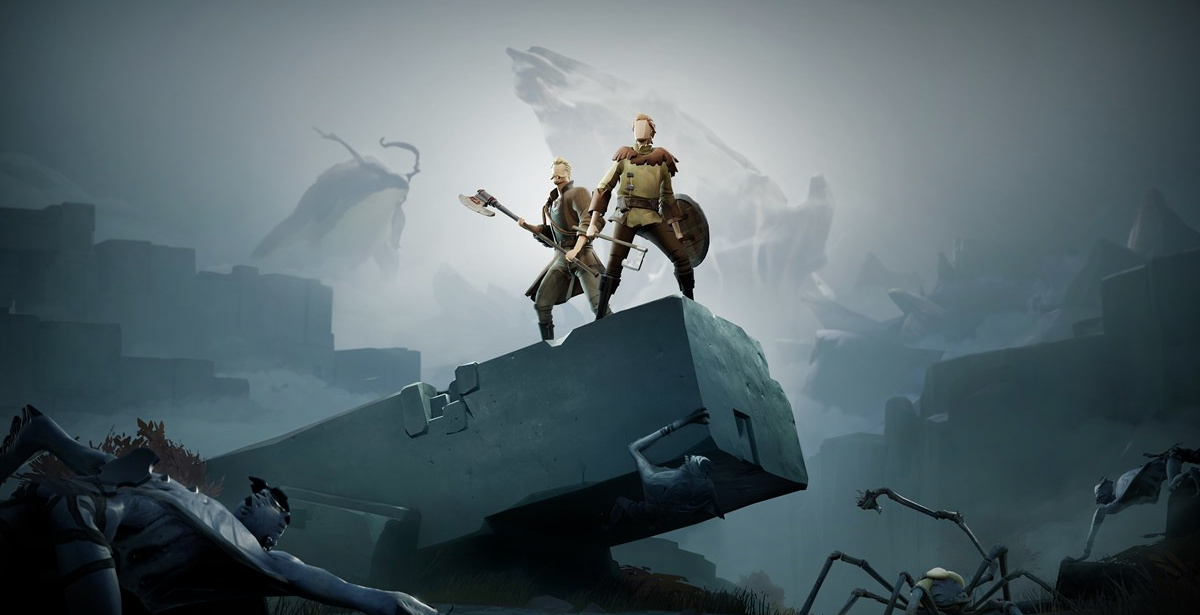
In a year with so many massive AAA releases, Ashen is yet another enjoyable indie game that flew below everyone’s radar. Developed by New Zealand studio A44 and released on Xbox One and PC, it finally gives Microsoft fans their own exclusive ‘Souls-like, albeit one that doesn’t consider wallowing in oppressive misery an essential feature. Ashen wears its inspiration on its sleeve for all to see but manages to provide a more uplifting and accessible experience, along with a novel take on multiplayer.

The overarching story is the usual pretentious bollocks. A realm consumed by darkness is brought back to life by the arrival of the “Ashen”, a giant luminous (incandescent?) bird that lands on the world tree. As it ages and dies, the Ashen’s final three breaths create three distinct ages, the last one being the arrival of man (let me know if you’ve heard this somewhere before). Your slightly-customisable, mostly-featureless human protagonist witnesses the beginning of the rebirth cycle and must assist several important characters of yore in stopping the forces of darkness, ensuring a new cycle of light begins.
...I never paid too much heed to the overarching story, preferring to spend my time assisting several companions that slowly settle and develop the ramshackle town, “Vagrant’s Rest”...
Honestly, I never paid too much heed to the overarching story, preferring to spend my time assisting several companions that slowly settle and develop the ramshackle town, “Vagrant’s Rest”, which you establish in the opening hours. Your townsfolk are not only essential to character progression – providing crafting facilities, equipable talismans, and rewarding attribute upgrades for completing their sidequests – they’ll also join you as AI companions while out exploring the world. Each has a distinct personality and unravelling their backstories reveals much about the long history of the world and the fall of the previous empire. They function similarly in battle, but I was nonetheless thrilled to see who would be joining me and always prioritised their quests above all else.

If you’ve played a ‘Souls game - or any other action-RPG governed by a stamina meter - you’ll know what you’re in for. Ashen sticks close to the basic template but focused entirely on melee weapons. There’s a choice between blunt weapons, which can stun, or bladed weapons, which have a critical-damage chance (in one- or two-handed variants), and you can equip a range of armour and shields, with the usual protection vs. stamina trade-off. By collecting “scoria” (i.e. souls) from fallen foes - which, of course, drops on death - you can upgrade weapons, your lantern (a necessity for exploring many dark areas), craft short-lived potions, or upgrade your sap gourd (i.e. estus flask). You can also craft spears – Ashen’s one concession to fans of ranged attacks – but these are best saved for aggroing foes, picking off weaker ranged attackers, and occasionally cheesing an annoying enemy. As you progress through Ashen’s world – which is made up of several large, open areas connected in a linear fashion – you discover ritual stones (i.e. bonfires) that you return to after dying and act as fast-travel points later. The game even has a map and marker system, removing some of the thrill of exploration but it only ever points you in the general direction.
Ashen follows the design mantra of “if you can see it, you can go there”, and the fluid traversal and platforming moveset make exploring the sprawling, oversized world enthralling, rather than frustrating.
There are no offensive skills or spells to unlock, other than weapon-specific combos, but passive abilities are gained by socketing up to four talismans into your charm of choice (which also offer different perks). These streamlined mechanics do feel limiting as you progress – completing sidequests for stat boosts, upgrading weapons, and finding rare feathers are the only way to improve your survivability – but Ashen offsets this with an increased focus on traversal and exploration, rewarding the inquisitive with large scoria stashes and rare crafting items. Platforming is a big part of Ashen and, unlike its contemporaries, it works. It can feel clunky, sure, but your character can leap huge distances, grab ledges, and mantle with ease. Ashen follows the design mantra of “if you can see it, you can go there”, and the fluid traversal and platforming moveset make exploring the sprawling, oversized world enthralling, rather than frustrating.

Combat is forgiving, at first, thanks to the companion system (which you can disable if you really want). As with any ‘Souls-like game, pattern recognition and crowd-management are key, but having a companion that can draw the attention of your foes is always a boon. That said, Ashen’s companions can both make and break the experience. Sometimes you’ll watch them kite enemies and expertly dodge blows, opening them up for you to attack from the rear. Other times, they’ll get stuck on a piece of scenery or fling themselves off a cliff to their doom because the path-finding bugged out. When in combat yourself, character movement is fluid, if a little floaty, while weapon impacts feel suitably meaty and satisfying. Occasional difficulty spikes, particularly when first traversing the Seat of the Matriarch and Palace of Lathyrus gauntlets are an issue, but the combination of level design and stunning aesthetics cemented these as some of the best dungeons I’ve tackled in years.
Occasional difficulty spikes, particularly when first traversing the Seat of the Matriarch and Palace of Lathyrus gauntlets are an issue, but the combination of level design and stunning aesthetics cemented these as some of the best dungeons I’ve tackled in years.
If you’re feeling overwhelmed and stuck - such as I was tackling the final boss - turning to multiplayer is often the solution. The multiplayer system in Ashen ranges from incredibly rewarding to annoying, entirely dependent on the player you encounter. The system is described as “passive” and works by swapping out the control of your AI companion with another player currently tackling the same quest or region. I’ve had other players let me take the lead and join me in hunting for collectibles around the world, whereas other times I had players rush from objective to objective, leap into combat like idiots, and leave me behind. The best way around this is to invite a friend but this involves defining a unique session code they must enter, rather than simply inviting them into your game. If this is not your cup of tea, you can disable multiplayer entirely and leave your companion under AI control.

Ashen aims for distinctive, stylised visuals over technical prowess, and it works. Simple geometry and flat textures work well thanks to larger-than-life structures; striking, contrasting colours; and a dynamic lighting system that comes into its own when you're exploring the many dark caves and tombs, lantern in hand and hostile eyes glowing in the distance. Environmental diversity is a big draw and every zone both looks and feels unique. Performance, even on a base Xbox One, is solid with only temporary stutters when you first enter a more complex area. Unfortunately, a lack of enemy variety – in terms of both design and behaviour - stands out in stark contrast to the myriad of environments.
Simple geometry and flat textures work well thanks to larger-than-life structures; striking, contrasting colours; and a dynamic lighting system that comes into its own when you're exploring the many dark caves and tombs, lantern in hand and hostile eyes glowing in the distance.
Some overwrought dialogue aside, the voice work is excellent, environmental sounds immersive, and the cries of your enemies and the clash of weapons impactful. By far, the most memorable part of the soundscape is the music. Ashen, although often a tension-filled experience, is about bringing light and serenity back to the world and the music always captures this feeling, especially when returning to Vagrant’s Rest. During your travels in the dark parts of the world, the music is subdued, allowing ambient audio to dominate, ramping up the tension levels.

I’m not a huge ‘Souls fan, at least not since bouncing off Dark Souls 2, and I tend to shy away from these games as I get older; however, even though Ashen has some difficulty spikes that remind me of those games, the vibrant world, likeable characters, companion system, and soothing soundtrack all kept me coming back. Simply watching my community grow and take shape between excursions was fulfilling and provided a far more uplifting experience than any number of its peers. It’s not quite as forgiving as games like Lords of the Fallen, but Ashen could still provide a great entry point into the genre for those who have been avoiding it, especially if you can find a good coop partner.


There are 4 comments
 Lurch
Lurch


Please login to post comments.
More Reviews

Review: Valor Mortis
Now here’s an interesting combination. Developer One More Level’s (of Ghostrunner fame) Valor Mortis...
16-10-26 Read more

Review: Pixel Washer (Early Access)
There’s always something uniquely satisfying about games that’s sole focus is on making something that...
14-10-26 Read more
Review: Hellraiser: Revival
I’ve been a fan of the Hellraiser movies ever since I snuck a VHS rental (yeah, remember those?) of ...
13-10-26 Read more
Review: The Sinking City 2
The Sinking City 2, from Ukrainian developer Frogwares, is less of a sequel than it is a Lovecraftian...
12-10-26 Read more

Review: Fire Emblem: Fortune's Weave
It’s legitimately very hard to believe that it’s been seven whole years since Fire Emblem: Three Houses...
05-10-26 Read more
Review: Control Resonant
It’s been seven years since the events of developer Remedy Entertainment’s original 2019 Control title...
02-10-26 Read more

Review: Gears of War: E-Day
Xbox’s flagship Gears of War series has had a bit of an identity crisis over the last decade. After ...
01-10-26 Read more

Review: Gachiakuta
Gachiakuta took the world by storm when it first aired from July to December 2025. With its gritty animation...
28-09-26 Read more

Review: Elden Ring: Tarnished Edition (Switch 2)
What can I say about Elden Ring that hasn’t already been said? From Software’s magnum opus originally...
21-09-26 Read more
Review: The Blood Of Dawnwalker
Rebel Wolves’s The Blood of Dawnwalker has often been compared to The Witcher III: Wild Hunt from fellow...
15-09-26 Read more

Overview
Developer
A44
Publisher
Annapurna Interactive
Platform
PC, Xbox One
Release date
7 January 2019