Latest Updates
Absolute Batman - Hush [Second Hand] now available pre-owned.
Absolute Green Lantern Rebirth (HC) [Second Hand] now available pre-owned.
Hannah Montana: Rock Out The Show (PSP Essentials) now available pre-owned.
KnightFall500 has just posted to What was the last game you finished?
KnightFall500 has just posted to What was the last game you finished?
KnightFall500 has just posted to Games with no threads: News and Trailers
KnightFall500 has just posted to Games with no threads: News and Trailers
Tea has just liked Review: Fire Emblem: Fortune's Weave
Who's Online

Please sign in to add comments
10 October at 12:31
10 October at 11:39
09 October at 16:07
09 October at 15:22
09 October at 14:36
09 October at 14:18
09 October at 14:04
09 October at 13:24
09 October at 13:11
09 October at 13:06
Cart Contents
| Item: | Price: | Qty: |
|---|---|---|
| Total: R 0.00 | ||
User Content
Latest Poll
Forums
 The SPACE News and Discussion thread!
Author
Post


https://twitter.com/MarsCuriosity?tw_i=232348380431544320&tw_e=screenname&tw_p=tweetembed
NASA has a Mars Twitter feed for images

NASA has a Mars Twitter feed for images

iPhone processor way outguns Mars Curiosity rover's
And then to celebrate 50 years of NASA's Kennedy Space Center Google has created a street view gallery of the space center.
http://maps.google.com/help/maps/streetview/gallery.html#!/nasa
If you have the time I recommend checking out some of the other gallery collections too
And then to celebrate 50 years of NASA's Kennedy Space Center Google has created a street view gallery of the space center.
http://maps.google.com/help/maps/streetview/gallery.html#!/nasa
If you have the time I recommend checking out some of the other gallery collections too
Thought this was interesting.
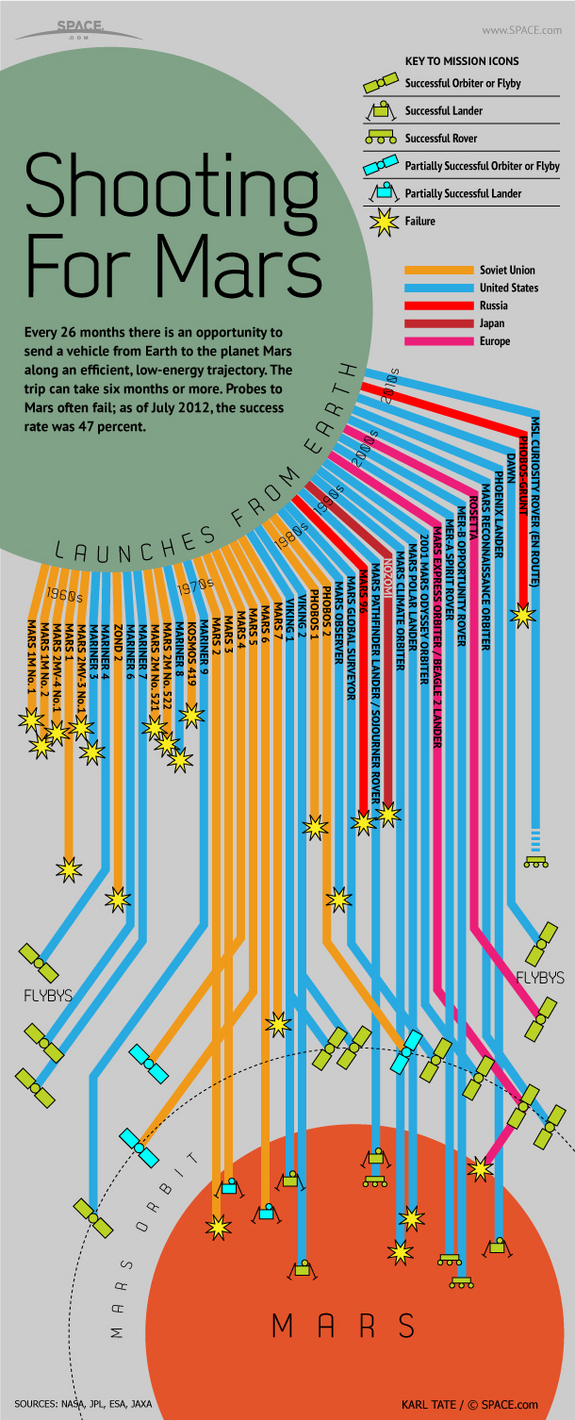
Source SPACE.com: All about our solar system, outer space and exploration
Source SPACE.com: All about our solar system, outer space and exploration
Hubble Watches Star Clusters on a Collision Course
Astronomers using data from NASA's Hubble Space Telescope have caught two clusters full of massive stars that may be in the early stages of merging. The clusters are 170,000 light-years away in the Large Magellanic Cloud, a small satellite galaxy to our Milky Way.
What at first was thought to be only one cluster in the core of the massive star-forming region 30 Doradus (also known as the Tarantula Nebula) has been found to be a composite of two clusters that differ in age by about one million years.
The entire 30 Doradus complex has been an active star-forming region for 25 million years, and it is currently unknown how much longer this region can continue creating new stars. Smaller systems that merge into larger ones could help to explain the origin of some of the largest known star clusters.
Lead scientist Elena Sabbi of the Space Telescope Science Institute in Baltimore, Md., and her team began looking at the area while searching for runaway stars, fast-moving stars that have been kicked out of their stellar nurseries where they first formed. "Stars are supposed to form in clusters, but there are many young stars outside 30 Doradus that could not have formed where they are; they may have been ejected at very high velocity from 30 Doradus itself," Sabbi said.
She then noticed something unusual about the cluster when looking at the distribution of the low-mass stars detected by Hubble. It is not spherical, as was expected, but has features somewhat similar to the shape of two merging galaxies where their shapes are elongated by the tidal pull of gravity. Hubble’s circumstantial evidence for the impending merger comes from seeing an elongated structure in one of the clusters, and from measuring a different age between the two clusters.
According to some models, the giant gas clouds out of which star clusters form may fragment into smaller pieces. Once these small pieces precipitate stars, they might then interact and merge to become a bigger system. This interaction is what Sabbi and her team think they are observing in 30 Doradus.
Also, there are an unusually large number of high-velocity stars around 30 Doradus. Astronomers believe that these stars, often called "runaway stars" were expelled from the core of 30 Doradus as the result of dynamical interactions. These interactions are very common during a process called core collapse, in which more-massive stars sink to the center of a cluster by dynamical interactions with lower-mass stars. When many massive stars have reached the core, the core becomes unstable and these massive stars start ejecting each other from the cluster.
The big cluster R136 in the center of the 30 Doradus region is too young to have already experienced a core collapse. However, since in smaller systems the core collapse is much faster, the large number of runaway stars that has been found in the 30 Doradus region can be better explained if a small cluster has merged into R136.
Follow-up studies will look at the area in more detail and on a larger scale to see if any more clusters might be interacting with the ones observed. In particular, the infrared sensitivity of NASA’s planned James Webb Space Telescope (JWST) will allow astronomers to look deep into the regions of the Tarantula Nebula that are obscured in visible-light photographs. In these areas cooler and dimmer stars are hidden from view inside cocoons of dust. Webb will better reveal the underlying population of stars in the nebula.
The 30 Doradus Nebula is particularly interesting to astronomers because it is a good example of how star-forming regions in the young universe may have looked. This discovery could help scientists understand the details of cluster formation and how stars formed in the early universe.
The members of Sabbi's team are D.J. Lennon (ESA/STScI), M. Gieles (University of Cambridge, UK), S.E. de Mink (STScI/JHU), N.R. Walborn, J. Anderson, A. Bellini, N. Panagia, and R. van der Marel (STScI), and J. Maiz Appelaniz (Instituto de Astrofisica de Andalucia, CISC, Spain).
The Hubble Space Telescope is a project of international cooperation between NASA and the European Space Agency. NASA's Goddard Space Flight Center in Greenbelt, Md., manages the telescope. The Space Telescope Science Institute (STScI) in Baltimore, Md., conducts Hubble science operations. STScI is operated by the Association of Universities for Research in Astronomy, Inc., in Washington, D.C.
Source
NASA decides to send robotic seismologist to Mars
Do Marsquakes rock the Red Planet? How big is its core? These and other questions should be answered by the next mission in NASA's Discovery programme, which aims to put top-quality science into space on a shoestring budget - in relative terms, at least.
The $425 million InSight mission, to be run from NASA's Jet Propulsion Laboratory in Pasadena, California, was chosen today as the next Discovery-class mission - edging out competing proposals to float a craft on a sea of methane and ethane on Saturn's moon Titan, and to land repeatedly on a comet.
Previous Discovery missions include Dawn, which after a rendezvous with the asteroid Vesta is now heading for the dwarf planet Ceres, and Kepler, a space telescope that has bagged an impressive haul of new extrasolar planets.
The Mars mission announcement comes hot on the heels of the Curiosity rover, which landed on the Red Planet earlier this month on a quest for signs of habitability on the Martian surface. Due to budget constraints, though, the $2.5-billion rover may mark the grand flagship missions to Mars. Instead NASA seems poised to send more targeted, low-cost projects - not unlike InSight.
Based on the same lander used for the earlier Phoenix mission, which studied water ice in the Martian Arctic, InSight will instead be sent to near the planet's equator, arriving in September 2016.
It will carry three main instruments, including a seismometer called SEIS that will be placed onto the planet's surface. A previous attempt to record seismic activity on Mars, during the 1976 Viking 2 mission, failed because the seismometer was on the lander's legs, where it was buffeted by wind.
A probe called HP3, meanwhile, will burrow about 5 metres down into the surface, recording flows of heat from the planet's interior. Back on the lander, an instrument called RISE will measure the planet's wobbles on its axis in response to the sun's gravity by measuring the Doppler shift of radio communications with Earth.
Putting these measurements together should provide a better picture of how Mars formed and has evolved, and reveal the current behaviour of its internal structures. For example, project scientists hope to discover the cause of landslides that have been spotted from space. Asks Jim Green, NASA's director of planetary science: "Are those occurring because of quakes, or melting?"
The decision to go with InSight over the Titan Mare Explorer will leave NASA without a craft studying the outer solar system from 2017, when the Cassini orbiter is due to crash into Saturn's atmosphere.
According to NASA science chief John Grunsfeld, in scientific terms there was little to choose between InSight and its two rivals. However, the Mars mission looked like a surer bet to stick within its budget. In the current fiscal environment, preventing cost overruns is crucial, Grunsfeld told reporters in a teleconference to announce the decision: "Otherwise, the Discovery programme gets stretched out and there are fewer opportunities."
Source
How sad 
Neil Armstrong, First Man on the Moon, Dies at 82
Read more: http://www.universetoday.com/97040/neil-armstrong-first-man-on-the-moon-dies-at-82/#ixzz24eMz7tdO
Neil Armstrong, First Man on the Moon, Dies at 82
Read more: http://www.universetoday.com/97040/neil-armstrong-first-man-on-the-moon-dies-at-82/#ixzz24eMz7tdO
KnightFall500  03 July 2009
14588
03 July 2009
14588
03 July 2009
14588
NASA Launches Twin Probes to Study Earth’s Radiation Belts
Read more: http://www.universetoday.com/97123/nasa-launches-twin-probes-to-study-earths-radiation-belts/#ixzz256W4AC8X
Read more: http://www.universetoday.com/97123/nasa-launches-twin-probes-to-study-earths-radiation-belts/#ixzz256W4AC8X
Telescope finds sugar near star
Santiago - Astronomers using a powerful radio telescope in Chile said that they had discovered sugar molecules, one of the building blocks of life, orbiting a young star similar to the Sun.
"This is the first time sugar been found in space around such a star," the European Southern Observatory (ESO), which is administering the project, said on Wednesday.
The astronomers found glycolaldehyde, a sugar compound described as essential to the existence of life, in the gas surrounding the star, located some 400 light-years from Earth, it said.
The discovery "shows that the building blocks of life are in the right place, at the right time, to be included in planets forming around the star".
Because the star is similar to our sun, the finding "shows that some of the chemical compounds needed for life existed in this [solar] system at the time of planet formation," the ESO said.
The discovery was made possible by the high sensitivity of the Atacama Large Millimeter/submillimeter Array (Alma), an international project still under construction and slated for completion in 2013.
Alma has 66 antennas exploring the universe via radio waves emitted by galaxies, stars and other bodies not captured by optical and infrared telescopes, which only receive light.
The ESO operates three sites in Chile.
The Very Large Telescope (VLT) array - a cluster of four telescopes that can view objects four billion times fainter than those visible to the naked eye - is housed at the ESO's Paranal site in Chile's Atacama Desert.
The ESO is supported by Austria, Belgium, Brazil, Britain, the Czech Republic, Denmark, France, Finland, Germany, Italy, the Netherlands, Portugal, Spain, Sweden and Switzerland.
Caught on webcam by amateur astronomer George Hall in Dallas, Texas, the impact on Jupiter that occurred yesterday at 6:35 a.m. CT can be clearly seen in the brief video above as a bright flash along the giant planet’s left side.
Read more: http://www.universetoday.com/#ixzz26HTGn2TM
Video link: http://www.flickr.com/photos/19299984@N08/7976507568/