Latest Updates
Who's Online

Please sign in to add comments

Cart Contents
| Item: | Price: | Qty: |
|---|---|---|
| Total: R 0.00 | ||
User Content
Latest Poll
Review
Uncharted 4: A Thief's End
Innate Goodness

Pirate legends, family drama, and yet another globetrotting adventure are the highlights of Nathan Drake’s final outing. Expectations were high for this title, given the reception to the original trilogy (or at the very least, Among Thieves), and the incredible technical prowess and writing quality seen in The Last of Us. Thankfully, A Thief's End is the most refined Uncharted game to date and, for many, will likely be the best. Described by the developers as the final adventure for Nathan Drake, it often feels like a lengthy “best of” compilation of set pieces inspired by the previous games. It even has a fantastic ending sequence and epilogue that concludes the present story arc – a rare treat in most videogames.

Nathan Drake may be considerably older in this game but nonetheless finds himself in increasingly ridiculous and perilous situations that would severely tax a much younger man.
It should come as no surprise to those who followed the extensive marketing campaign that Nathan now has a long-lost older brother, Sam. While jarring at first - especially in light of the opening chapters of the third game, which featured a teenage Nate - the introduction of Sam serves to drive the plot forward, delve deeper into the “Drake” family history, and create tension between established characters that many players will feel deeply invested in (especially if they have played through all of the trilogy).
...the introduction of Sam serves to drive the plot forward, delve deeper into the “Drake” family history, and create tension between established characters...
A Thief's End is primarily a game about family. From prologue to epilogue, this new treasure hunt serves as means to delve into Nathan’s relationship with both the family he has created, and his actual flesh and blood. The introduction of Sam, the reasons Nathan hid his existence, and his response to the reunion, all tie nicely into the overarching narrative and, coupled with some great flashback sequences, more than justify the modification to the backstory established in the previous games. These playable flashback sequences serve as the game’s tutorial levels, introduce the dynamics of Nathan’s relationship with Sam, and provide the player with some much needed answers as to how Nathan possesses such incredible knowledge of historical figures, artifacts, and unsolved legends.
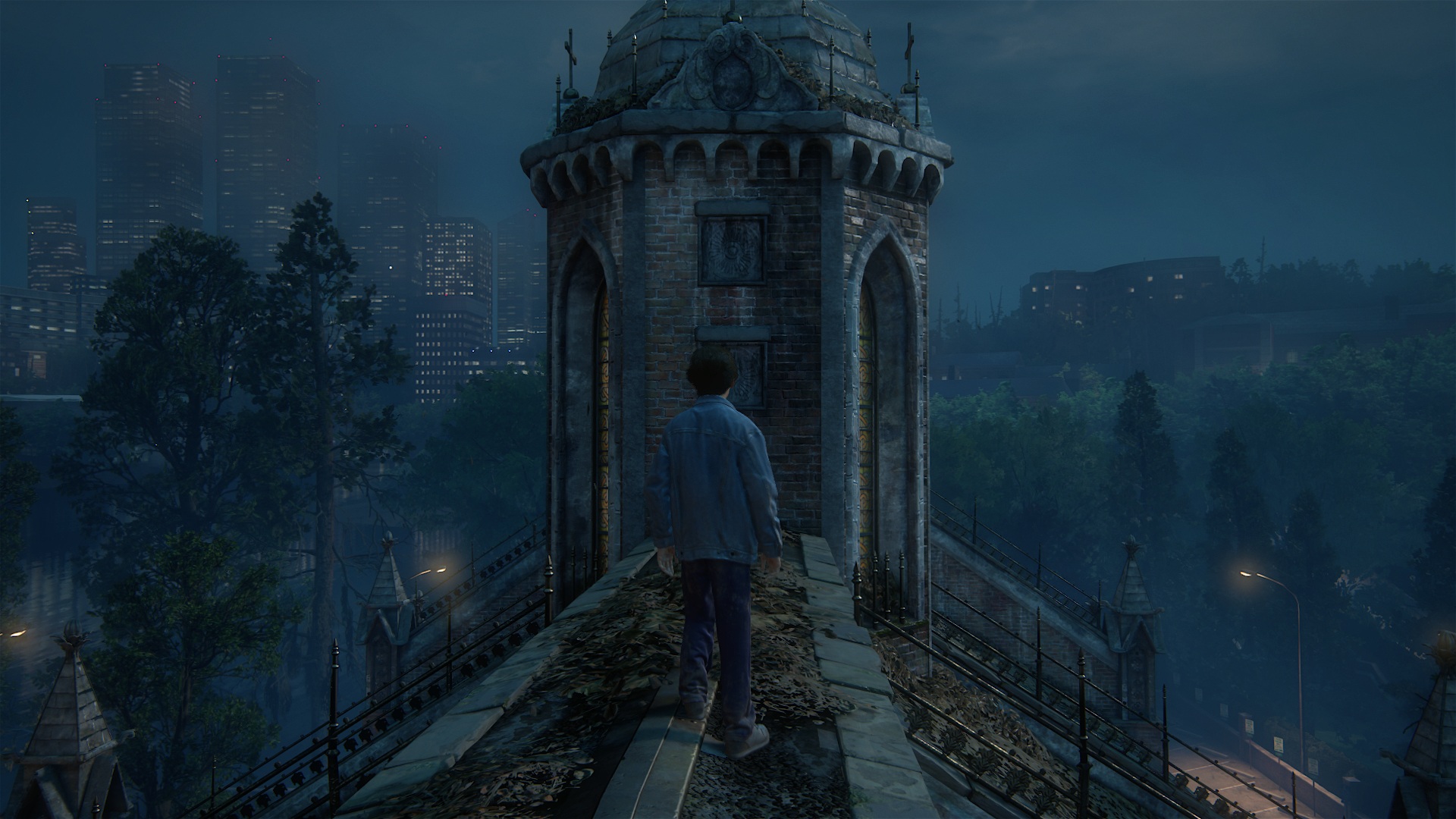
A Thief's End kicks off with a flashback sequence that introduces Nathan’s brother. Each subsequent flashback slowly unravels the history of the “Drake” family.
Equally compelling – if a little overacted – is the primary antagonist, Rafe. Ambitious and obsessed, yet incredibly insecure, he represents the dangers of abandoning everything to pursue achievements. A very possible outcome for Nathan and Sam. Rafe’s second in command, Nadine, is equally dangerous, but far more rational in her approach, and the leader of the mercenaries that will dog Nathan throughout the adventure. The interaction between these antagonists is often more interesting than their conflict with the protagonists, as both have a personal stake in securing the treasure.
As with every Uncharted game, A Thief's End has its own fantastic pseudo-historical tale, full of intrigue, betrayal, and danger. On this outing, Nathan and co. hunt for the pirate utopia of “Libertalia”, with each new chapter bringing the protagonists closer to discovering the location of the legendary pirate horde. As could be expected from a collective of pirates, things did not progress smoothly, and A Thief's End does a fantastic job of creating parallels between the historical tale and the present adventure.
...A Thief's End has its own fantastic pseudo-historical tale, full of intrigue, betrayal, and danger.
While the story – written by Neil Druckmann who penned the story for The Last of Us – is excellent, it feels grounded throughout, lacking the supernatural or “end of the world” threats seen in the previous games. Many may see this as a huge improvement but, personally, I enjoyed the added tension, higher stakes, and faster pacing of the previous games. With so much focus on Nathan’s strained relationships, my only other gripe is the limited amount of time spent with Sully and Elena. Thankfully, chapters spent with these characters are usually fantastic, full of both plot-specific and incidental dialogue. When travelling with multiple companions, they often engage in interesting or amusing banter while Nathan is leading the way, providing a constant source of entertainment even when you are engaged in sequences of rote gameplay.
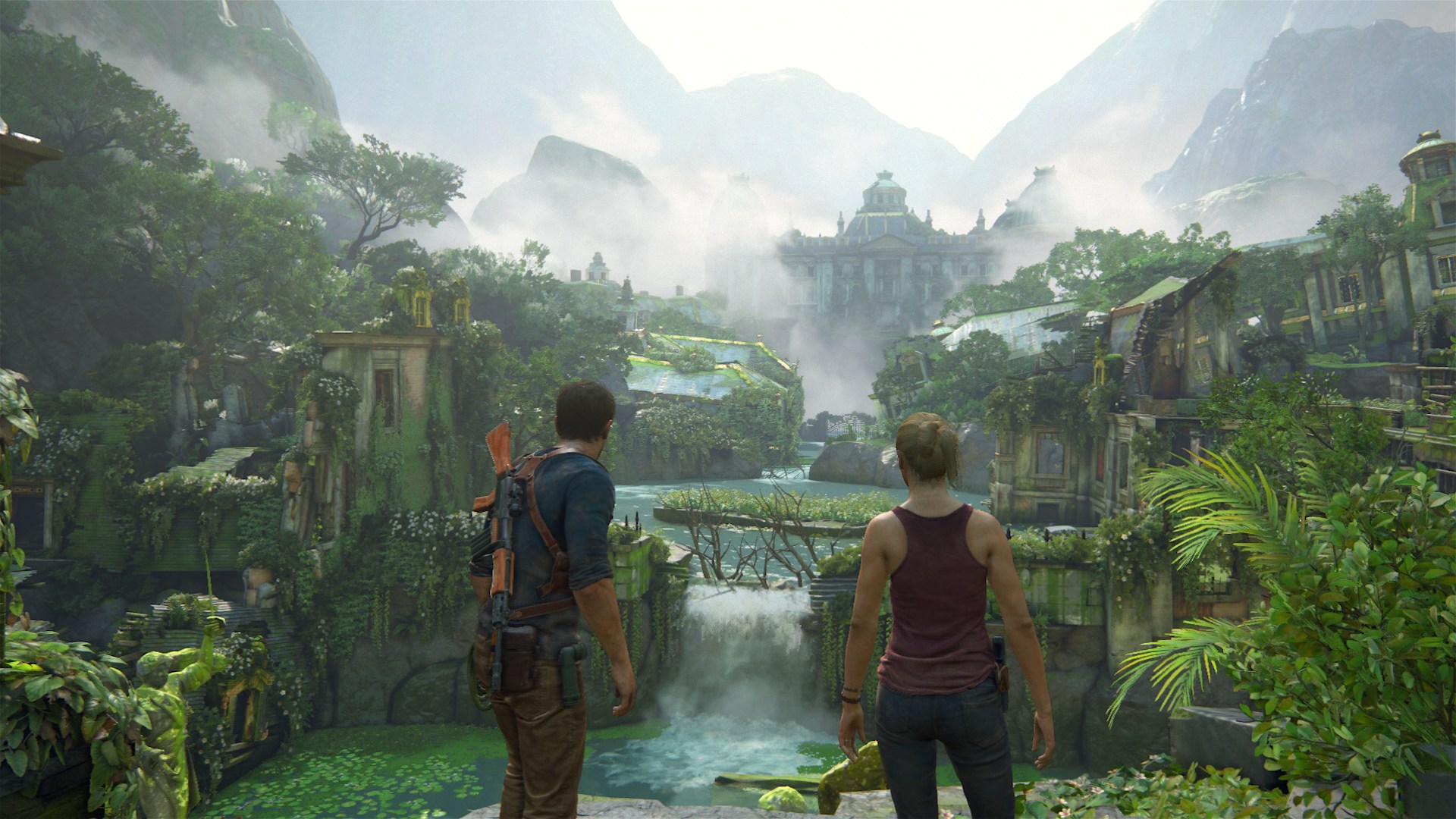
My favourite chapters were those spent with Elena and Sully, most of which occur towards the conclusion of the game and slowly reveal the fate of Libertalia.
Speaking of gameplay, A Thief's End does not shake up the formula, but rather refines it. The minute-to-minute gameplay has benefited greatly from Naughty Dog’s work on The Last of Us, with a heavier feel to movement animations and far more impact when it comes to fistfights and gunplay. Striking an opponent or landing a shot feels satisfying and your target responds appropriately. Clambering up ledges and over obstacles looks more lifelike, relative to Uncharted’s dubious understanding of physics at any rate.
...minute-to-minute gameplay has benefited greatly from Naughty Dog’s work on The Last of Us, with a heavier feel to movement animations and far more impact when it comes to fistfights and gunplay.
The most impactful gameplay additions are the huge open environments to explore during certain chapters, typically navigable by vehicle or grappling hook. These gameplay additions spice up traversal and are used repeatedly in some high-speed set pieces. The previous titles have had their share of open areas to explore and fight in; however, nothing comes close to the scale of some environments seen in A Thief's End. Equally impressive is the way each environment supports multiple play-styles: you can sneak through camps using long grass and cover, engage in close range firefights while moving swiftly around the environment, or camp at a distance and drop enemies at range. The AI responds aggressively – starting firefights will frequently trigger reinforcements – and will converge on your position in an attempt to flank you or flush you out with explosives. Most satisfying is the way AI companions will now effectively contribute to any encounter, either by assisting in dropping enemies stealthily, saving Nathan when he is grabbed by an opponent, or simply inflicting reasonable damage in firefights (rather than hanging around like a useless background prop).

More vehicles sections and rope-physics are the major gameplay additions, both of which are essential for exploring the larger environments. All the running, climbing, swimming, and manipulation of (inexplicably intact) ancient machinery remains unchanged.
Puzzle segments feel more substantial in this title, often requiring solutions that are more interesting than simply replicating a scene from Nathan’s notebook. The action set pieces, while perhaps (slightly) less preposterous this time, often feel like a fantastic reimagining of the most impressive moments from previous games, highlighting the incredible technical advances while playing on nostalgia. As with the previous trilogy, gameplay is competent but the Uncharted series has always relied heavily on an interesting story, well-developed characters, and set pieces to keep players hooked. Thankfully, the story and characters are up to Naughty Dog’s incredible standards and could carry the game alone even when gameplay can feel distinctly average.
The action set pieces, while perhaps (slightly) less preposterous this time, often feel like a fantastic reimagining of the most impressive moments from previous games...
Unfortunately, some areas of the game feature extended periods of mundane gameplay that dragged down the flow of the story and highlighted repetitive elements. Most of these stretches of gameplay involved one or more companions, with plenty of banter between them; however, this was still not enough to obscure the fact extended climbing and driving sections involve little to no challenge. With combat, the absence of any supernatural element ensures all enemies in the game are mercenaries or security guards, resulting in unchanging, predictable firefights across the whole game (and some awful Afrikaans accents). In line with the previous titles, increasing combat difficulty is achieved with the introduction of bullet-sponge armoured enemies and a [censored] of ridiculously accurate (and seemingly infinite) grenades. Most infuriatingly, the final encounter introduces a brand new quick-time mechanic just for that battle, which ground my progress to a halt, and had me repeating parts of the final encounter a half dozen times until I mastered the new mechanic (here’s a warning – if you’re playing on the “crushing” difficulty, you’ll die with one mistake). It is an awful design decision; one that I was surprised made it into the game, especially given the backlash against other games that have done it in the past. Thankfully, the fantastic ending and curious epilogue soothed my rage.
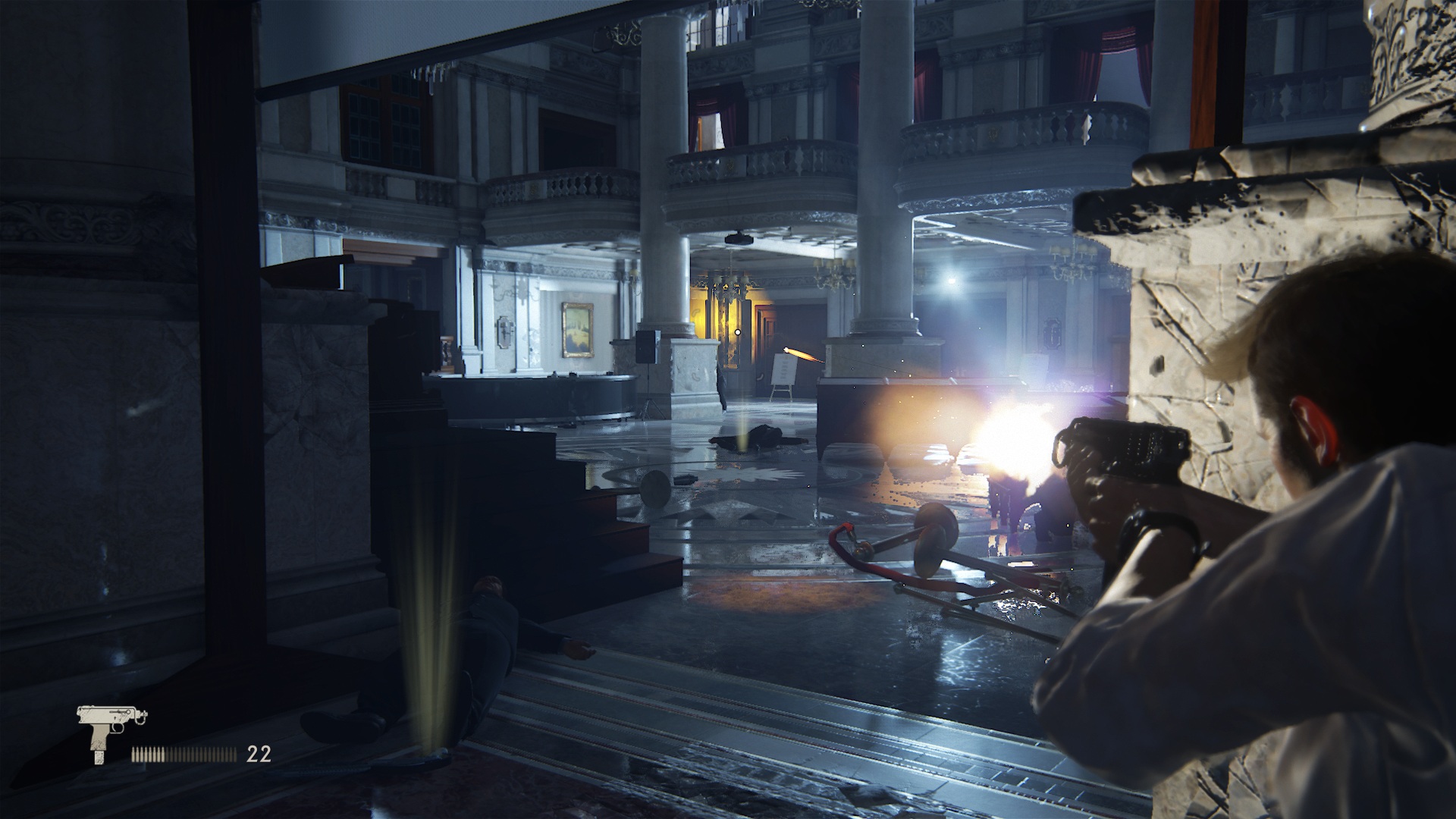
Firefights can look fantastic but the gunplay has not changed much since the original trilogy. The cover-based shooting feels competent, but both enemy types and their tactics remain the same throughout the game.
Thankfully, during the rare segments of rote gameplay and chapters in which the story lost some momentum, I was often too busy staring at the screen, contemplating how best to position the camera to take yet another screenshot. In a frame-by-frame comparison, The Order: 1886 may still hold the crown for visual quality; however, Naughty Dog has created a game with outstanding visuals in a far more ambitious and open setting.
...the final encounter introduces a brand new quick-time mechanic just for that battle, which ground my progress to a halt, and had me repeating parts of the final encounter a half dozen times...
From the frantic prologue to the relaxed epilogue, A Thief's End never falters in terms of presentation. Those who have played The Last of Us: Remastered will see a similar attention to fine details in the environments, both urban and wild, with more natural looking features, rather than geometry clearly designed around gameplay. While the more open environments do eventually converge on the correct path, this was the first Uncharted game in which I sometimes got lost while exploring, left trying to figure out which route to take.

A Thief's End looks fantastic throughout. Exploring for collectibles in the far reaches of the largest environments never once revealed an ugly texture or misplaced object.
From a technical standpoint, the game renders at a full 1080p/30FPS with only a handful of moments when the frame-rate dipped slightly. Textures, character models, lighting, and animation look superb throughout, with even the most distant scenery looking crisp and detailed. Only when looking back at distant gameplay areas do you see some low-polygon structures and foliage that stand out against the attractive distant backdrops. Animation of characters and flowing materials deserves special mention – characters correctly shift and bounce around the back of a vehicle based on the forces experienced; mud accumulates on vehicles and clothing, washing off when moving through water; loose gravel on a slope collides, aggregates and triggers small avalanches.
Voice acting, coupled with the quality writing and animation, remains Naughty Dog’s strength; their in-engine cutscenes are of higher quality than many pre-rendered CG scenes from other games.
Voice acting, coupled with the quality writing and animation, remains Naughty Dog’s strength; their in-engine cutscenes are of higher quality than many pre-rendered CG scenes from other games. The audio is impressive with satisfyingly loud gunshots, rumbling explosions and meaty punches. The excellent ambient sound, be it for a bustling market, wind-swept wilderness, or echoing cave, all add to the immersion. A major change from the original trilogy is the more subdued music in most locations. It fits the more grounded tone of the game but, as a result, both the main theme and set piece music felt mostly forgettable in comparison to the previous titles.
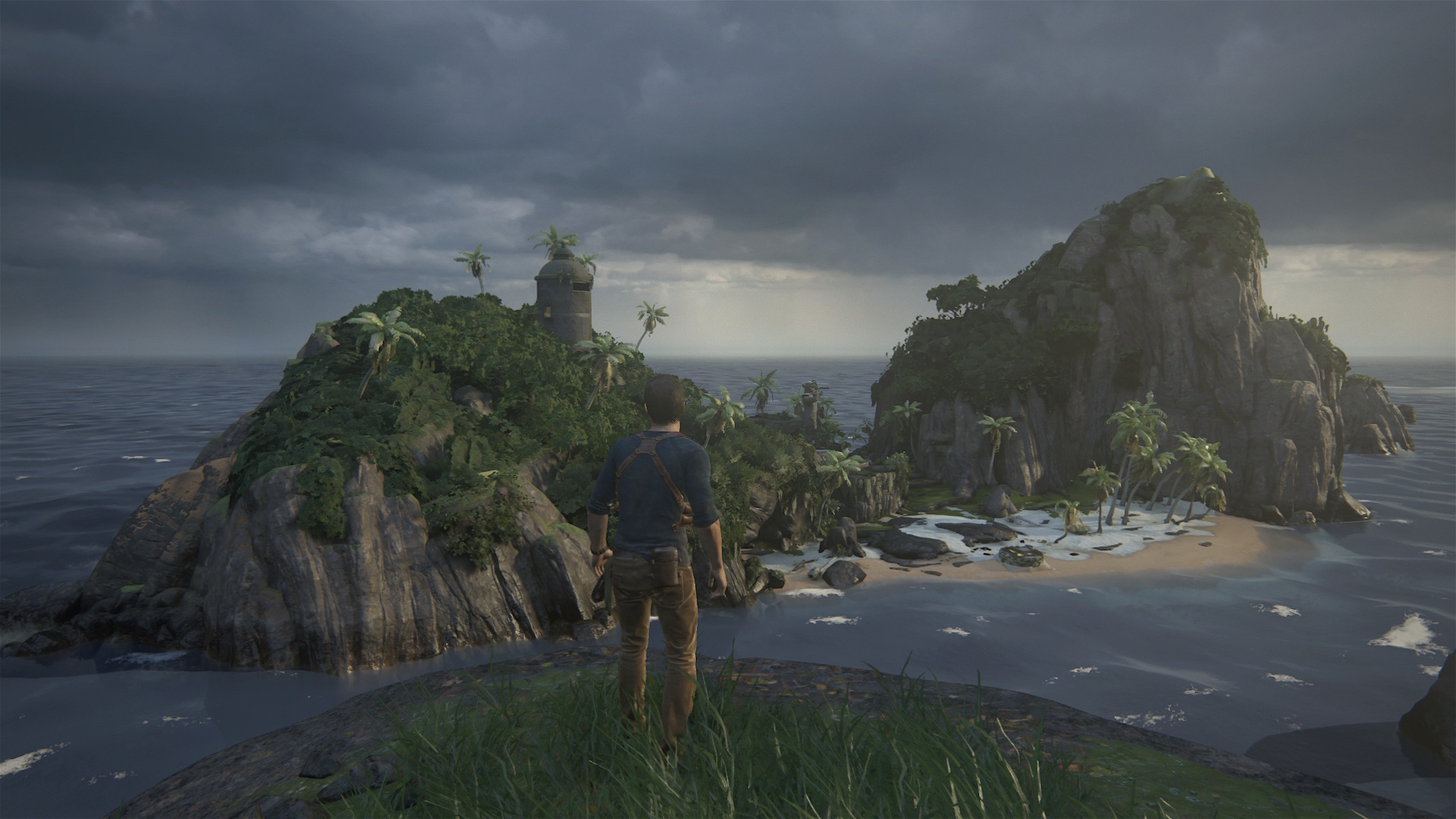
Lighting looks impressive and is also used to mark the passage of time or change the mood. As you explore this cluster of small islands, it gets progressively darker as daylight fades and a menacing storm approaches.
Uncharted 4: A Thief's End takes everything learned from the previous trilogy and The Last of Us, refines it further, and ultimately provides an impressive final outing for Nathan Drake. The storytelling, through the writing, voice acting, and animation, is comparable to the quality seen in The Last of Us; and the introduction of Nate’s brother feels both believable and provides an opportunity to shed light on their family history. Gameplay is refined and more varied than ever, with the best balance of combat, exploration, and puzzling out of all the games. There are times when the larger chapters drag on and the overuse of certain gameplay mechanics can affect story pacing; however, this is a minor blemish on an otherwise excellent package. Complementing both narrative and gameplay, the incredible visuals set a new standard for console games.


Please login to post comments.
More Reviews

Review: Elden Ring: Tarnished Edition (Switch 2)
What can I say about Elden Ring that hasn’t already been said? From Software’s magnum opus originally...
21-09-26 Read more
Review: The Blood Of Dawnwalker
Rebel Wolves’s The Blood of Dawnwalker has often been compared to The Witcher III: Wild Hunt from fellow...
15-09-26 Read more
Review: Marvel's Wolverine
When I think about some of PlayStation Studios’ most consistent developers, Insomniac Games always ranks...
10-09-26 Read more
Review: Dumb Ways to Build
Originally a public service announcement which discouraged the Australian public from thoughtless activity...
09-09-26 Read more
Review: Orbitals
Booting up Orbitals for the first time, I was immediately hit by a warm wave of nostalgia like the food...
08-09-26 Read more

Review: Onimusha: Way of the Sword
It’s a good year to be a fan of action games, and an even better year to be a fan of Capcom. After delivering...
31-08-26 Read more

Review: Spa Weekend
I was invited to attend an exclusive preview screening of the film Spa Weekend on August 20th at Sandton...
21-08-26 Read more
Review: SanDisk Extreme Fit USB-C Flash Drive (128GB)
The SANDISK Extreme Fit USB-C™ Flash Drive - 128GB is something that you might not even believe exists...
21-08-26 Read more
Review: Ground Zero Hero
It’s not often that a game comes around with the ability to grip you into a mindless cycle of absolute...
19-08-26 Read more
Review: Marvel Tokon: Fighting Souls
You know, if anybody was going to make a Marvel themed arcade fighting game in 2026, I’m glad Arc System...
18-08-26 Read more

Overview

Add to cart
Developer
Naughty Dog
Publisher
Sony Interactive Entertainment
Platform
PlayStation 4
Release date
10 May 2016