Latest Updates
Who's Online

Please sign in to add comments

Cart Contents
| Item: | Price: | Qty: |
|---|---|---|
| Total: R 0.00 | ||
User Content
Latest Poll
Review
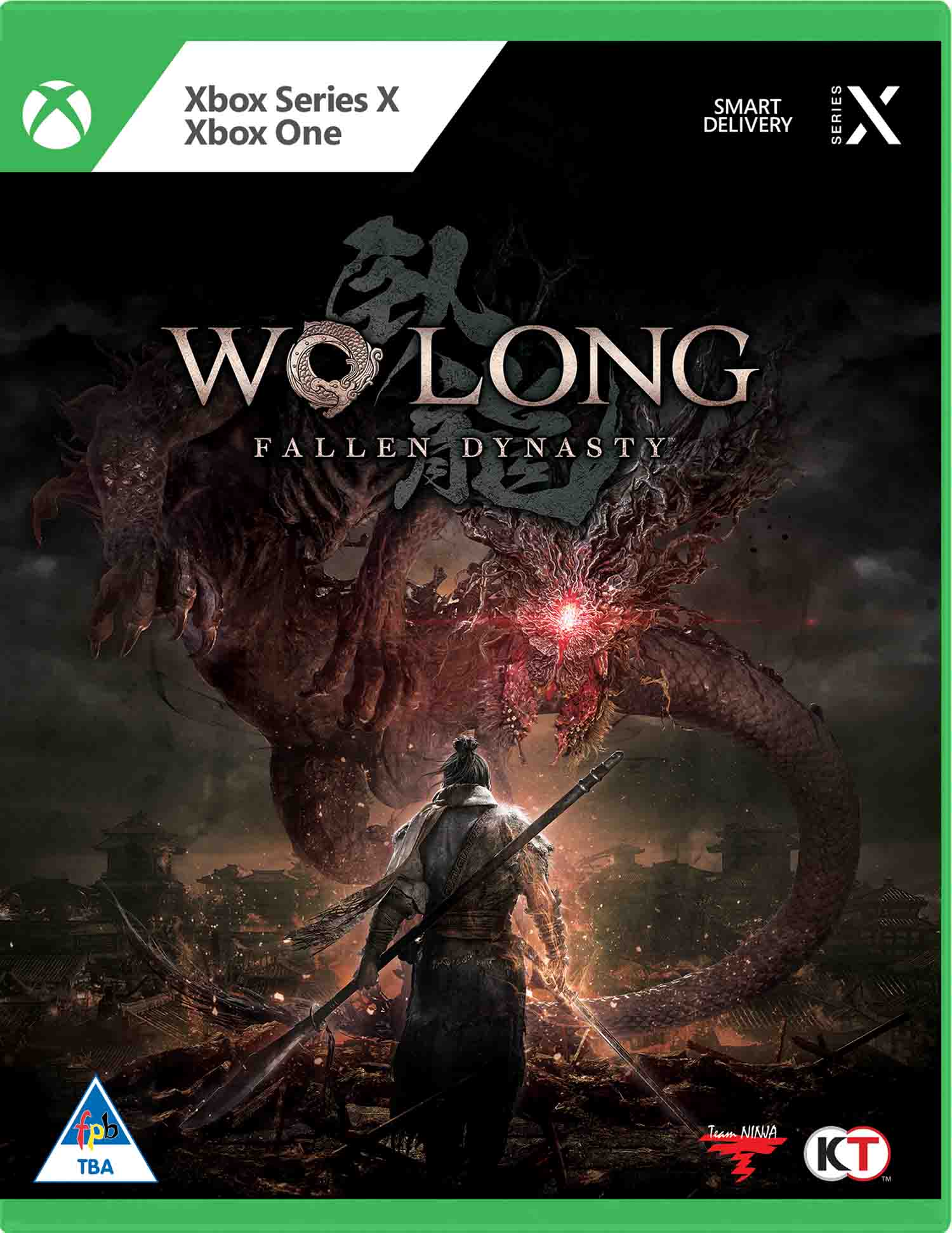
Review: Wo Long: Fallen Dynasty
Dynasties die twice.

Wo Long: Fallen Dynasty was high up on my list of most anticipated games this year. Coming from acclaimed developer Team Ninja, the studio behind the Ninja Gaiden and Nioh series, I was already hooked at the idea of exploring the unique setting of ancient China during the Three Kingdoms - but with a devilish fantasy twist. After clashing and deflecting swords, toppling monsters and consuming an ungodly amount of healing items, I was left mostly satisfied with this high-octane spin on a familiar yet challenging style.
Calling Wo Long: Fallen Dynasty a "Soulslike" is not exactly fair. It certainly shares a lot of similarities to Nioh which lifted its inspiration from From Software's signature formula, but Wo Long actually shares a lot more in common with Sekiro: Shadows Die Twice. The gameplay is soundly built around deflecting and parrying. Apart from your standard light and heavy attacks, oncoming enemy attacks can (and in some instances must) be deflected in a split second. It always kept me on my toes but while its controls aren't as precise as Sekiro, the core combat is extremely rewarding once you get the hang of it.

Wo Long exchanges a stamina bar with a Spirit Gauge that gradually builds up during combat. Enemies also have Spirit so the objective is to break their "postures" by trading and deflecting blows. It's a crazy back-and-forth rhythm of countering, dodging and attacking that's absolutely exhilarating. It makes each encounter feel like a dance where the slightest slip-up can lead to punishing outcomes. The combat will undoubtedly be compared to Sekiro but Wo Long wears that inspiration on its sleeve, for better or worse.
It's a crazy back-and-forth rhythm of countering, dodging and attacking that's absolutely exhilarating.
Wo Long has a staggering variety of weapons and loot to the point where it gets overwhelming, even if you're already accustomed to Nioh's large loot dumps. After a few missions, my inventory quickly filled up. The lack of a handy sorting button made it difficult to sift through loot with varying degrees of stats, percentages and perks so it's easy to see how newcomers to the genre might be thrown head-first into the deep end here. That said, once you get past the loot hogwash, the combat feels remarkably accessible - dare I say, this the most accessible Soulslike I've played in recent memory.
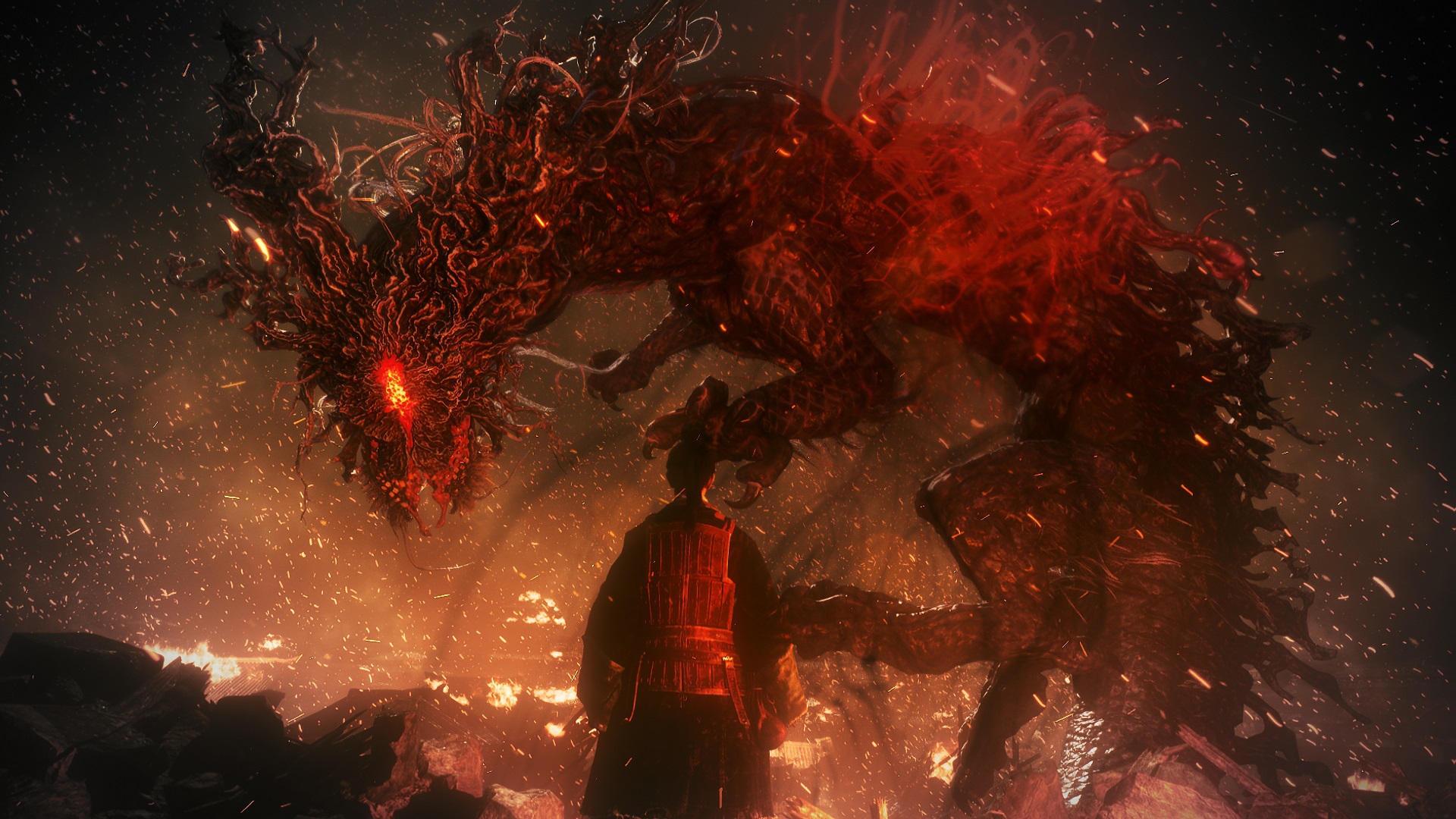
This is down to a number of factors, both good and bad. Wo Long's reliance on countering is tricky to get the hang of and enemies still hit with the force of ten kilotons, but some interesting additions alleviate the stress. Most missions can be tackled with AI companions that start off pretty weak but can be levelled up alongside you. Initially they're just disposable distractions for bosses but quickly become dependable allies, capable of dealing decent damage and holding their own. This made several boss fights surprisingly easy, which is unusual to see in a Team Ninja game. Of course, you have the option to not use compansions but even then, many boss fights were still a breeze to tackle solo.
The same can't be said about other bosses (and even some mini-bosses) in Wo Long that come out of the blue with the sole intention of destroying your confidence and controller. They provided the most challenging obstacles in the game that forced me to rely on deflecting, even when the controls weren't as finely tuned as I needed. Thankfully these difficulty spikes are sparse but still notable enough to incite rage.
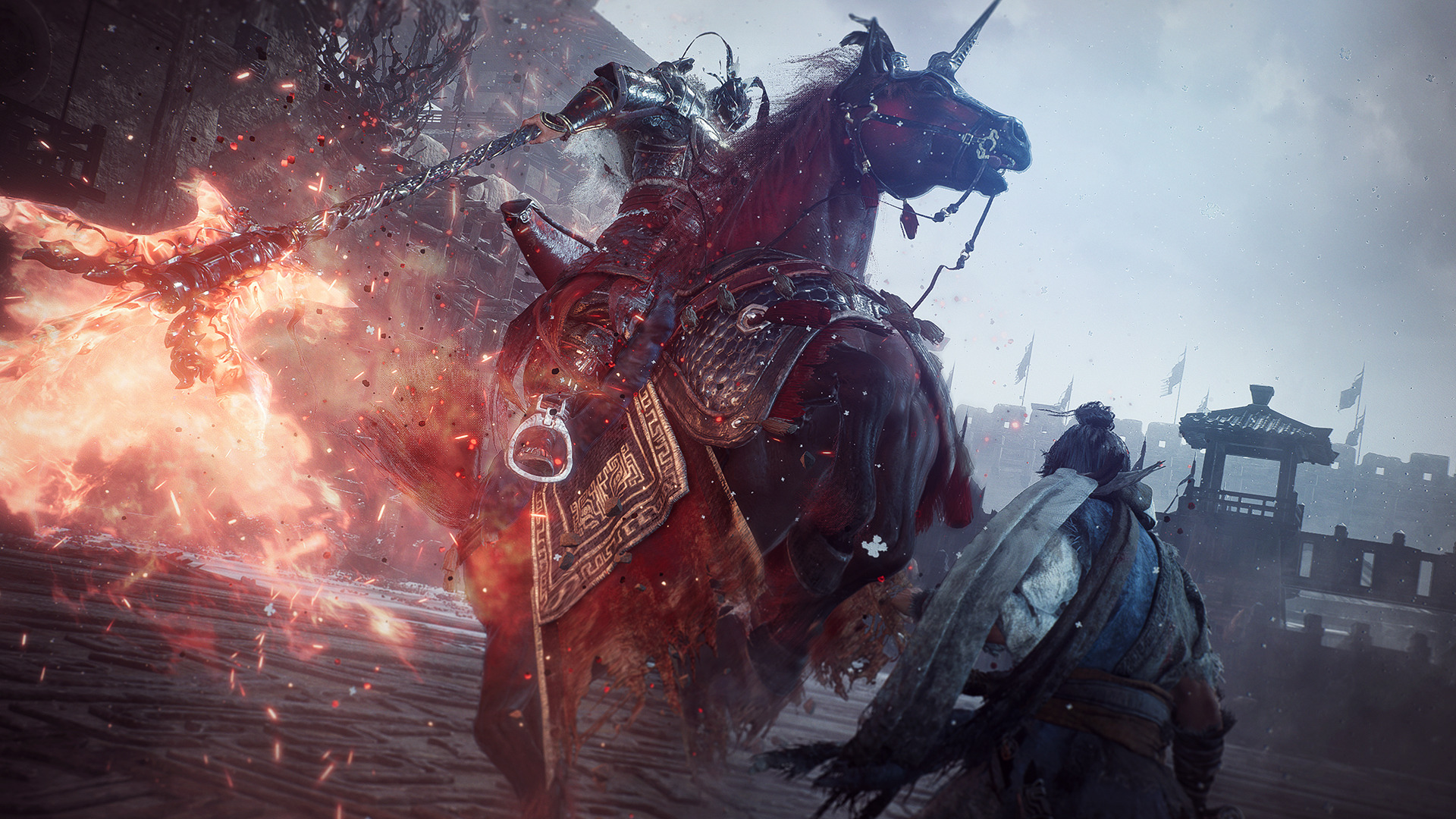
Approaching most combat encounters in Wo Long was less anxiety-inducing than the Nioh games. Without a stamina bar, you're often free to unleash devastating combos in quick succession and evade accordingly. Even if you don't grasp the deflecting system in some battles, you can get by on sheer aggression alone if you're brave enough. The game actively encourages a more aggressive playstyle than Nioh but once you figure out how to balance countering with it, most fights become quite trivial. When paired with the game's daft enemy AI, it makes stealth an incredibly powerful option for swift backstabs that deal big damage.
The game actively encourages a more aggressive playstyle than Nioh but once you figure out how to balance countering with it, most fights become quite trivial.
As you can tell, most of Wo Long's systems seem to be working in the player's favour and that's not necessarily a bad thing. Those seeking a formidable challenge might not find it here (unless they intentionally sabotage their levelling) but it also creates a fantastic entry point into the sub-genre. Admittedly I did get my backside handed to me on a silver platter a few times but I never really hit a brick wall in Wo Long, which was a refreshing change of pace.

The first half of Wo Long is definitely a more exciting experience than the second half. The first boss (which acts as the mandatory "Souls tutorial boss") was one of the hardest fights in retrospect. Once I learned every enemy attack and mastered deflecting them, the rest of the game sort of unravelled itself. This was mainly due to the lack of enemy variety. You'll run into the same types of enemies, sometimes with slight variations, for most of the game. Maybe this was a time constraint issue in development but I wish enemies were a bit more varied throughout.
Wo Long's level design is fairly easy to grasp. Like Nioh, players traverse mostly linear levels littered with enemies and obstacles before arriving at the level's boss. Some levels are definitely more sprawling than others but I didn't really feel encouraged to go off the beaten path and explore much. I actually found that this worked to the game's benefit after a while. It's clear that Wo Long's level design was more streamlined than its counterparts which gave it this great "arcade" quality that I really appreciated.

Wo Long's gear system is definitely not streamlined, though. If you're a fan of min-maxing your character to achieve an optimal build, this game has a ridiculously in-depth pool of options, percentages to tweak, items to apply buffs, stats to fine-tune, ailments and elements to combine, weapons to upgrade and master, specific gear pieces for specific bonuses, and a partridge in a pear tree. It's pool of build opportunities almost dwarfs Nioh which is no easy task. I managed to get by on the bare essentials but with more time, I could easily see myself getting lost in these deep systems for hours.
If you're a fan of min-maxing your character to achieve an optimal build, this game has a ridiculously in-depth pool of options.
Wo Long boasts a pretty captivating setting that stands out from its Soulslike counterparts. Ancient China and the romance of the Three Kingdoms is beautifully explored here in authentic fashion, though obvious liberties are taken with the bizarre fantasy monsters running around. It provided a nice break from the usual Japanese mythology setting. It's a shame that the game's story isn't strong enough to leverage this awesome setting, complete with forgettable characters and skippable - though well-crafted - cutscenes.
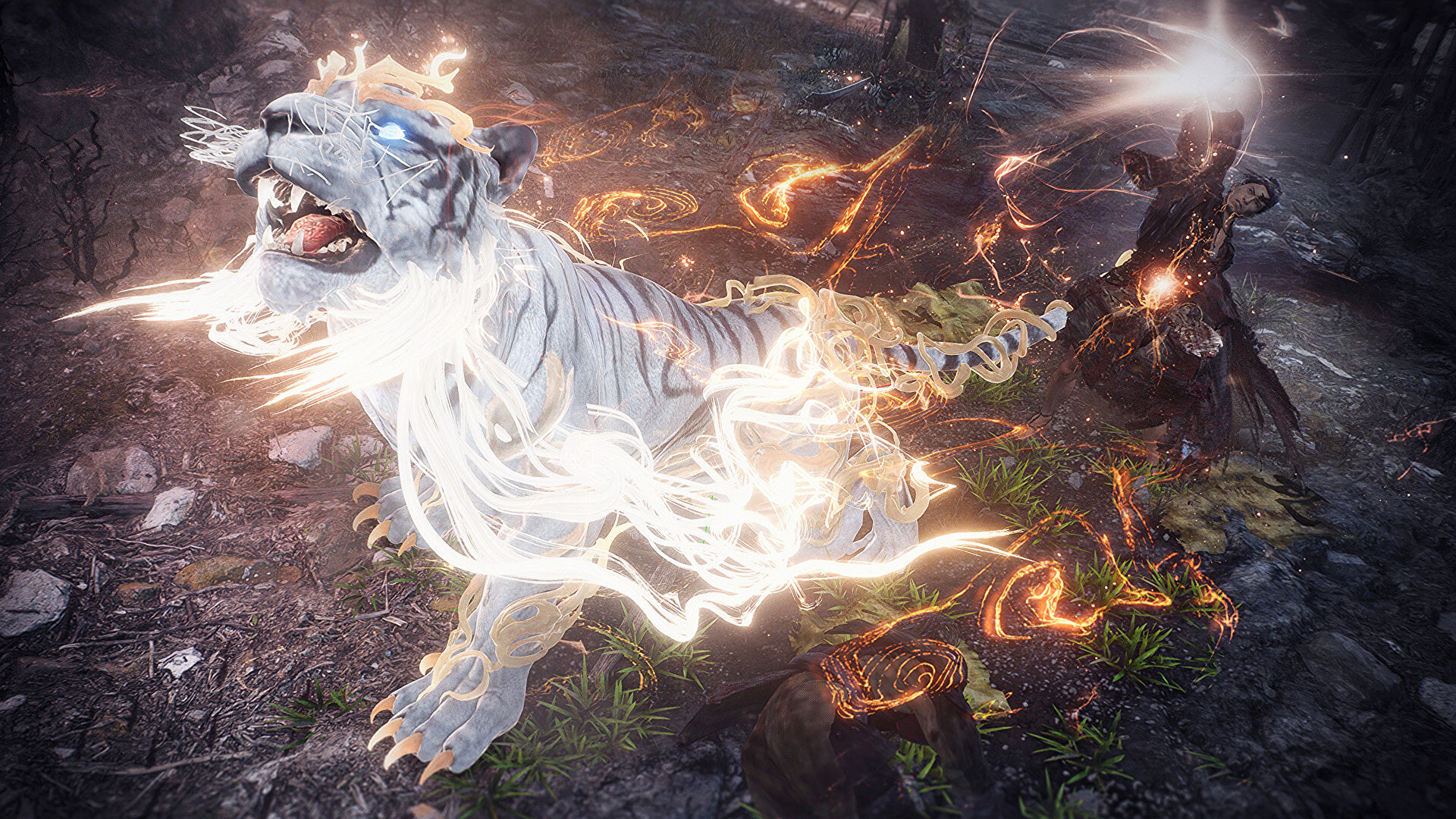
On the technical front, Wo Long isn't going to please everyone. The visuals occassionally evoke striking beauty in its splashes of purple and red hues but it's unfortunately lost in graphics that feel a bit dated. I played the game on Xbox Series X and ran into a number of framerate dips and one instance where my game crashed. With a game so reliant on perfectly timed counters, you kind of need every frame you can get. Luckily these are issues that can be patched out.
Wo Long: Fallen Dynasty is another highly enjoyable effort from Team Ninja that wears its Sekiro inspirations proudly on its sleeves, but it may lack the brutal challenge that usually accompanies these games. However, the deep gear system is extremely rewarding, combat is an absolute blast and the accessibility has never been higher for a Soulslike. It's not going to shake up the gaming world like many of its genre contemporaries but it's still a worthy time-sinker worth every blade.


Please login to post comments.
More Reviews
Review: Final Fantasy Resonance
I love a good JRPG as much as the next guy, but I tend to draw the line at mobile spin-offs, even if...
02-11-26 Read more

Review: Forever Ago
Forever Ago is the kind of compact, uplifting indie palate-cleanser I need between an endless supply...
29-10-26 Read more

Review: Clayface
The DCU started off on a decent note. We had a good Superman movie from James Gunn, The Penguin was ...
27-10-26 Read more
Review: Star Wars: Galactic Racer
It’s been a really long time since we’ve got a new Star Wars racing game so you can just imagine the...
27-10-26 Read more

Review: Phantom Blade Zero
It’s been a while since I’ve played an action game with combat as good as Phantom Blade Zero. Unlike...
26-10-26 Read more

Review: Wildwood
The creators and studio behind hit film Coraline (2009), Laika Studios, have done it again, this time...
22-10-26 Read more

Review: Valor Mortis
Now here’s an interesting combination. Developer One More Level’s (of Ghostrunner fame) Valor Mortis...
16-10-26 Read more

Review: Pixel Washer (Early Access)
There’s always something uniquely satisfying about games that’s sole focus is on making something that...
14-10-26 Read more
Review: Hellraiser: Revival
I’ve been a fan of the Hellraiser movies ever since I snuck a VHS rental (yeah, remember those?) of ...
13-10-26 Read more
Review: The Sinking City 2
The Sinking City 2, from Ukrainian developer Frogwares, is less of a sequel than it is a Lovecraftian...
12-10-26 Read more

Overview
Add to cart
Developer
Team Ninja
Publisher
Koei Tecmo
Platform
PC, PlayStation 4, Xbox One, PlayStation 5, Xbox Series
Release date
3 March 2023