Latest Updates
Who's Online

Please sign in to add comments

Cart Contents
| Item: | Price: | Qty: |
|---|---|---|
| Total: R 0.00 | ||
User Content
Latest Poll
Review
Review: Kingdoms of Amalur: Re-Reckoning
Where did my nostalgia goggles go?

Given the prolonged legal battle between the State of Rhode Island and bankrupted developers, Big Huge Games and 38 Studios, I never expected there’d be any further development of the Kingdoms of Amalur IP. However, in September 2018, THQ Nordic picked up the rights to the IP, and a month later the original game reappeared as backwards-compatible on the Xbox consoles. Given THQ Nordic’s track-record after purchasing old IPs, a remaster was all but guaranteed. Arriving over eight years since it originally released – and with another subtitle so stupid I can’t help but smile – KAIKO has provided us Kingdoms of Amalur: Re-Reckoning and promised a brand-new expansion next year.
The result is… fine. Much like their work with the Darksiders Warmastered Edition and Red Faction Guerrilla Re-Mars-tered, this is another competent but low-impact remaster that succeeds in bringing older, often overlooked games back into the spotlight. The problem is the aforementioned games were priced at $20 (~R300 locally when they released), whereas Kingdoms of Amalur: Re-Reckoning is being sold at twice that (and mores still if you want the “FATE Edition”). That said, those who never played the original might find it worth the asking price, and, as such, I’m going to break this review into two parts: the first covering the game, the second the extent of the remastering.

Kingdoms of Amalur: Re-Reckoning takes place in a fantasy world of humans, light and dark elves, gnomes, Fae (think classic high elves), and a myriad of “wild fae” (the many monsters you’ll face). The Fae are immortal – their souls returning to new bodies over time – but this was never a problem until an uncharacteristically violent Fae leader of the “Winter Court” decided to wage war against the mortal races. Fighting their forces to a standstill has been a costly process for the mortals, so gnomish scientists have been working on the “Well of Souls” – an attempt to grant mortals the same power. Your character is the first and only success before the well is attacked and destroyed. You escape into the Faelands and embark on a lengthy quest to overthrow Gadflow and end the war.
In Kingdoms of Amalur, your character is known as the “Fateless One”, as Amalur is a world in which all creatures are bound by an ultimate fate that oracles, called “Fateweavers”, can discern. Seemingly stripped of such a predetermined destiny by their rebirth, your protagonist can shape their own fate, and this ties into a flexible levelling system that allows you to invest in might, finesse, and sorcery skills. It’s also an excuse for a flashy “Reckoning Mode”, which slows time and allows you to dispatch several foes in short order (or simply rack up massive damage on a boss). All these systems are elaborately explained in mountains of exposition if you want it, probably because the universe and lore was created by R. A. Salvatore (who has written dozens of books in the Dungeons & Dragons universe).

This focus on world-building and lore ensures you get an elaborate plot (which moves at a glacial pace) and will often stumble upon lengthy, multi-part side-quests for different factions, guilds, and random strangers (who often end up more important than they initially seem). As this version comes with the two previously released expansions, The Legend of Dead Kel and Teeth of Naros, you also have access to a lengthy pirate-themed excursion that comes with amazing player housing, and a combat- and looting-focused gauntlet through a land of the Kollossae. Viewed in isolation, most of the questlines in Kingdoms of Amalur: Re-Reckoning are worth experiencing from a narrative perspective, and, irrespective of how serious the content matter may be, they all channel a quirky, charming Fable-esque tone. The problem lies in the sheer number of them, coupled with dozens of throwaway quests, repetitive and unchanging environments, and limited gameplay complexity.
The world may exist as interconnected zones, rather than a continuous open world like The Elder Scrolls games, but it packs in almost as many quests and just as many locations.
Perhaps it was the combination of a new, ambitious studio with a healthy budget, but nobody seemed to reign in the developers. The world may exist as interconnected zones, rather than a continuous open world like The Elder Scrolls games, but it packs in almost as many quests and just as many locations. As with The Elder Scrolls, this means a ton of reused assets and far too many linear interiors that feel like a gauntlet you need to navigate before completing your simple objective (kill/rescue this person, collect-X-many-of-Y, etc.). That said, the combat in Kingdoms of Amalur: Re-Reckoning is action-oriented and feels impactful (even when you are chipping away at a much higher-level foe), and the individual quests are rarely that long. You’ve got a primary and secondary attack that can be any weapon combination you can equip, spells that are easy to access by pulling a trigger and tapping a face button, and the ability to block and roll at any moment.

My rogue-mage hybrid could stealth-stab unaware foes, riddle distant foes with fire-infused arrows, coat her blades in poison and cast a shield for when things got dicey, and fling chain lightning to thin out lesser minions. After building up enough “Fate”, I would slow time, strike down several foes, and use a simple QTE to finish them off simultaneously and gain bonus XP. This flexibility in combat builds (which you can re-spec at any time for a trivial fee), coupled with the satisfying feel of combat (nothing like the traditional RPG dice rolls) makes for a thrilling experience… at first. The size of the game works against it. Even if you simply follow the main narrative (which’ll take you 25+ hours), repetition sets in, even if you’re frequently changing up your build as I did. What amplifies this sensation is the slow realisation that your involvement in most quests boils down to accepting or declining tasks. The world is static, with your actions having little impact outside of adding or removing certain NPCs until you hit a cutscene.
As a result, the longer you play Kingdoms of Amalur: Re-Reckoning, the more you begin to see the seams, and both the world and quests take on an MMO-like quality. It simply becomes a backdrop for endless busywork (albeit with well-written narrative context), allowing you to grind XP to play around with different character builds. For some, this might be enough. For me, the lack on tangible role-playing outside of combat lessened the experience. When it released, Kingdoms of Amalur was the perfect example of a 7/10 game – fun in short bursts, packed with content, surprisingly well-polished, but lacking its own defining feature to set it apart from its contemporaries. This still holds true today.

If you never played the original or have distant memories from back when we thought the Xbox 360 and PS3 represented the pinnacle of gaming visuals, you’ll probably think the upscaled visuals and higher framerate is all that’s on offer. Thankfully, there’s more to it under the hood. Given the sheer amount of content, it was always easy to power-level in Kingdoms of Amalur, and most players would find the game increasingly easy over time. To offset this, KAIKO has tweaked several variables, such as decreasing the rate of XP-gain and resetting zone-levels every time the player returns. There’s also a new difficulty, “Very Hard”, which shifts the minimum and maximum zone-levels higher still. On the other hand, loot containers are now set to the player’s level when they’re opened and gear is tweaked to more likely match your current build. As a result, you’ll still grow in power towards the end-game, but your foes are likely to remain a challenge for longer.
If you never played the original... you’ll probably think the upscaled visuals and higher framerate is all that’s on offer. Thankfully, there’s more to it under the hood.
Visually, the increase in resolution and framerate – up to 4K/60 on the enhanced machines – makes the combat feel more responsive than ever (the performance on the original consoles was variable at best, especially when multiple monsters and spell effects were filling the screen). The character models and gear benefit the most from the increased resolution, but distant scenery also gets a boost, with higher resolution textures loading in further away, removing the blurry haze used in the original to mask low-resolution geometry and textures. That said, it’s not perfect, and you’ll still see objects pop-in at a distance and geometry/texture shifting on distant scenery. However, thanks to the chunky art style and vibrant use of colours, worked on by Todd McFarlane, it still holds up visually. The soundtrack, composed by Grant Kirkhope, is another element that was and remains excellent. Every line in the game is fully-voiced and, despite often hearing the same voice actors for generic NPCs, everyone hams it up nicely.

Ultimately, my biggest problem remains the pricing of Kingdoms of Amalur: Re-Reckoning, especially with the precedent set by prior remasters from THQ Nordic. Yes, the expansions are bundled in and there’s promise of fresh content later if you get the “FATE Edition”, but Kingdoms of Amalur is not some forgotten masterpiece you can’t play anywhere else (the original version remained on sale). It needed to be priced low enough to convince old fans to double-dip, while simultaneously getting curious new players to take the plunge in a year packed with other excellent releases.
Overall, despite several changes to the mechanics that smooth out the progression and the upscaled visuals, Kingdoms of Amalur: Re-Reckoning still plays much the way it did in 2012 – ambitious in scope but lacking in depth. You may not be compelled to see it through to the end, but you’ll enjoy most of the time spent with it, and it really should have been launched at a lower price point.
*Review code provided by THQ Nordic


There are 2 comments
 Lurch
Lurch

Please login to post comments.
More Reviews

Review: Elden Ring: Tarnished Edition (Switch 2)
What can I say about Elden Ring that hasn’t already been said? From Software’s magnum opus originally...
21-09-26 Read more
Review: The Blood Of Dawnwalker
Rebel Wolves’s The Blood of Dawnwalker has often been compared to The Witcher III: Wild Hunt from fellow...
15-09-26 Read more
Review: Marvel's Wolverine
When I think about some of PlayStation Studios’ most consistent developers, Insomniac Games always ranks...
10-09-26 Read more
Review: Dumb Ways to Build
Originally a public service announcement which discouraged the Australian public from thoughtless activity...
09-09-26 Read more
Review: Orbitals
Booting up Orbitals for the first time, I was immediately hit by a warm wave of nostalgia like the food...
08-09-26 Read more

Review: Onimusha: Way of the Sword
It’s a good year to be a fan of action games, and an even better year to be a fan of Capcom. After delivering...
31-08-26 Read more

Review: Spa Weekend
I was invited to attend an exclusive preview screening of the film Spa Weekend on August 20th at Sandton...
21-08-26 Read more
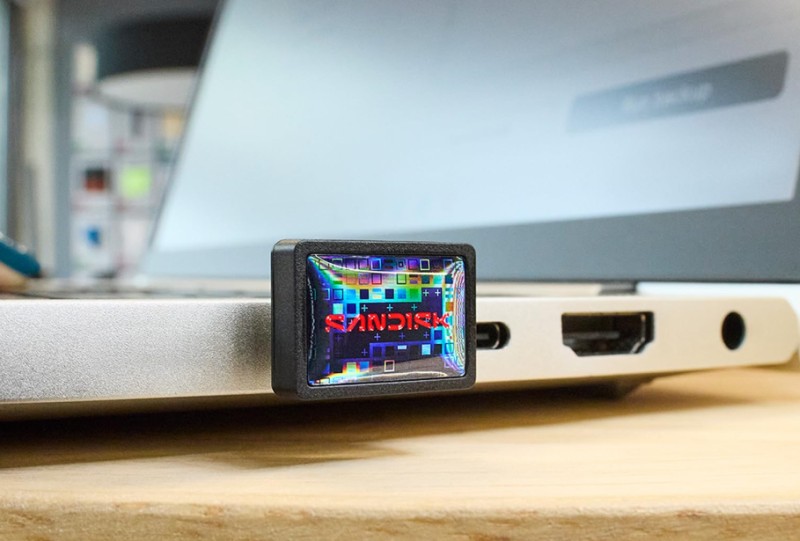
Review: SanDisk Extreme Fit USB-C Flash Drive (128GB)
The SANDISK Extreme Fit USB-C™ Flash Drive - 128GB is something that you might not even believe exists...
21-08-26 Read more
Review: Ground Zero Hero
It’s not often that a game comes around with the ability to grip you into a mindless cycle of absolute...
19-08-26 Read more

Review: Marvel Tokon: Fighting Souls
You know, if anybody was going to make a Marvel themed arcade fighting game in 2026, I’m glad Arc System...
18-08-26 Read more

Overview

Add to cart
Developer
KAIKO, Big Huge Games
Publisher
THQ Nordic
Platform
PC, PlayStation 4, Xbox One
Release date
8 September 2020