Latest Updates
Who's Online

Please sign in to add comments

 )
) Cart Contents
| Item: | Price: | Qty: |
|---|---|---|
| Total: R 0.00 | ||
User Content
Latest Poll
Review
Life is Strange
Unintended consequences
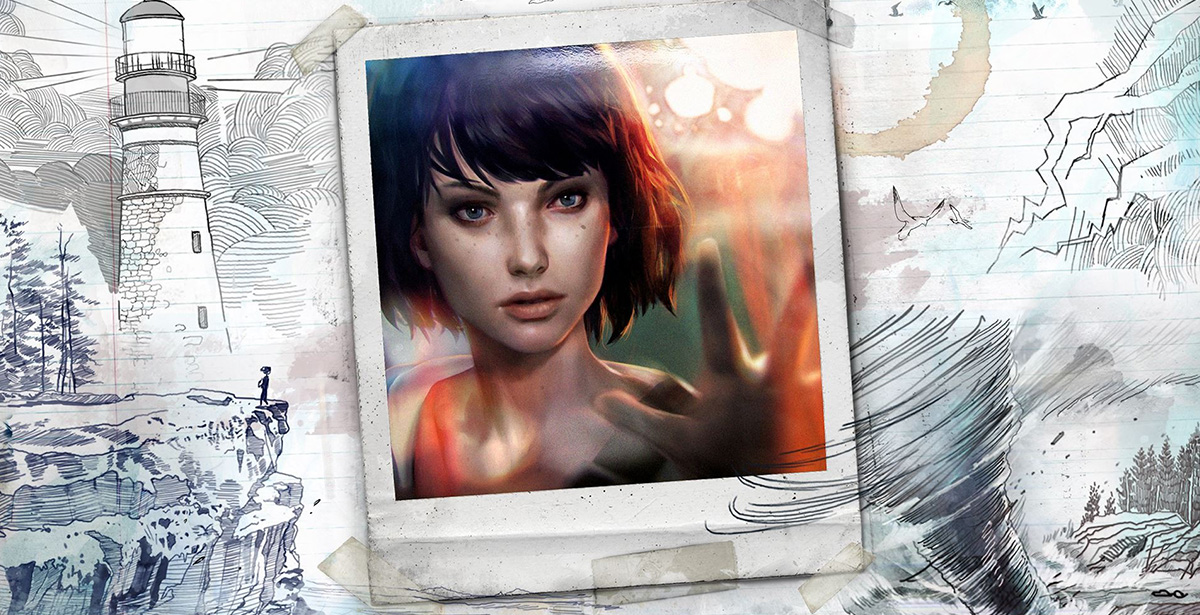
Life is Strange relies on many established gameplay mechanics and has a story that is, at times, predictable. However, the combination of a time-rewind mechanic (that maintains consistent logic), with excellent voice acting and animation, results in a narrative-driven game that tells its story more competently than any other game to date. Over five episodes, the player will come to know all the major and minor characters, the history of the town, and the seedy interactions going on behind the pleasant small-town facade. The game is a fantastic story of friends, family, choices, consequences, and accepting loss of control.
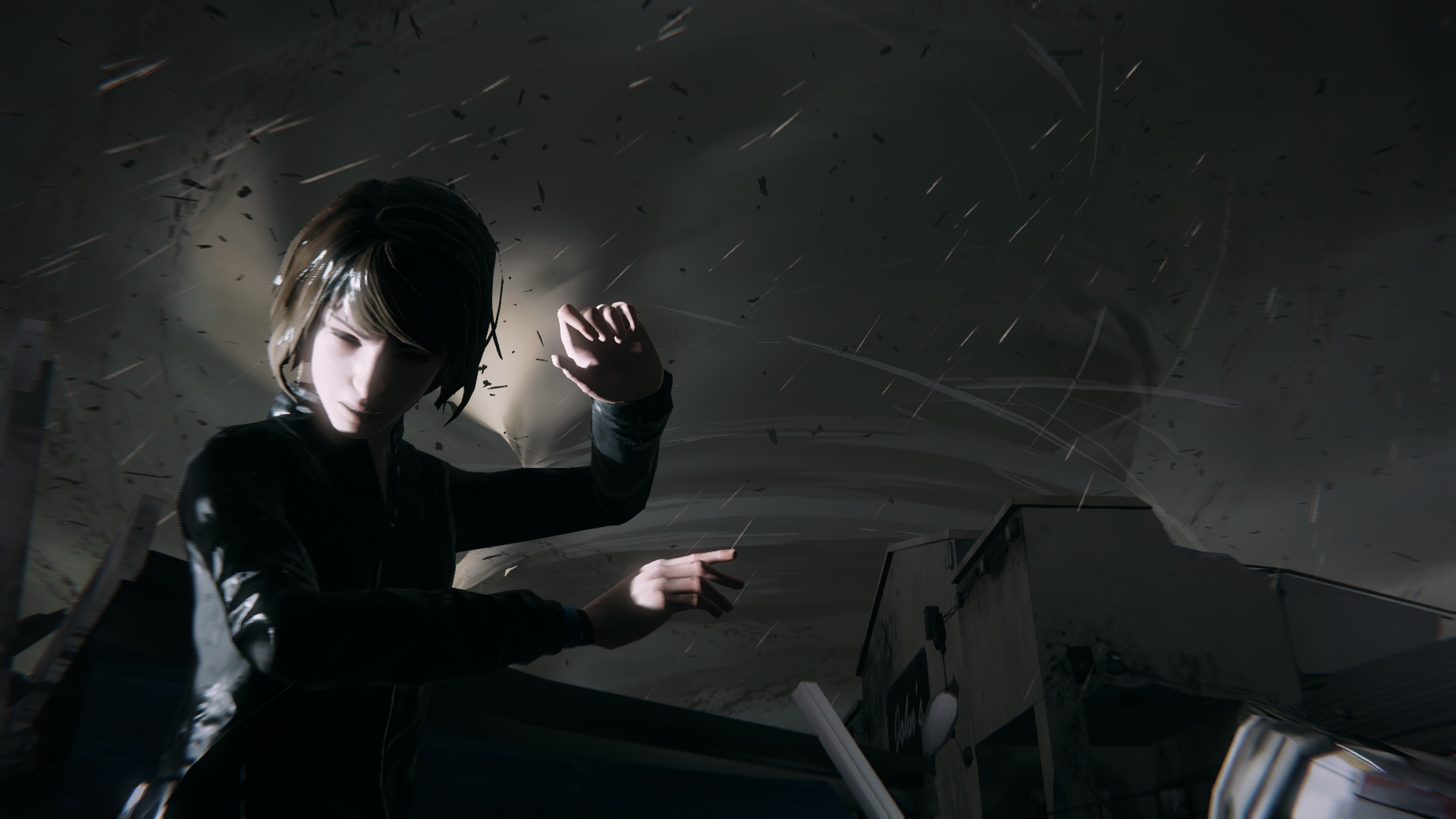
Max’s adventure starts with a premonition of the destruction of the town. This constant variable will haunt her repeatedly as she alters timelines.
Protagonist Max (never Maxine) Caulfield is a photography-obsessed loner, excellent at observing the world around her, but rarely interacting with it. After receiving a bursary to attend the prestigious Blackwell Academy, she returns to her hometown of Arcadia Bay. The player first encounters Max as she awakens in class after a premonition of a natural disaster destroying the town. This sets the tone for the following events that occur, at least chronologically, over the course of a week.
Life is Strange is first and foremost a narrative adventure, with the majority of the game playing out through exploration, character interactions with branching dialogue, and interactive cut scenes. As the player starts with little knowledge of Max or her past in Arcadia Bay, a combination of dialogue and internal commentary slowly builds up their understanding of her past and her relationship with an old friend introduced early on. It is difficult to say much about the story without spoiling the many potential choices the player can make, but suffice to say, it revolves around a missing girl, an old friend, a string of potential suspects, and the dark side of an otherwise average-looking town. The game takes a page from the TV series Twin Peaks, with the protagonist tackling both an impending, unexplainable threat, while dealing with daily conflicts between the students and townsfolk. While not all issues are pivotal to the story, the narrative covers issues such as bullying, financial difficulties, drug use, casual sex, and mental health, sometimes with devastating consequences.
As the player starts with little knowledge of Max or her past in Arcadia Bay, a combination of dialogue and internal commentary slowly builds up their understanding of her past and her relationship with an old friend...
Episodes 1 and 2 provide a relatively slow start that introduces Max, her powers, the setting, and major characters, all leading up to a major plot point that pivots on many previous actions. The final three episodes ramp up the intensity, in terms of both Max’s power use and the nature of encounters, presenting much greater consequences. This setup works well as by the time it asks the player to make some major choices in the third episode, they will have developed strong feelings towards most supporting characters (be that love or hate). The game excels at slowly revealing more information on potential suspects, casting doubt as to their intentions and guilt, all the while throwing numerous red herrings at the player. This design ensures later twists and turns in the story hit hard.
Early manifestations of Max’s power allow her to change minor events, those that have just occurred. These small choices from the opening episodes allow the player to define Max’s personality through her interactions with the supporting characters. While seemingly trivial, these choices often affect future interactions that may not drastically change outcomes, but personalize the experience. Even seemingly obvious choices between good and selfish (Max is never inherently “evil”) rarely play out as expected. In my initial playthrough, I completely misread a character and after the events of episode 4 and 5, felt like absolute s**t based on my previous actions.
The game excels at slowly revealing more information on potential suspects, casting doubt as to their intentions and guilt, all the while throwing numerous red herrings at the player.
In later episodes, Max develops the ability to travel considerably further back in time and drastically alter timelines. As can be expected in any time-travelling story, the outcomes are far from perfect and the personal consequences for Max greater still. This escalation in the story and timeline changes introduces a common criticism against the game. Later decisions, made in a desperate attempt to correct the timeline, often negate many early choices or events. However, I found these fit the themes of the story and are decisions made by Max with full knowledge of previous events. Many small choices, erased by some later plot points, are still essential in allowing the player to define Max’s personality and her motivation for later choices.
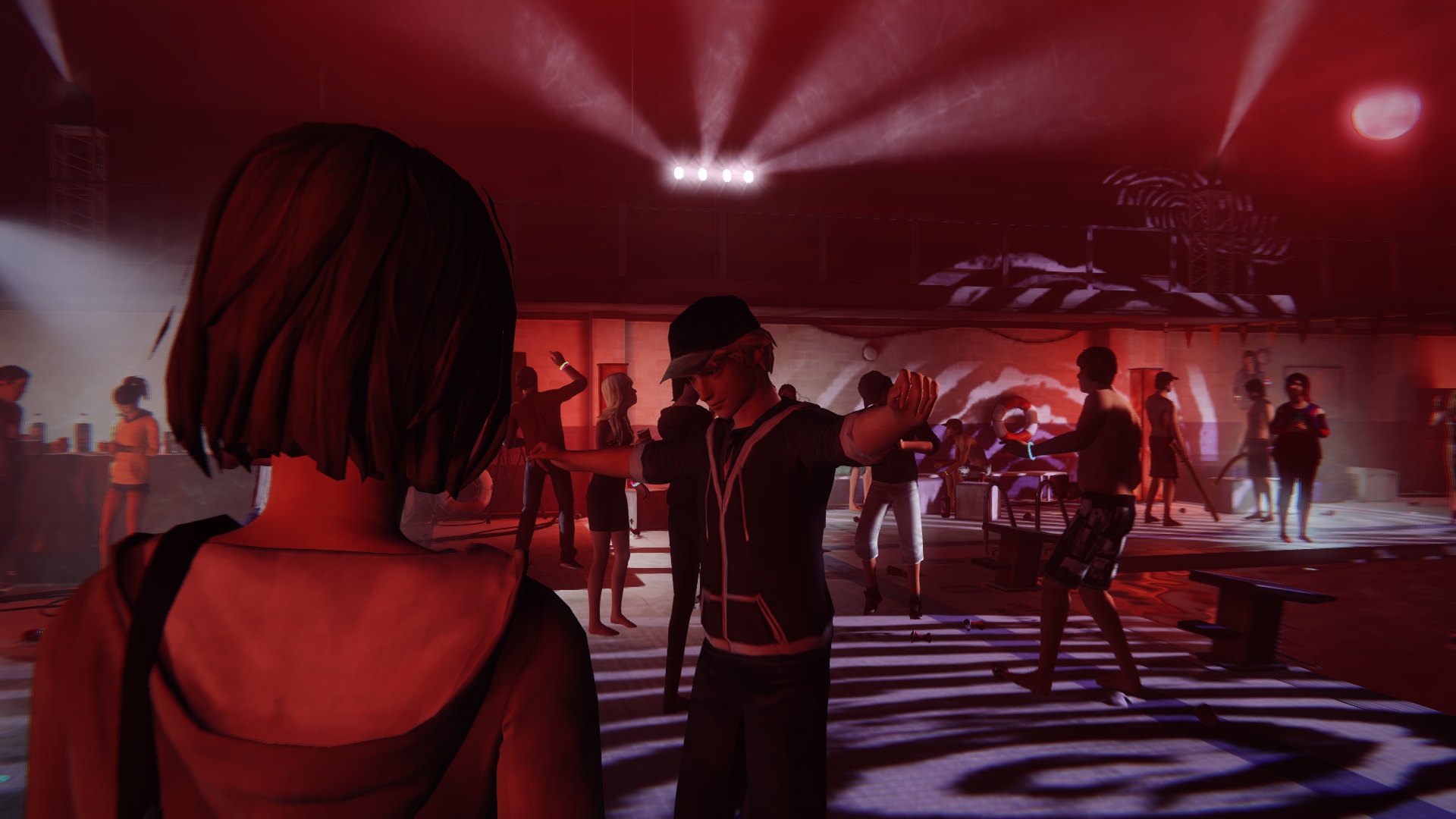
Life is Strange does an excellent job of injecting tension into otherwise ordinary locations, coupling the typical social challenges Max must face with the impending threat of disaster.
The gameplay is a blend of mechanics seen in Telltale and Quantic Dream games, most similar to Heavy Rain, only without the needless button prompts for every basic task. The player will guide Max around small yet detailed environments in third person, allowing her to interact with other characters, objects, and notes. In other scenes, the player alters dialogue and events during extended cut scenes, trying to influence the outcome. These sequences feel like an evolution of the memory-altering mechanics from Dontnod’s previous game, Remember Me. Occasionally, the player must make an important binary choice that drastically affects future interactions or events. Thankfully, a distinct visual style ensures the player can identify these choices. If played while connected online, the conclusion of each episode will provide a breakdown of the major choices other players have made (in the form of percentages), sometimes even revealing actions the player may not have noticed or solutions they never considered.
Occasionally, the player must make an important binary choice that drastically affects future interactions or events.
The time-rewind mechanic introduced in the first episode is an essential component of both the gameplay and narrative. It allows the player to follow certain actions or dialogue paths and then rewind if they feel another choice would provide a better outcome (Max will sometimes comment on decisions, but this is never advice, rather an indication of other options). In places, this allows a brute force approach to puzzle solving and dialogue challenges; however, careful observation and clue hunting is still vital in most situations. The game maintains a consistent logic with both Max and the player retaining knowledge of their previous actions after rewinding. To aid the player, small visual prompts will inform the player if other options are now available post-rewind. I often missed these prompts and still found myself successfully picking the right, logical times to do go back in dialogue. Overall, the game does an excellent job of tagging important information in dialogue and allowing the player to go back and use it to manipulate conversion. On only one occasion, dialogue progressed with Max seemingly knowledgeable of something I am almost sure I never extracted from conversation.
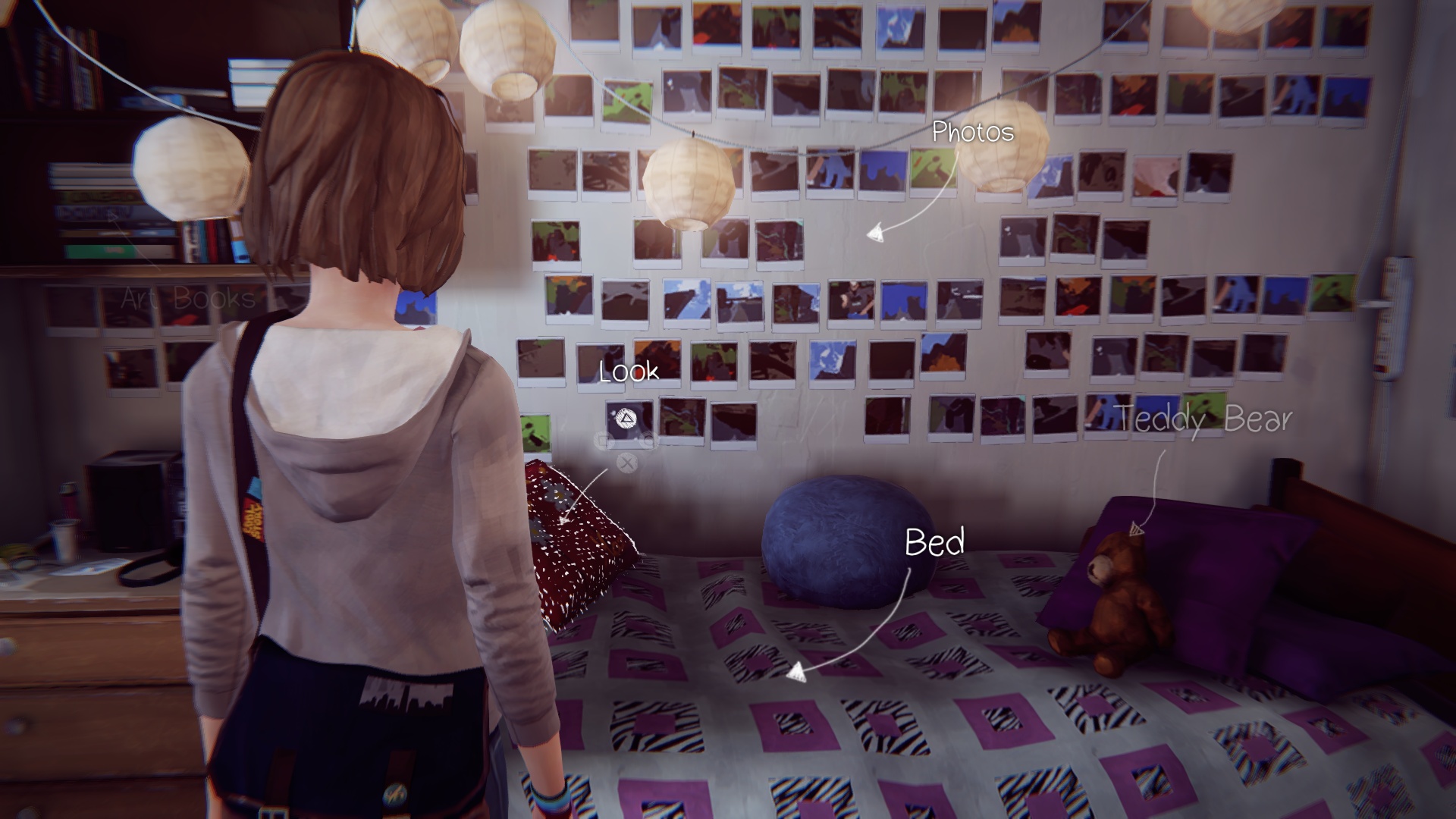
Many objects in the environment are interactive. These are essential for solving puzzles, extracting dialogue topics, or simply providing insight into Max’s past or current state of mind.
As the player can either move or remain stationary while rewinding time, this becomes an essential part of some puzzles during high-intensity sequences, but also in exploration sequences. While most puzzles offer numerous solutions, the player is free to take brash approaches such as entering a room by damaging the lock (leaving evidence of their presence) only to rewind time once standing in the room and then opening the lock from the inside.
The game maintains a consistent logic with both Max and the player retaining knowledge of their previous actions after rewinding.
In a few scenes, the solutions to puzzles or encounters were unclear, especially when interactive items are tucked away in the environment. In one scenario, I found a clue sitting on top of a shelf, only highlighted at close range. In another late-game sequence, I struggled to find intractable objects in the environment to influence the outcome of a fight. Max can rewind time, but not stop it outright and simply observe the environment. As a result, the player can find themselves repeatedly rewinding a scene, desperately scanning the environment each time for something to interact with. Thankfully, the game allows the player to skip any previously watched scene or line of dialogue, somewhat reducing the frustration this can cause.

I spent an inordinate amount of time exploring a garage looking for this damn box of tools to progress the story.
In a pleasant change from the status quo, the game has only one collectible-hunting activity that involves using Max’s film camera to capture certain objects or moments in the environment. The game menu, which doubles up as Max’s excellently written journal and objective tracker, provides hints as to the content of the photographs and it is up to the player to find each shot. Some are simply objects in the environment, whereas others require Max to use her time-rewind power to capture the perfect shot.
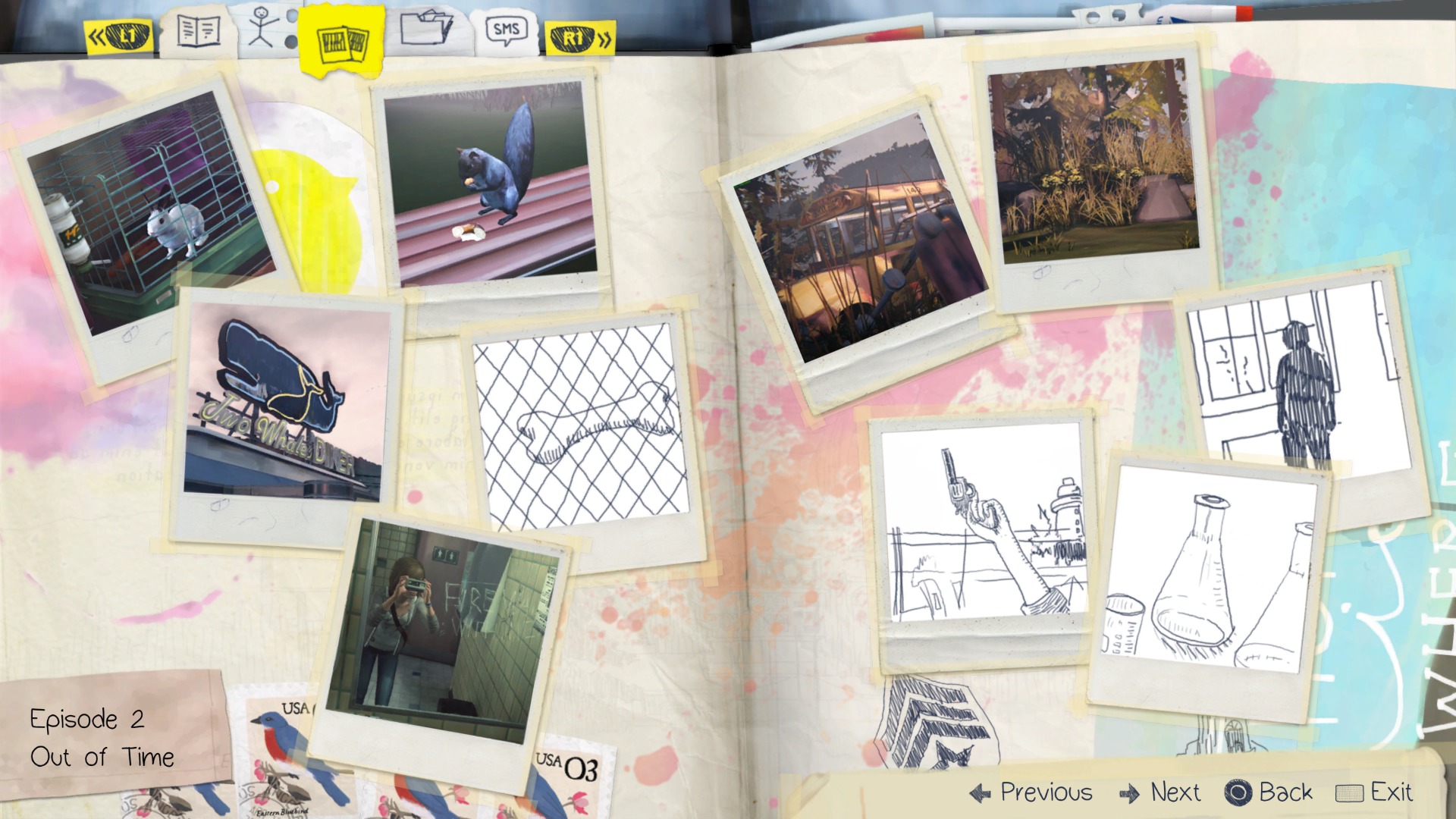
The game provides hints and keeps track of collectible photos the player can take throughout the game. Many require Max to use her time rewind powers in unexpected ways, even during interactive cut scenes when you only control the scene through dialogue.
The blend of time-travelling mechanics with the narrative and well-developed characters creates an excellent game. As a bonus, Life is Strange also has incredible presentation that relies mostly on art style and quality acting, rather than visual fidelity. As mentioned above, the quality of voice acting really conveys the story, and the outstanding animation work, especially during the many interactive cut scenes, helps the characters feel “real”. Almost all open areas, full of characters and clues, provide a spot in which Max can sit and reflect upon her surroundings and situation. This simple mechanic provides excellent narration and reminds the players of past events and current goals. There is the occasional dodgy lip-syncing in some scenes, but character interactions are generally excellent.
Life is Strange also has incredible presentation that relies mostly on art style and quality acting, rather than visual fidelity.
Visually, the game is a mixed bag with detailed characters and objects coupled with flat and blurry-looking textures. Interiors tend to look excellent whereas distant environments and objects can appear very basic. Thankfully, for a game about an avid photographer, numerous visual effects can result in a game that still looks stunning in places. Dynamic lighting, motion blur, and depth-of-field give each scene a cinematic look, making the transition between exploration gameplay and cutscenes feel seamless. Each episode is bookended by fantastic opening and closing sequences that set the tone for the episode or emphasize consequences from the previous episode. Players with last-gen consoles or weaker PCs should be able to enjoy the game without issue, as the art style, rather than pure technical prowess, is what defines the experience.
Music is an essential part of the experience and is used to set the tone for many locations and encounters. Both licensed songs and ambient music tracks are primarily soft, acoustic guitar pieces that reflect both Max’s state of mind and the (apparent) tranquility of the Pacific northwest setting. Certain tracks for specific locations help create a sense of familiarity as the player returns to them over the course of the in-game week.
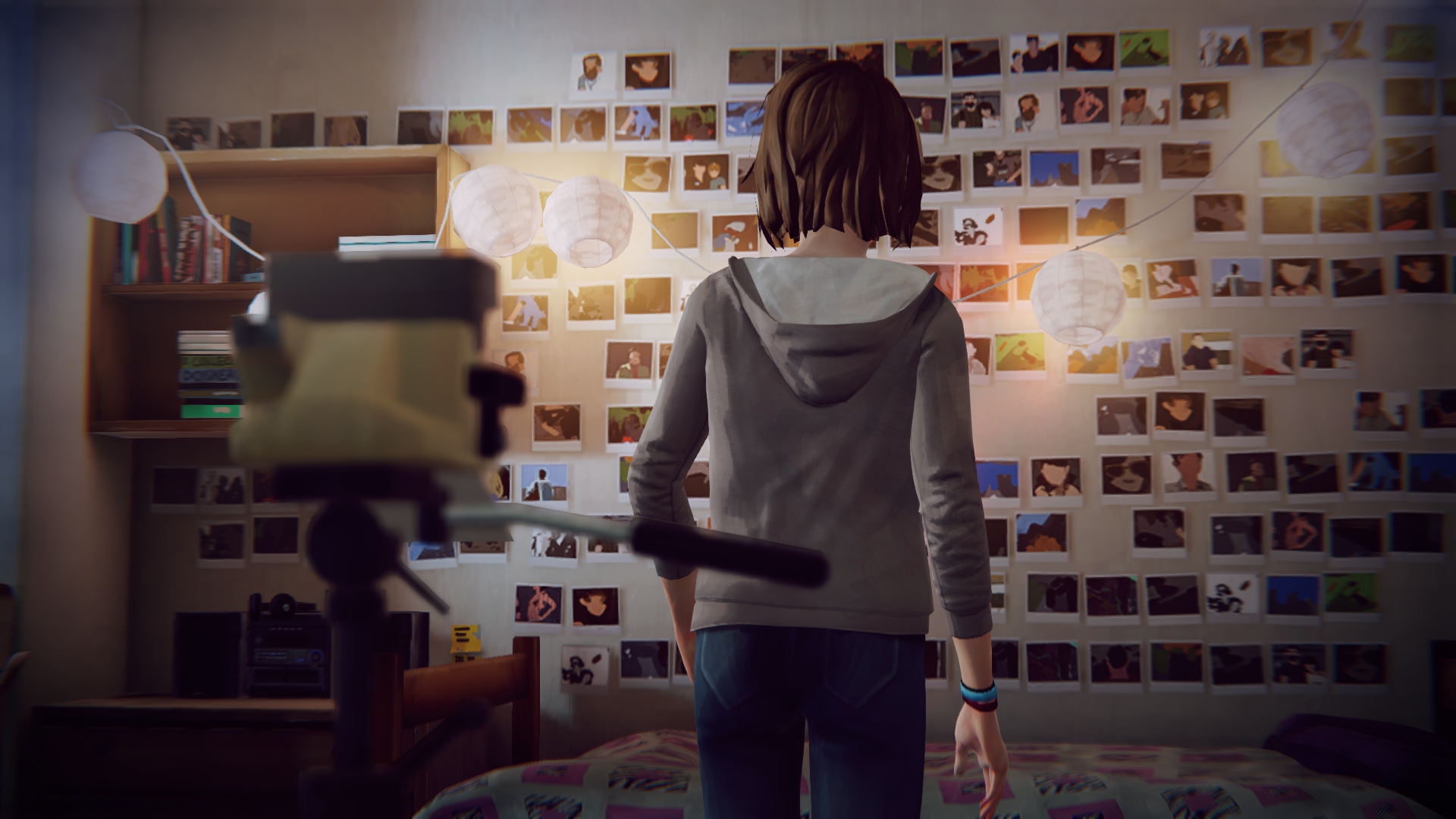
Image quality can vary from scene to scene but when the shot composition and visual effects come together, it can look incredible.
For anyone planning on picking up the excellently priced physical Limited Edition, you will receive the game along with the art book and a CD of the soundtrack including both licensed songs and ambient music. The art book, in the style of Max’s diary, lacks commentary, but contains some incredible concept art and numerous images that appear in the game as photographs or environmental art. As discussed previously, the soundtrack is incredible and is easily the most valuable addition to the physical release. I immediately ripped the tracks to MP3 and added them to my playlist.
Both licensed songs and ambient music tracks are primarily soft, acoustic guitar pieces that reflect both Max’s state of mind and the (apparent) tranquility of the Pacific northwest setting.
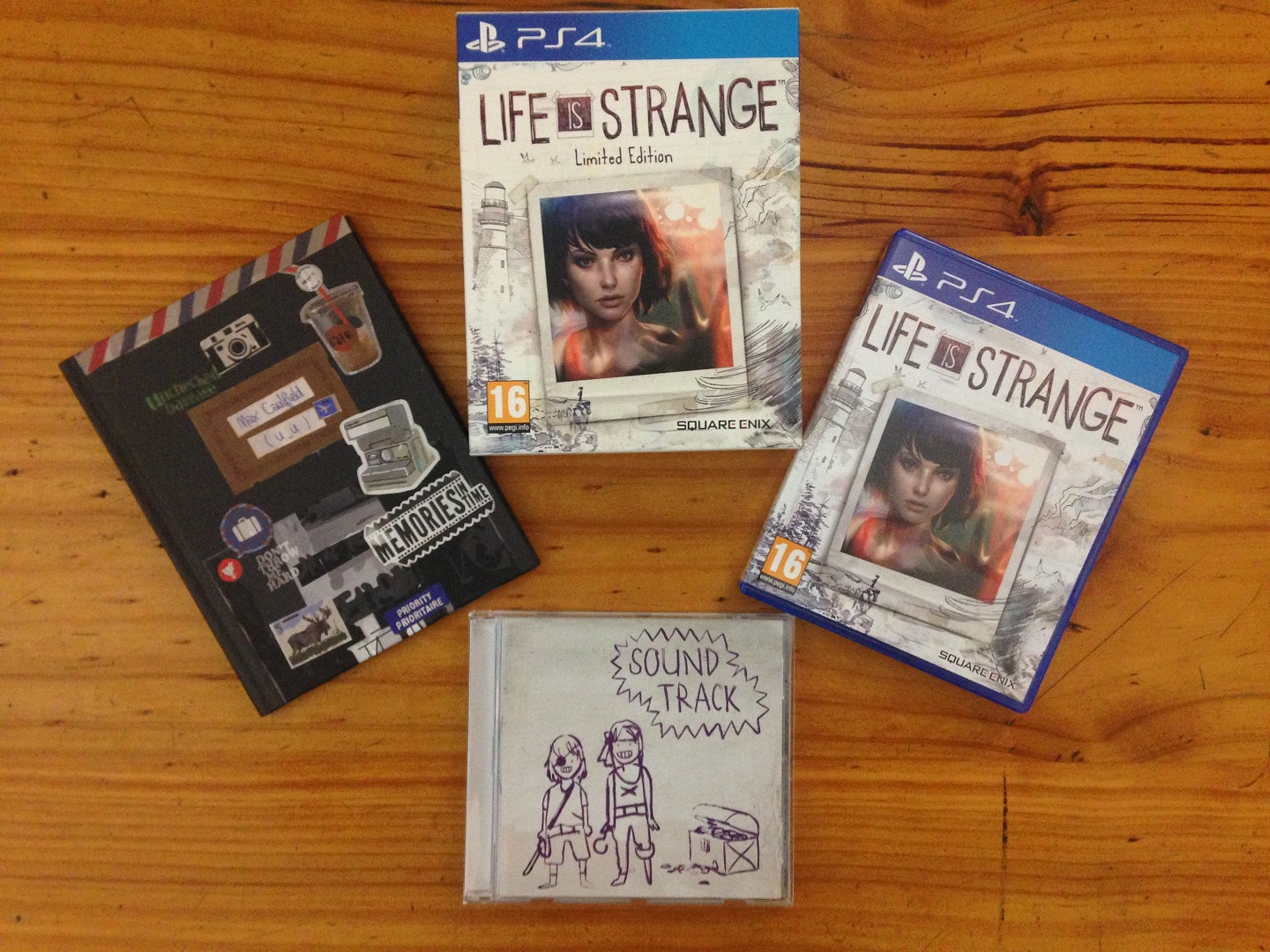
The Limited Edition box contains the game, art book (in the style of Max’s diary), and the excellent soundtrack on CD.
While not everyone will enjoy the slower-paced gameplay or lack of direct player control during many scenes, the game does an excellent job of combining basic gameplay mechanics with cinematic cutscenes to create many incredibly tense, high-stakes sequences. Decisions made during dialogue, both seemingly small and large, often result in unintended consequences throughout the game. The story plays out as an excellent thriller that manages to keep the player guessing well into the fifth episode, even after many primary plot threads appear resolved. Through careful pacing, excellent characterization, and believable interactions (even in a game about time-travel), Life is Strange works hard to invest the player in its narrative. If you can immerse yourself in the story, it will keep you on the edge of your chair through all five episodes.


Please login to post comments.
More Reviews

Review: Fire Emblem: Fortune's Weave
It’s legitimately very hard to believe that it’s been seven whole years since Fire Emblem: Three Houses...
05-10-26 Read more
Review: Control Resonant
It’s been seven years since the events of developer Remedy Entertainment’s original 2019 Control title...
02-10-26 Read more

Review: Gears of War: E-Day
Xbox’s flagship Gears of War series has had a bit of an identity crisis over the last decade. After ...
01-10-26 Read more

Review: Gachiakuta
Gachiakuta took the world by storm when it first aired from July to December 2025. With its gritty animation...
28-09-26 Read more

Review: Elden Ring: Tarnished Edition (Switch 2)
What can I say about Elden Ring that hasn’t already been said? From Software’s magnum opus originally...
21-09-26 Read more
Review: The Blood Of Dawnwalker
Rebel Wolves’s The Blood of Dawnwalker has often been compared to The Witcher III: Wild Hunt from fellow...
15-09-26 Read more

Review: Marvel's Wolverine
When I think about some of PlayStation Studios’ most consistent developers, Insomniac Games always ranks...
10-09-26 Read more
Review: Dumb Ways to Build
Originally a public service announcement which discouraged the Australian public from thoughtless activity...
09-09-26 Read more

Review: Orbitals
Booting up Orbitals for the first time, I was immediately hit by a warm wave of nostalgia like the food...
08-09-26 Read more

Review: Onimusha: Way of the Sword
It’s a good year to be a fan of action games, and an even better year to be a fan of Capcom. After delivering...
31-08-26 Read more

Overview

Add to cart
Developer
Dontnod
Publisher
Square Enix
Platform
PC, PlayStation 4, PlayStation 3, Xbox One, Xbox 360
Release date
29 January 2016