Latest Updates
Who's Online

Please sign in to add comments

Cart Contents
| Item: | Price: | Qty: |
|---|---|---|
| Total: R 0.00 | ||
User Content
Latest Poll
News
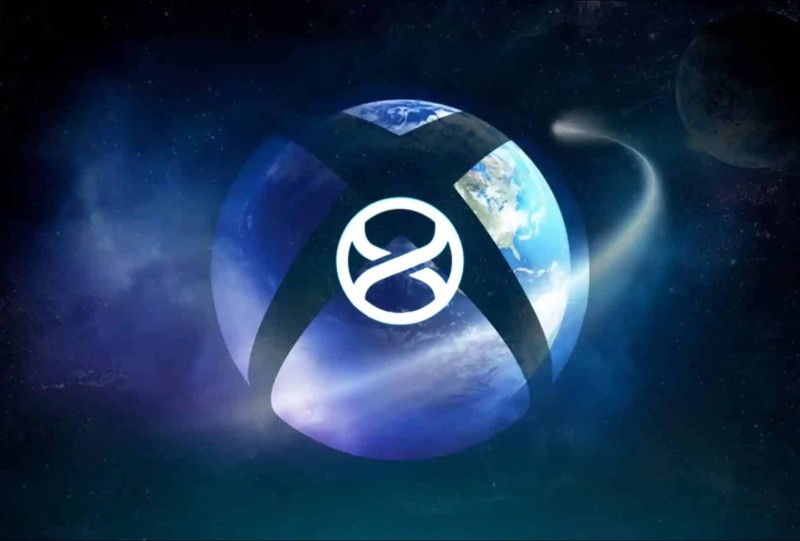
Microsoft Says Project Helix is a Console First, Not a Gaming PC

Microsoft is making one thing clear about its next-generation Xbox: Project Helix is being designed as a console first, not a gaming PC with an Xbox badge slapped on it.
The clarification comes from Xbox Vice President of Next Generation Jason Ronald, who shared more details about the company’s vision for the hardware in a special Xbox 25th Anniversary magazine published on 15 November.

While Microsoft has already confirmed that Project Helix will support both Xbox and PC games, Ronald says the company wants to preserve the simplicity of a traditional console while opening the door to a much wider gaming library.
A Console That Plays PC Games
Ronald was particularly clear about how Microsoft wants people to understand the device.
“Helix is designed to be a console that is also capable of playing games from your PC. It is not a PC that can also play console games,” he explained.
The distinction is important. There has been plenty of speculation about whether Project Helix would essentially become a Windows gaming PC designed for the living room. Microsoft appears to have a different idea in mind.
The goal is to make accessing games easy, intuitive and instant, without requiring players to deal with the usual complications associated with PC gaming. However, Ronald also confirmed that players who want more control will still have access to deeper customisation options for settings and performance.
That means Microsoft is attempting to bring some of the flexibility of PC gaming into a console experience without making the entire system feel like a traditional desktop PC.
Its Interface Will Take Cues From the ROG Xbox Ally
Microsoft also appears to be taking lessons from its work on the ROG Xbox Ally and the introduction of Xbox Mode on Windows.
Ronald explained that the development of the handheld and its unified approach to different game libraries helped shape Microsoft’s thinking around the next generation of Xbox hardware.
However, Project Helix will have its own interface rather than simply borrowing the existing Xbox Mode experience found on Windows.
This is an important distinction, particularly as Microsoft continues to bring console and PC gaming closer together. The company wants players to have a consistent experience across different screens, while still making the hardware feel like an Xbox console.
Plenty of Questions Remain
There are still some major unanswered questions about how PC gaming will actually work on Project Helix.
Microsoft hasn’t explained exactly how PC games will be installed, which storefronts will be supported, or whether players will have access to platforms such as Steam and the Epic Games Store. Being able to play PC games doesn’t automatically confirm support for every PC storefront or every existing game.
The company has previously confirmed that Project Helix is being developed alongside AMD, using a custom system-on-chip designed for the next generation of DirectX and FSR. Microsoft has also committed to keeping games from four generations of Xbox playable.
Alpha versions of the hardware are expected to reach developers in 2027, but Microsoft has yet to announce a consumer release date, final specifications or pricing.
The cost of the next Xbox is another concern, particularly with memory prices continuing to affect hardware development. Microsoft has already acknowledged that RAM supply and pricing could influence the availability and cost of its next-generation console. Microsoft has previously commented on the RAM situation. The company says it will only worsen and cause further price hikes around tech and gaming.
Project Helix is shaping up to be a significant shift for Xbox. Microsoft isn’t simply trying to build a more powerful console; it’s looking to bring together two gaming ecosystems that have traditionally operated separately. The big question now is whether it can deliver that flexibility without sacrificing the straightforward experience that has made consoles appealing in the first place.
Original article on GLITCHED
Written by Marco Cocomello

Please login to post comments.
More News

Six More Games Are Getting QSSR Visual Upgrades on Base PS5
Sony is expanding its AI-powered upscaling technology to more PlayStation 5 games, with six additional...
16-11-26 Read more
Microsoft Says Project Helix is a Console First, Not a Gaming PC
Microsoft is making one thing clear about its next-generation Xbox: Project Helix is being designed ...
16-11-26 Read more

Wolfenstein 3 is Officially in Production at MachineGames
After years of rumours, Xbox has officially confirmed that Wolfenstein 3 is currently in development...
13-11-26 Read more

The Game Awards 2026 Will Stream on Disney+ For The First Time
The Game Awards is getting another major streaming partner this year, with Disney+ confirming that it...
13-11-26 Read more

A New Mass Effect Game Could Be Made For Under $200 Million, Says Ex-BioWare Dev
A former BioWare developer has stated that $200 million would be more than enough to make a new Mass...
12-11-26 Read more

Marvel 1943 Isn’t Cancelled But Development Struggles Have Surfaced – Report
It’s been a hot minute since we’ve heard anything about Skydance’s and Amy Hennig’s upcoming Marvel ...
12-11-26 Read more

Logitech Gives 7,000 Employees The Day Off to Play GTA VI
While the rest of the world braces for millions of people to call in sick on 19 November in the weirdest...
12-11-26 Read more

Sony Cancels Live-Service Shooter Fairgames After Recent Playtests
In a tale as old as time, PlayStation has apparently cancelled yet another live-service game. This time...
11-11-26 Read more

The DCU is Reportedly Getting Rebooted Again
Yesterday, we reported on James Gunn and Peter Safran stepping down as co-presidents of DC Studios following...
11-11-26 Read more

GTA VI Targets 30FPS on Consoles With PS5 Pro Ray Tracing Enhancements
Rockstar Games has officially confirmed that Grand Theft Auto VI will target 30FPS on all consoles. ...
11-11-26 Read more