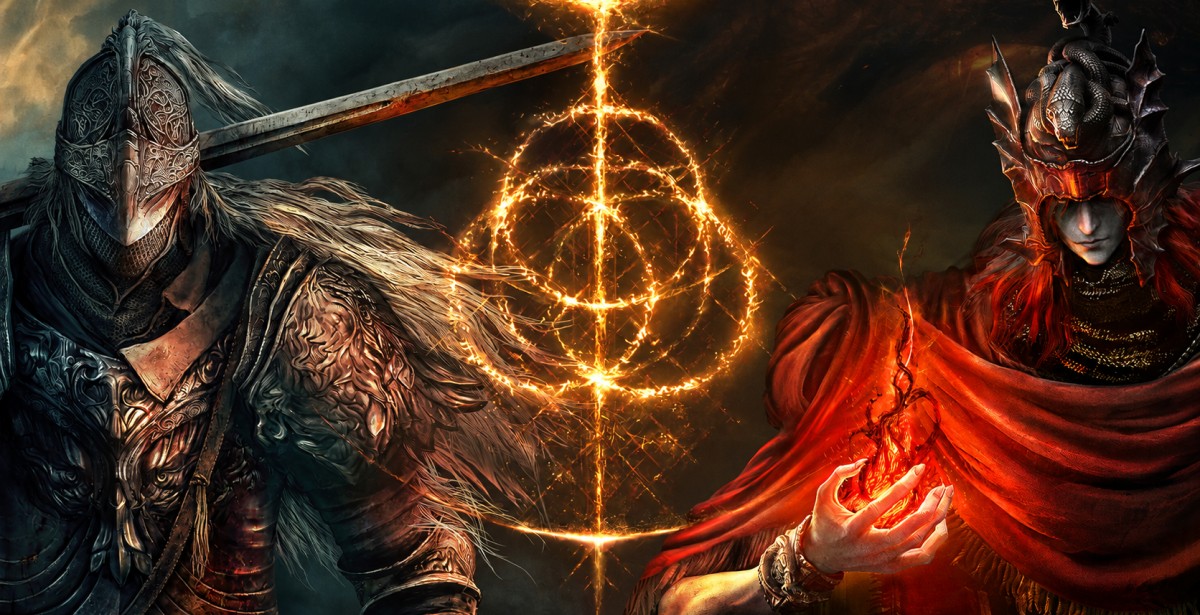
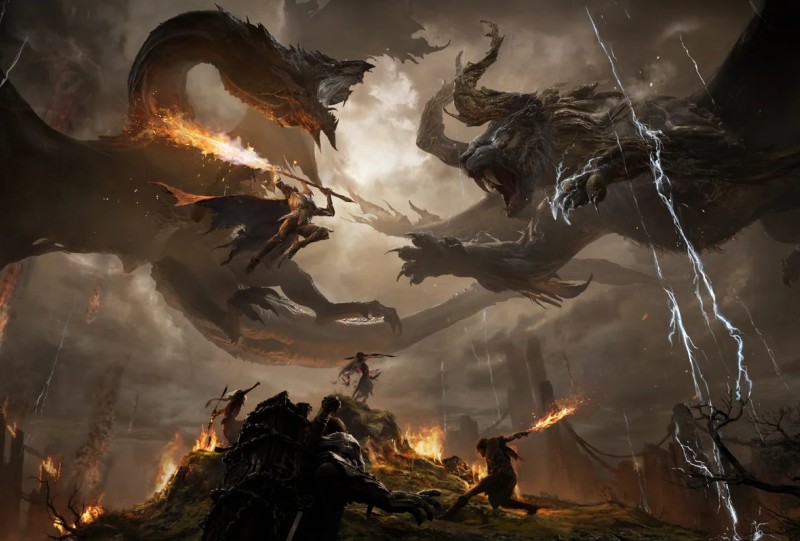
What can I say about Elden Ring that hasn’t already been said? From Software’s magnum opus originally released in 2022 to massive critical acclaim, redefining open-world action-RPGs forever. After a gargantuan expansion with Shadow of the Erdtree and a successful co-op multiplayer endeavour with Nightreign, From Software now extends Elden Ring’s reach over to the Nintendo Switch 2 to mostly great results.
Elden Ring: Tarnished Edition combines both the base game and the expansion, Shadow of the Erdtree, along with all previously released updates and new content, in one excellent package. If you want to read more about what makes Elden Ring so exceptional, I have an entire standalone review (as well as for Shadow of the Erdtree) you can check out, because this review is more focused on the technical aspects of Elden Ring running on Nintendo Switch 2.
Performance-wise, Elden Ring on Switch 2 initially drew some scepticism. Early impressions of outlets getting hands-on time with the game running in handheld weren’t very optimistic. Many reported bugs and frequent framerate dips that sometimes got as low as 20fps. For the longest time, it seemed like Nintendo’s next-gen hardware was ill-equipped to handle the game. I’m happy to report that From Software used all of its spare time to fine-tune the game on Switch 2 because the end-product is honestly commendable, but not without faults.
Elden Ring: Tarnished Edition combines both the base game and the expansion, Shadow of the Erdtree, along with all previously released updates and new content, in one excellent package.
There had to be some caveats to get Elden Ring running on Switch 2 and unfortunately, that came with a downsizing of the target framerate. Unlike its PC/console counterpart, Elden Ring’s Switch 2 version ultimately targets 30fps instead of 60fps though results may vary. In my experience, there were instances where the framerate did exceed 30fps but it never hit the smoother 60fps I wanted. This is most noticeable playing the game docked and during open world stretches of exploration, as the framerate sometimes struggled to stay consistent but it hovers around the 30-35fps mark without many significant dips below that point.
The real kicker is whether 30fps is enough to be effective in boss fights. Elden Ring has no shortage of these spectacular boss encounters that often require pin-point precision and movement from players. Thankfully, 30fps doesn’t seem to hurt the experience at all. Like playing Bloodborne, your brain eventually recalibrates itself to flow with the lower framerate and it shouldn’t be long before you’re as effective and skilled as you were on other platforms. For newcomers, this will barely be an issue.
In handheld mode, the Switch 2’s VRR somewhat alleviates the framerate fluctuations and it might be the preferred way to play the game for many. On a smaller screen, the image quality and visual fidelity is noticeably more vibrant and colourful, with less instances of texture pop-ins or framerate stutters, though they’re still present. When you get to in-door sections or dungeons, thankfully things smoothen out and there’s barely any technical hiccups worth stressing over.
The most immediate differences are going to be the visuals and overall texture quality. Perhaps it’s unfair to directly compare it to its console counterparts since I could only boot up my Xbox Series X and PS5 Pro to see side-by-side comparisons - two powerful consoles offering a notably more consistent and stable version of the game - but the downgrades on Switch 2 are only noticeable if you really look for them. Otherwise, despite the framerate dips, this is a remarkable port that surprised me in unexpected ways.
In handheld mode, the Switch 2’s VRR somewhat alleviates the framerate fluctuations and it might be the preferred way to play the game for many.
Apart from the novelty of playing Elden Ring on the go, the Switch 2 version also offers some neat new content. Two new starting classes, the Heavy Knight and the Idus Knight, give you a bit more flexibility starting out with a build. I opted to choose the Heavy Knight and build a tanky, greatsword-swinging Tarnished, but you can really choose any direction to go when it comes to build-crafting in the game - one of its most appealing selling points. On top of the new classes, you can also now customise your spectral steed with cool mounts but these are merely cosmetic cherries on top of an already delicious cake. Additionally, new in-game events spot the Lands Between like new NPC invasion points - and trust me, they’re a brutal challenge if you actively go out looking for them.
The biggest draw of Elden Ring: Tarnished Edition is the fact that this is, by all accounts, the most “definitive” edition of the game out today. The base game, expansion, and new DLC all contribute to a staggering action-RPG absolutely worthy of its asking price, easily providing hundreds of hours of gameplay if you’re looking to explore and try out everything. For newcomers to the Soulslike genre, as tough as Elden Ring gets (and it gets unreasonably tough at times), I can’t think of a better jumping-in point for the genre since its open world structure and very lenient build flexibility means you’ll always have options on how to progress.
Elden Ring: Tarnished Edition on Nintendo Switch 2 brings a masterful action-RPG to new shores, stacked with new and old content. It’s a surprisingly polished package, despite some of the technical drawbacks needed to get the game working well on the Switch 2. Most of all, it’s just a solid deal for Switch 2 players looking to experience one of the best games ever made and have the novelty of carrying it around wherever you go.
Nintendo Switch 2 Review code provided by Bandai Namco