Latest Updates
Who's Online

Please sign in to add comments

Cart Contents
| Item: | Price: | Qty: |
|---|---|---|
| Total: R 0.00 | ||
User Content
Latest Poll
Review
Review: Command & Conquer Remastered Collection
I've got a present for ya!
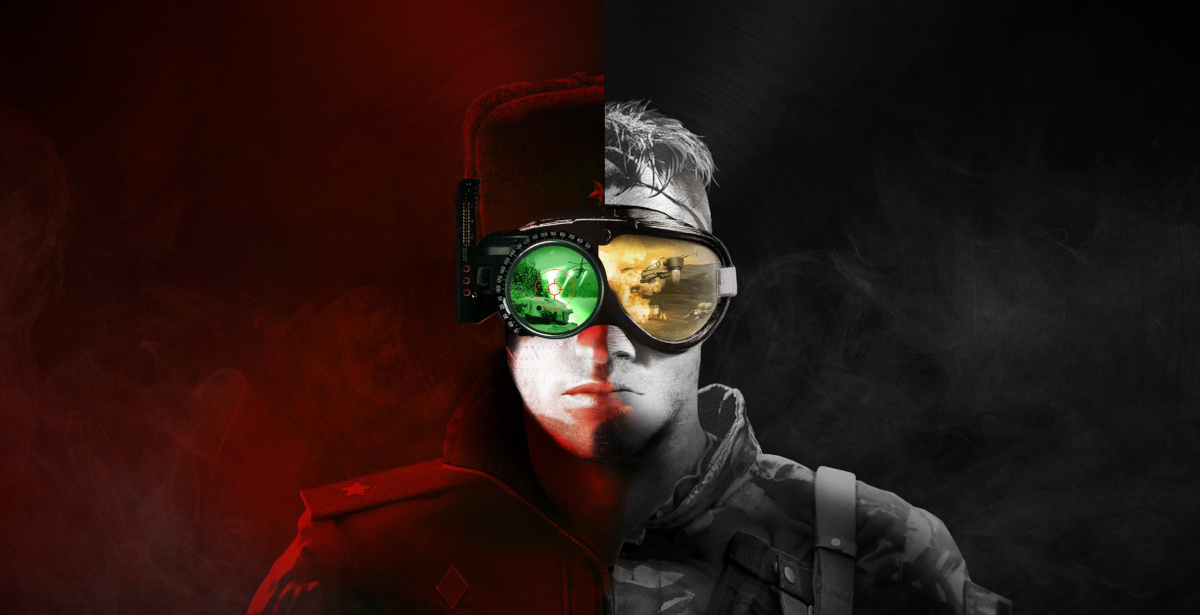
It doesn’t matter what your current real-time strategy preferences are – Blizzard’s hero-focused fantasy epics with their lavish cutscenes; Relic Entertainment and Creative Assembly’s squad-based historical battles; Xbox Game Studios’ epoch-spanning Age of Empires series (to which multiple developers contributed); or even the streamlined, console-focussed Halo Wars – they all owe a debt to Westwood Studios.
It all started with a minor strategy component in 1992’s Dune, before that strategy element went "real-time" and became core focus of 1993’s Dune II: Battle for Arrakis. These games laid the time foundations for Westwood Studios Command & Conquer series that would, in turn, go on to influence the designs of their contemporaries, such as Warcraft II: Tides of Darkness, Total Annihilation, Age of Empires, and StarCraft.
The basic tenants of real-time base-building: resource-management, build-order, army composition, and rock-paper-scissors combat were all defined and refined by Westwood Studios in the mid-90s, first with 1995’s Command & Conquer: Tiberian Dawn and then 1996’s Command & Conquer: Red Alert. In addition to the revolutionary gameplay (for the time), they also set a high bar for audio-visual expectations in the RTS genre, with live-action FMV cutscenes and an incredible, eclectic soundtrack from Frank Klepacki. For those that grew up playing PC games in the mid- to late-90s, it was hard to ignore the impact of Command & Conquer.

This brings us to Command & Conquer Remastered Collection – lovingly remastered by Petroglyph Games and Lemon Sky Studios – which gives an audiovisual overhaul of C&C: Tiberian Dawn, C&C: Red Alert, and the expansions (including missions previously exclusive to the PlayStation 1/Sega Saturn ports), with only minor tweaks to the user interface and gameplay.
I think there are two groups of gamers that’ll want to pick up the Command & Conquer Remastered Collection: a) those that played the originals back in the day and crave a nostalgic return to "simpler" times, and b) those who have spent years listening to the first group praise these classic games and want to find out what the fuss is about.
Thanks to a $20-equivalent price tag, I feel this is an easy recommendation for both groups. However, you need to go into the Command & Conquer Remastered Collection expecting a smart preservation project, packed to the brim with bonus features - not some revelationary gameplay experience that demonstrates we need to strip out all the added complexities of the last two decades.

When it comes to the remastering efforts, I’m certain the bulk of the Command & Conquer Remastered Collection install size is taken up by the remastered soundtrack – along with several completely re-recorded tracks by Klapacki and The Tiberian Sons – paired with a jukebox function that allows you to listen to any track, from any game, at any time (even as a background app while you’re working). Honestly, few developers have managed to come close to providing a soundtrack so diverse, yet so unexpectedly perfect for the genre.
When updating the visuals, the intent was clearly to remaster the game so it's exactly how you “remember” it. Petroglyph Games and Lemon Sky Studios have dramatically improved the level of detail on building and unit models, while sticking closely to the original map design without changing the layout, cluttering the screen with new objects, or obscuring visual feedback with excessively detail backdrops. It all runs at any resolution up to 4K, with a bare minimum of tweakable settings outside of v-sync and animation smoothing.

UPDATE: I've no idea if it was a driver update, patch, or some background process hogging resources, but my 2-year-old basic gaming laptop (i5-8300H @2.3 GHz, GTX1050 4GB, 8 GB DDR4 RAM, SSD) now runs Command & Conquer Remastered Collection at 110-120 fps on the 1080p/120 primary display. You should expect a wide variety of rigs to run this remaster without issues.
When it comes to extras, you'll find a bonus gallery that unlocks FMVs and B-roll from the campaign (“remastered” to the best of their ability); an updated operational-theatre interface during the campaigns; and a simple mission-selection menu that allows you to a) see more detail on what you’re getting into when offered branching mission paths, and b) start any mission from the expansions at any time.

If you’ve never played the original Command & Conquer, you'll probably want to hear a bit about gameplay. Everything you need to know is in the title: command your forces, conquer your enemies. Of course, it's never that simple, but these classic Command & Conquer games can feel ancient at times.
In stark contrast to the super-specialised, micro-heavy units of many modern RTS, both C&C: Tiberian Dawn and C&C: Red Alert can feel distinctly lacking in complexity. Units have a clear rock-paper-scissors approach to combat, but there are no upgrades to be found, no secondary abilities that allow units to occupy multiple roles, no formations to shield weaker units, and no attack-move command to ensure they don’t race to their doom. Pathfinding is, as in the original, appalling, especially when moving a mixed unit group.
That said - before bashing the dated gameplay any further - there are some “remastered” features that improve the experience: you can mix-and-match classic control schemes (like right-click movement), zoom in and out, double-click to select all units of the same type, snap to control-groups, and even create build queues (!).

Rather than a strong focus on unit micromanagement, the challenge comes from optimizing your build order to ensure unit prerequisites are met, balancing resource gathering vs. constructing units/defences, rushing your foes as early as possible, and priority targeting of resource operations or essential structures. Multiplayer team-matches can allow for a degree of turtling if you and your allies divvy up roles. However, in a 1 vs. 1 match, the player who starts disrupting resource operations, blocking chokepoints, or targeting key buildings first will almost always win.
That said, C&C: Tiberian Dawn is famous (or infamous?) for the nefarious strategy of sneaking engineers/commandos into an enemy base to take it over/blow it up. Over 25 years since it first released, rushing an APC through enemy defenses, unloading engineers, taking over key structures, and then selling them to fund your own coffers, still remains hilarious.
Another aspect of these classic games I enjoy – and this is something sadly lacking in modern over-balanced/over-symmetrical RTS games – is the impact of the map layout can have on the gameplay flow. Some maps are open, forcing players to keep their armies mobile; others have multiple chokepoints, encouraging air or sea battles instead. The Command & Conquer Remastered Collection has a ton of maps and - if multiplayer stress is not your thing - there's the ability to team-up or go alone against AI of varying difficulty levels. There's something for everyone.

When it comes to the campaign and expansion missions, things are a little different, and – I think – these will be the highlight for many returning players. These are structured scenarios, often with a limited tech-tree and unbalanced map layout, that ran the gamut from thrilling to infuriating.
Both C&C:Tiberian Dawn and C&C: Red Alert have some highlights, typically missions that feel like multi-stage operations, with limited units clearing a path before your main force arrives, or missions that provide you with powerful and unconventional units to wipe out your foes. Unfortunately, there are just as many bland seek-and-destroy missions (especially in C&C:Tiberian Dawn), and missions that give you a limited number of units to complete it with the outcome often feeling too random (e.g. your commando blowing up a structure and the game arbitrarily deciding if a harmless civilian or two infantry units will emerge, Tanya being repeatedly eaten by dogs emerging from the fog-of-war, or the scripting breaking and every unit converges on your location). Save, a lot.
It certainly helps that these missions are all bookended by entertaining FMV briefings and cheesy victory clips (though rarely as goofy as the sequels). Any scene with Joseph David Kucan as Kane remains captivating, and though his co-actors can’t quite match his screen presence, they do a great job if you’re in the mood for so-bad-its-good B-grade drama.

Some of the best singleplayer missions come from the “The Covert Operations”, “Counterstrike” and “Aftermath” expansions, where it is clear the developers were allowed to play around with mission scripting and freely tweak unit parameters. From more commando missions to unstoppable super units, and even dinosaur or giant ant invasions, there are almost as many of these missions as in the four campaigns.
Briefing videos and operational theatre maps for these expansion missions, originally exclusive to the PS1 Command & Conquer Red Alert: Retaliation port, introduce Barry Corbin as General Carville (who would reprise the role in Command & Conquer: Red Alert 2), and lump together thematically similar missions into a mini-campaign. You also get the Retaliation music remixes that, despite being tacky, distorted variants of the originals, still entertain me as much as now as they did my 13-year-old self in 1998.
Finally, there is full mod support coming, so I imagine there’ll be plenty of user-created content that pushes the limit of mission design even further.
All in all, despite the gameplay often feeling dated and an overreliance on simple seek-and-destroy missions, Command & Conquer Remastered Collection is still worth your time for some standout missions, the simple yet intense multiplayer, the amazing soundtrack, abundant extras that give insight into the original development, and pure historical value. Preservation of classic games, especially those that had such an impact on the genre, is something I always support I hope this remaster inspires other publishers to invest in remastering classic titles in their portfolios for future generations.
The Command & Conquer Remastered Collection is one of the progenitors of the real-time strategy genre. The original game was released way back in 1995 and went on to spawn numerous expansions and spin-offs. Now in 2020, Electronic Arts, in collaboration with Petroglyph and Lemon Sky Studios, has managed to revive the original game with a remaster that somewhat brings it up to modern-day standards. Why “somewhat” you may ask? Let’s get into it, shall we?
The Command & Conquer Remastered Collection includes 4 campaigns, all 3 expansions, a modernized UI, map editor, bonus footage gallery, and 7-hours of remastered music. The game has also been given a shiny new makeover which players can trigger in-game by simply pressing the spacebar. Swapping over from pixelated 1995 graphics to the "modern" 4K look is immensely enjoyable. While playing the game you’ll often find yourself pressing spacebar just to see what it used to look like back in the day.
The gameplay of Command & Conquer Remastered Collection has remained largely the same as the original. Units still get stuck due to absolutely horrific pathfinding by any modern-day standard. The AI will still ignore you at times, even if your units are close by (Andrew - I think this might be a new bug?). The game will still brutally punish you for making small mistakes. It’s peak 90s retro gaming goodness and fans of the original C&C: Tiberian Dawn and C&C: Red Alert will definitely enjoy the remaster.

The same challenges the original game set are still as present as ever and players will have to deal with some really tough missions, with downright dastardly gameplay mechanics working against you. Remember having to take out multiple sam sites with one unit? Well, that’s back and there isn’t any hand-holding here to help you out. If you are a fan of challenging games, the Command & Conquer Remastered Collection will be quite a treat to play.
Players will, however, have access to a couple of quality of life improvements in the game. For example, the command HUD has been revamped to look less dated and players will be able to double click on units to group select them. You can also zoom in and out. Players can also increase the game’s speed and this is an absolute must if you plan on playing the game for extended periods of time. Why do I say this? The answer lies with the fact that units move incredibly slowly, and watching your Tiberium harvester chug along the map at a snail’s pace becomes mind-numbingly boring after the first few missions. It certainly seems like the developers realized that 1995’s game pace is not going to cut it in 2020 and opted to allow players to increase the speed. Thank goodness they did, because this saves the game from becoming incredibly tedious and unnecessarily time-consuming.

The original C&C: Tiberian Dawn component of the remaster is a dated game and has a lot of flaws. However, it’s still a solid RTS game, and the remaster has done it justice without ruining the experience. C&C: Red Alert still holds up quite well and the remaster has done this justice as well, if not more so. Arguably it’s the better half of the package since there are numerous gameplay aspects that were refined in it over the 1995 original. If you play through C&C: Tiberian Dawn first, you’ll definitely notice this in the sequel.
Overall, if you’re a PC gamer who is a fan of RTS games from an era of gaming long gone, the Command & Conquer Remastered Collection is a must buy. Even more so if you played the original games back in the day. The added extras - in the form of behind the scenes bonus footage content and the remastered soundtrack - sweeten the deal even further. There’s enough content in the package to keep you busy for literally hours and hours on end. The multiplayer has also been revived with over 250 maps available to play with friends in custom lobbies. Command & Conquer is back!


Please login to post comments.
More Reviews

Review: Elden Ring: Tarnished Edition (Switch 2)
What can I say about Elden Ring that hasn’t already been said? From Software’s magnum opus originally...
21-09-26 Read more
Review: The Blood Of Dawnwalker
Rebel Wolves’s The Blood of Dawnwalker has often been compared to The Witcher III: Wild Hunt from fellow...
15-09-26 Read more
Review: Marvel's Wolverine
When I think about some of PlayStation Studios’ most consistent developers, Insomniac Games always ranks...
10-09-26 Read more
Review: Dumb Ways to Build
Originally a public service announcement which discouraged the Australian public from thoughtless activity...
09-09-26 Read more
Review: Orbitals
Booting up Orbitals for the first time, I was immediately hit by a warm wave of nostalgia like the food...
08-09-26 Read more

Review: Onimusha: Way of the Sword
It’s a good year to be a fan of action games, and an even better year to be a fan of Capcom. After delivering...
31-08-26 Read more

Review: Spa Weekend
I was invited to attend an exclusive preview screening of the film Spa Weekend on August 20th at Sandton...
21-08-26 Read more
Review: SanDisk Extreme Fit USB-C Flash Drive (128GB)
The SANDISK Extreme Fit USB-C™ Flash Drive - 128GB is something that you might not even believe exists...
21-08-26 Read more
Review: Ground Zero Hero
It’s not often that a game comes around with the ability to grip you into a mindless cycle of absolute...
19-08-26 Read more
Review: Marvel Tokon: Fighting Souls
You know, if anybody was going to make a Marvel themed arcade fighting game in 2026, I’m glad Arc System...
18-08-26 Read more

Overview

Add to cart
Developer
Petroglyph, Lemon Sky Studios
Publisher
Electronic Arts
Platform
PC, Steam
Release date
5 June 2020