Latest Updates
Who's Online

Please sign in to add comments


Cart Contents
| Item: | Price: | Qty: |
|---|---|---|
| Total: R 0.00 | ||
User Content
Latest Poll
Review
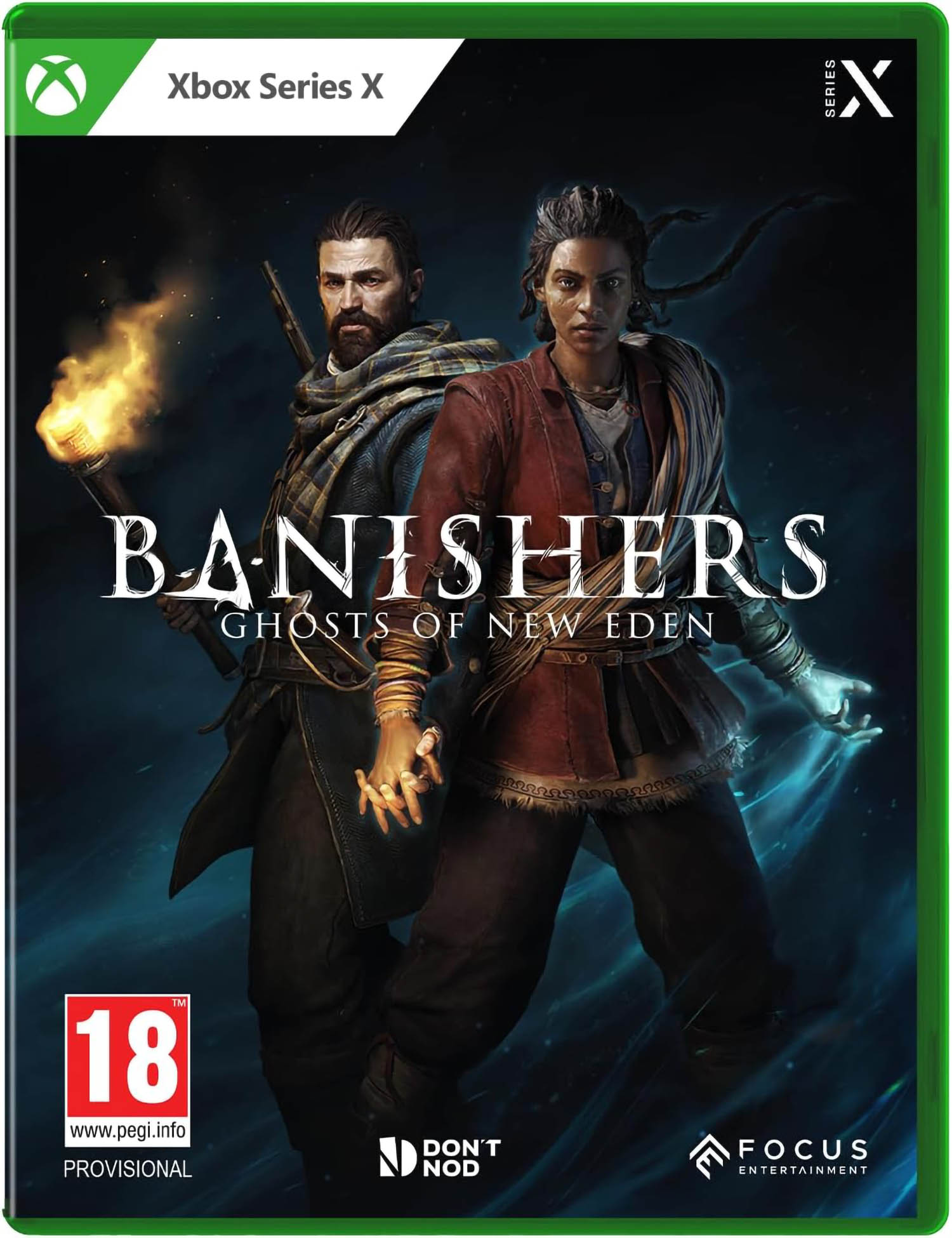
Review: Banishers: Ghosts of New Eden
Love, grief and ghosts.

The game that most often came to mind while playing Banishers: Ghosts of New Eden was Greedfall. There’s the European colonial-era setting and themes, but also the somewhat classic structure and the smart use a limited budget to craft an adventure that still feels epic. Unfortunately, it makes some of the same mistakes and begins to buckle under its own weight.
Banishers: Ghosts of New Eden is the evolution and refinement of Don’t Nod’s first attempt at an action-RPG, 2018’s Vampyr, more so than a pure branching-narrative adventure like Life is Strange. Major story beats on the critical path play out much the same way irrespective of your choices, and it has a strong focus on combat and character builds you’d expect in an action-RPG.
Instead of leading to mutually exclusive quest lines or wildly different scenarios, your choices have an impact on the protagonist’s evolving relationship, how they interpret the actions of others, and how others perceive them. You have to tackle optional hauntings and side quests to see a more notable impact on the fate of several settlements and the secondary cast.

Banishers: Ghosts of New Eden has an intriguing historical-fiction premise and central mystery that kept me hooked after the gameplay loop grew stale.
Red mac Raith and his mentor Antea Duarte – banishers and lovers – come ashore near the Puritan settlement of New Eden during a turbulent 1695. The French and English are at war again, with the conflict spreading to the North American colonies; settlers striking out from Boston face a harsh existence in untamed lands; and a close friend has summoned them, fearing the entire region is cursed by a Nightmare – the most severe form of haunting driven by past trauma and intense emotions.
Instead of leading to mutually exclusive quest lines or wildly different scenarios, your choices have an impact on the protagonist’s evolving relationship.
Tragedy has already befallen the mostly abandoned settlement and the situation only gets worse after their first encounter with the Nightmare. The survivors are scattered and Red is washed up miles away from New Eden, but the combination of his grief and Antea’s hunger for vengeance draws her spirit back to him, reuniting them once more – albeit now by the same bond they strived to break in life. What follows is a lengthy trek across the beautiful and mystical New England wilds, from the forested west, through central marshes, to the frozen mountainous north, the Atlantic coastline, and finally back to the rainswept and fog-shrouded New Eden in the east.
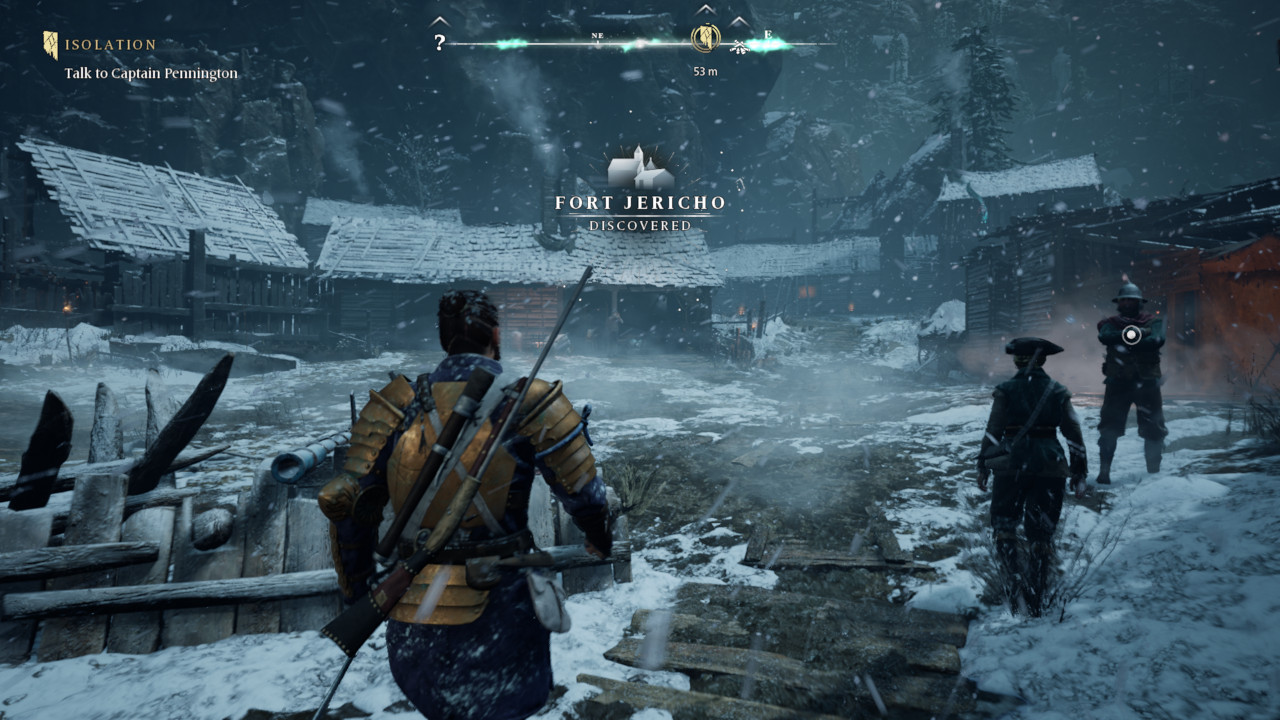
Along the way, the pair come must come to grips with their new circumstances while finding allies who can help them banish the Nightmare and lift the curse. This means liberating several settlements claimed by the curse; aiding haunted settlers by dealing with lingering ghosts and spectral horrors; and they soon realise the Nightmare’s manifestation might not be tied to one singular event but the sins of many.
Investigating hauntings, conversing with the living and dead, and choosing closure represent the strongest and weakest parts of Banishers: Ghosts of New Eden. There are a dozen mandatory and optional hauntings to resolve and few provide a clear victim or villain, so it’s up to you to grant spirits a peaceful ascent, a punitive banishment, or possibly condemn the living from their crimes. The Banishers creed is “Life to the living, death to the dead”, but Red and Antea’s dogmatism is tested by their current situation and the terrible decisions others can make when dealing with love and grief.
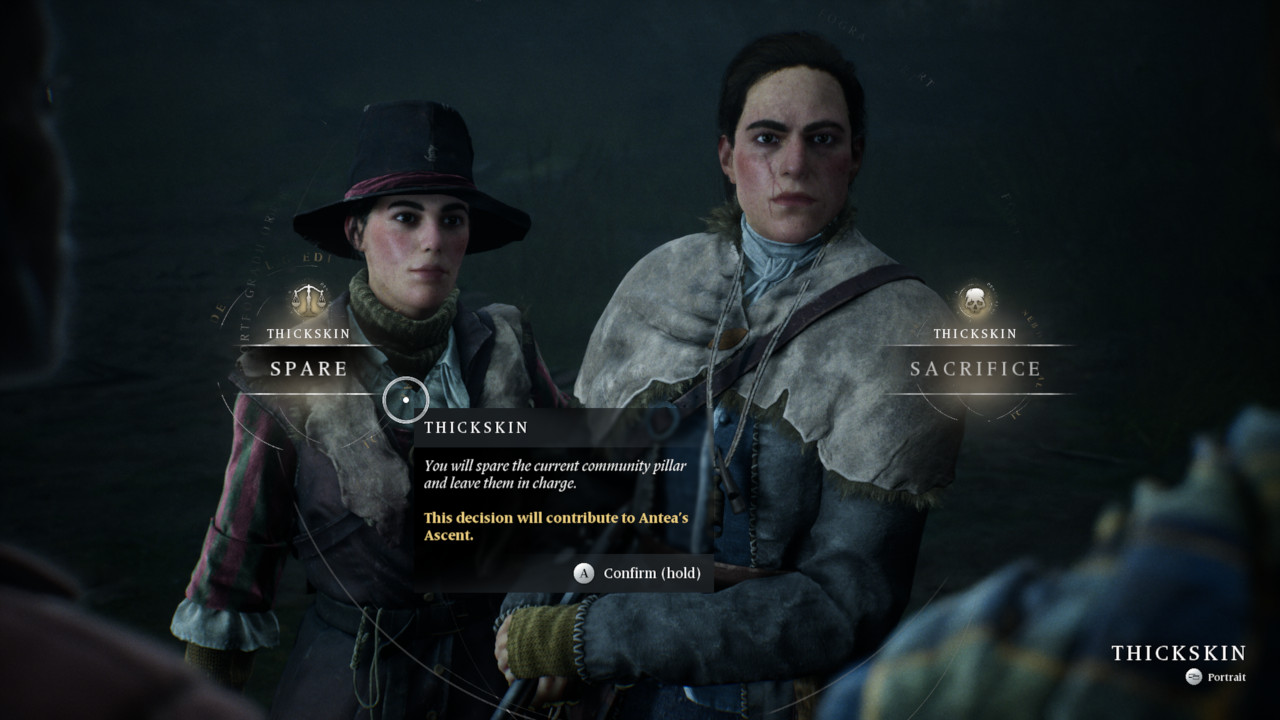
Even if these choices don’t drastically alter the main story path, it’s an opportunity for role-playing beyond just tweaking your character build for combat. The writing quality and natural performances were excellent throughout, I enjoyed watching Red and Antea’s personalities evolve, and you can tackle simpler side quests that result in settlements changing over time – for better or worse. It’s a much-needed dynamic system that has to support increasingly rote gameplay.
Investigating hauntings, conversing with the living and dead, and choosing closure represent the strongest and weakest parts of Banishers: Ghosts of New Eden.
That said, I have two issues with the narrative mechanics. Firstly, you’re asked to take an important oath early, despite the depth of Red and Antea’s relationship only becoming obvious well into the game. Deciding to grant Antea peace through ascension or killing the living for the essence needed to fuel an archaic ritual to return her to life is a decision that would have had more impact at the halfway point. Weirder still, the game is blatantly transparent about the impact of your choices – such as the consequences of breaking the aforementioned oath – with tutorial screens and detailed text robbing scenes of emotional impact and breaking immersion.

When it comes to exploration, combat, and character progression, the mechanics are intuitive, streamlined, and they all feel remarkably polished. The problem is how familiar they feel if you’re a fan of the genre – even with the dual-protagonist setup – and how they fail to evolve sufficiently to support a game that’ll take upwards of 30-hours in a casual playthrough.
Starting with the good, the first dozen or so hours were great and had brisk narrative pacing. The world consists of small but dense regions, connected by linear paths, traversal zones, and plenty of shortcuts to loop back. It helps that Banishers: Ghosts of New Eden looks and sounds great great. It’s not cutting edge but what you’d expect from mature engine technology and a strong, consistent artistic vision. Character models and animations look a bit dated in cutscenes and combat, but the voice work compensates for it, while the ambience and music finds a perfect middle ground between magical and creepy.
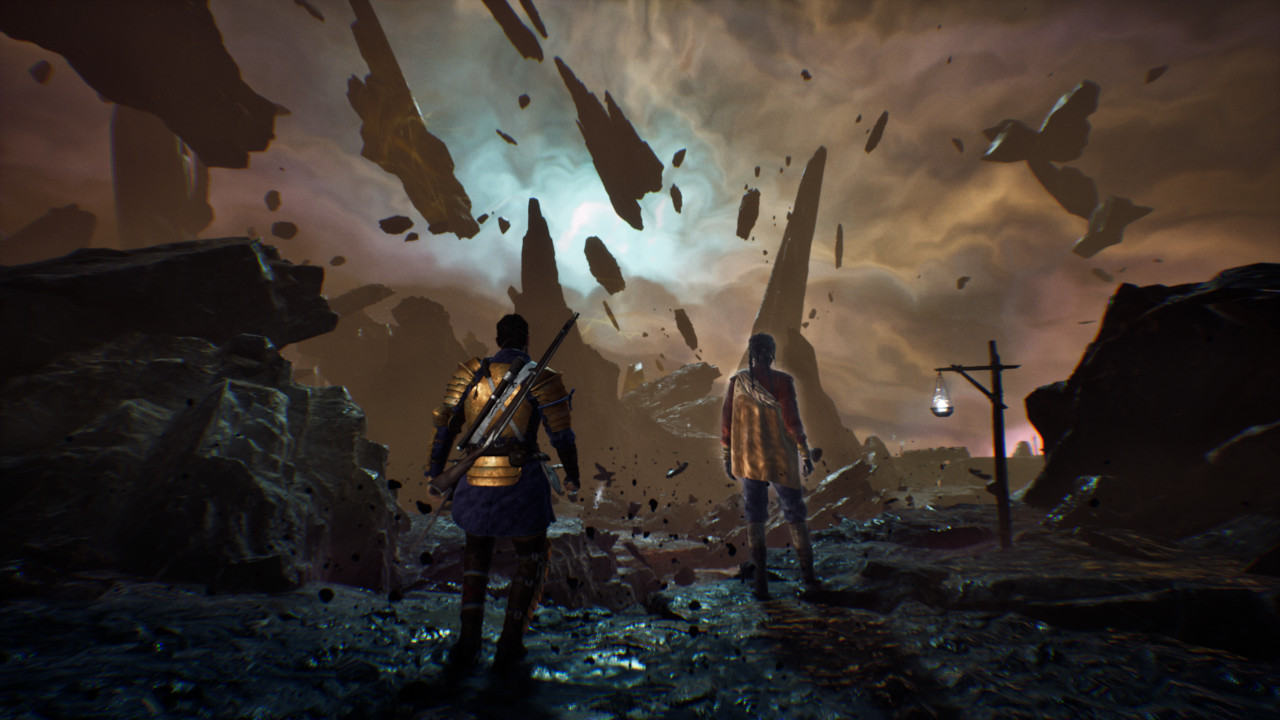
Early on, ability-restricted barriers keep you moving in the right direction as you hoover up an inordinate amount of herbs, metals, and gold for rituals, gear upgrades, and rare stores; you battles against spectres, wildlife, and elite variants thereof during scripted encounters or random spawns; you discover collectibles like gear chest or clear undead nests that boost your attributes; and eventually stumble upon settlements with quest-giving NPCs – dead and alive.
The world consists of small but dense regions, connected by linear paths, traversal zones, and plenty of shortcuts to loop back. It helps that Banishers: Ghosts of New Eden looks and sounds great great.
It was familiar fare, but exploring new areas was initially thrilling as it felt like I was plunging into the unknown, with many beautiful vistas to boot, and I was frequently resolving hauntings, gearing up, and expanding my combat options. To keep exploration interesting, there’s always some light puzzling involved, most of which uses Antea’s ghostly powers to highlight interactive objects or traverse gaps and obstacles using new spectral manifestations unlocked through story progression.
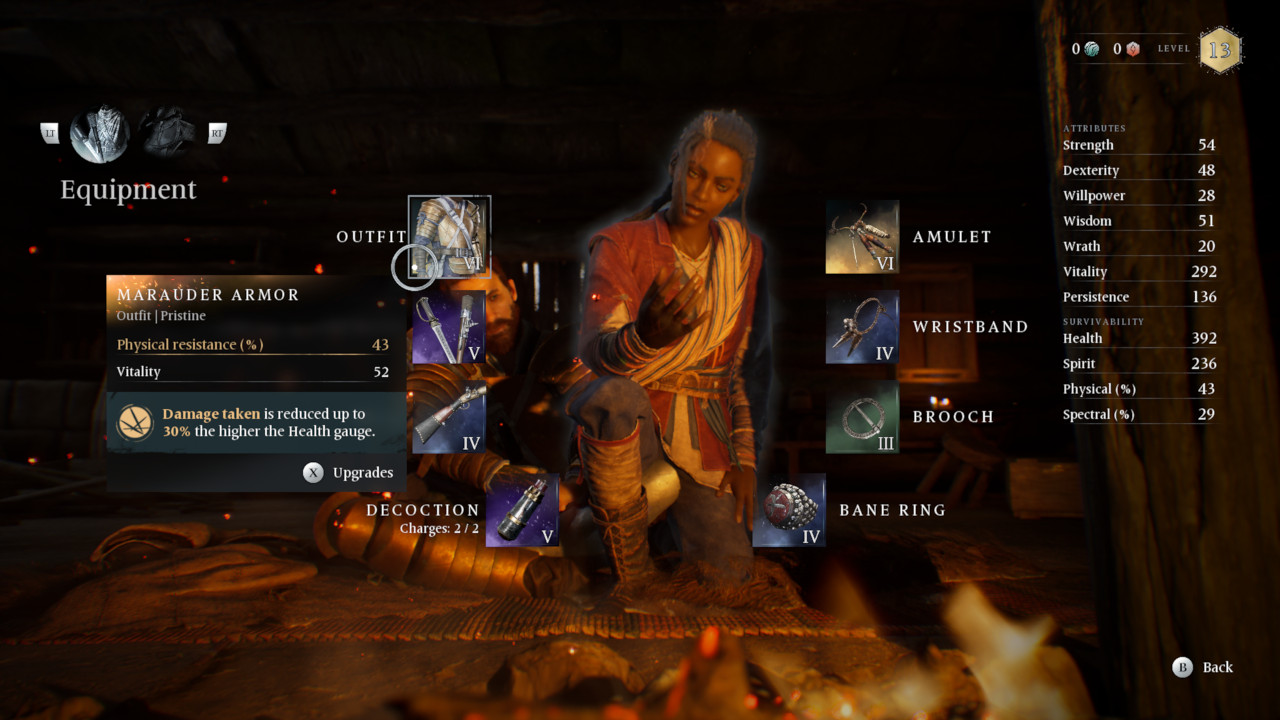
Of course, these ghostly abilities also supplement Red’s traditional sword, shield, and rifle-based move-set in combat. The gear and character “Evolution” mechanics take a few hours to reveal their depth, as Banishers: Ghosts of New Eden is more of an RPG than the streamlined interface and action-based combat would suggest.
There are only a handful of items for each slot and the move-set never changes, but gear boosts several attributes that affect Red and Antea, it can be upgraded through several tiers by investing increasingly rare resources, has each comes with a unique modifier that can synergise with other gear or the Evolution tree. For each new spectral manifestation Antea learns, you can invest points into a mini-skill tree with passive or ability-altering unlocks. There’s always a choice between two, but you can switch between them once unlocked, and these offer surprising depth if you take them time to consider them in tandem with your gear load-out.
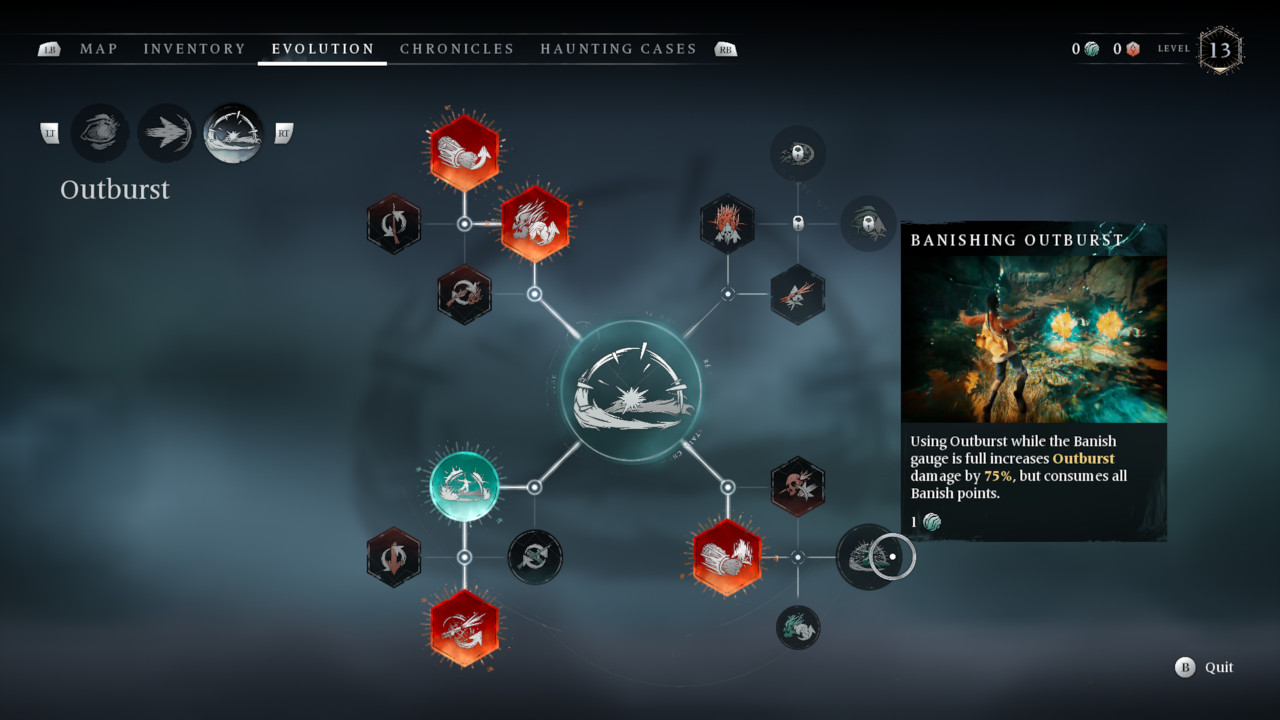
You can customise your pair to maximise damage output at the expense of resilience; have them become stronger when the other is weaker; gain bonuses when parrying or switching forms with perfect timing; have basic sword and spectral-punch kills restore health and spirit energy respectively; or focus on the damage of Red’s banish ability and Antea’s manifestations instead of basic attacks. It’s a system you’ll need to invest time in on all but the easiest difficulty.
It never felt too hard in one-on-one battles, but being reckless can see you surrounded and beaten down quickly.
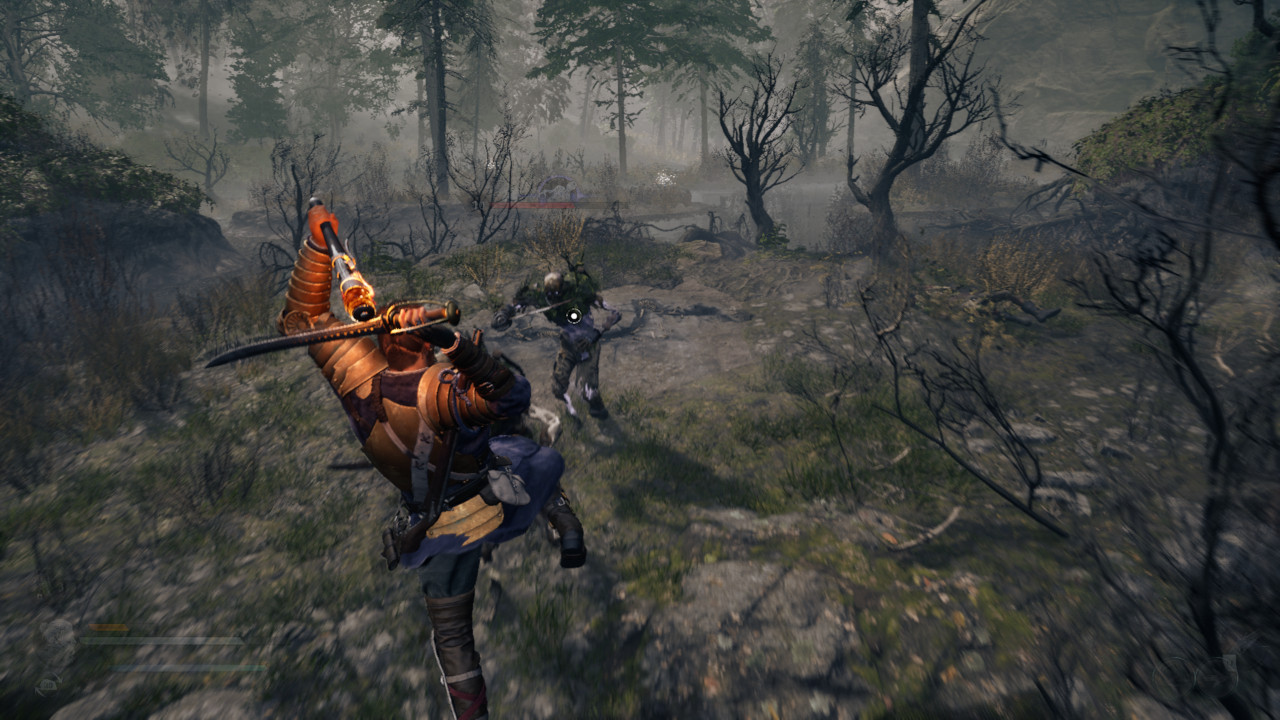
Encounters start out simple enough but you’ll soon find yourself doing minimal damage with considering tactics or modifiers attached to some encounters. Basic spectres can posses corpses for a second health bar, lumbering scourges and boss encounters force you to target weak spots, and you’ll need to track priority targets that can bolster other spectres or hit you from afar with projectiles. It never felt too hard in one-on-one battles, but being reckless can see you surrounded and beaten down quickly.
If Banishers: Ghosts of New Eden had started drawing to a close around the 20-hour mark, I’d have given it an easy 9/10, forgiving most issues in light of its narrative ambitions, epic scope, audiovisual quality, and high level of polish on mid-tier budget. Unfortunately, that was just after the mid-point for me, when I was presented with two massive regions to tackle in any order before the finale. At that point, the game lost the plot – both literally and figuratively – and the narrative pacing slowed to a crawl.
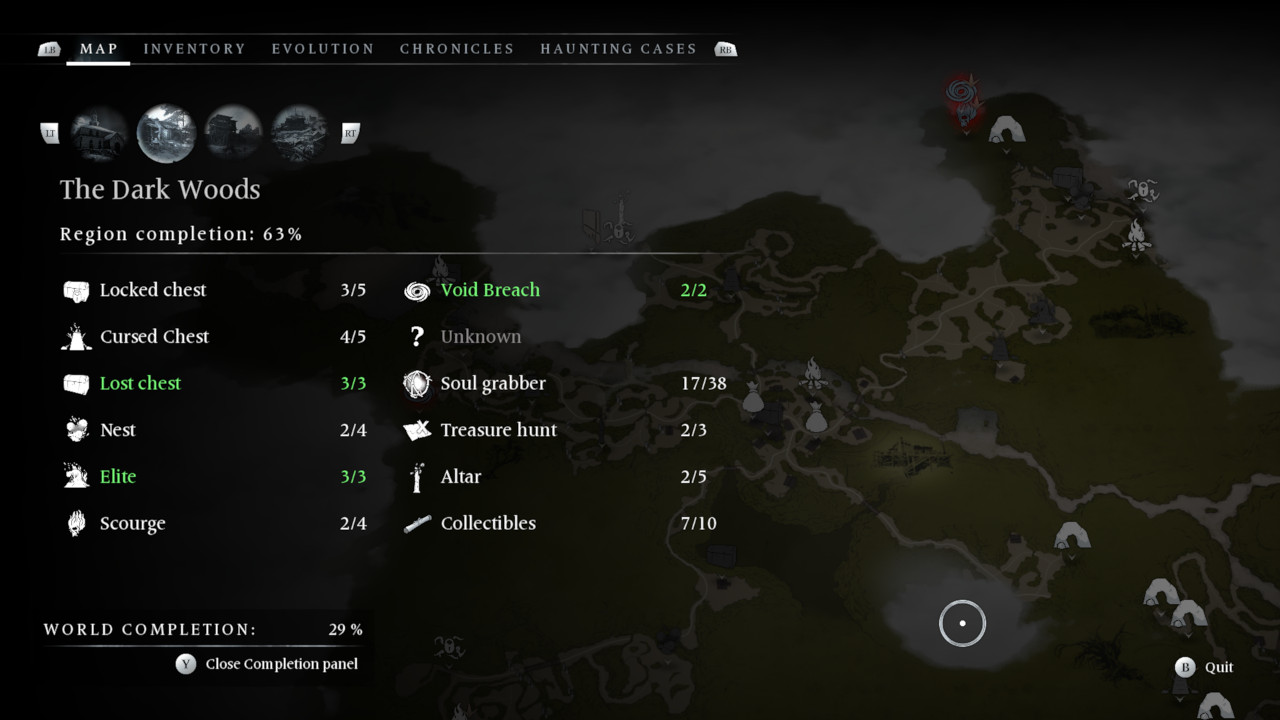
The game suddenly doubling down on open-world filler and excessive backtracking – even if you just want to tackle settlement side quests – repopulating old areas with quests and collectibles, and even introducing repeatable events for grinding resources and experience.
Scattered chests and shrines just off your path are one thing, but I quickly came to despise the way you can only fast travel between limited campfires and how often I’d backtrack with a new ability, unlock a new path, and immediately find another ability blocker behind it (sometimes even preventing me from getting to the next objective in a side quest). Environments that once felt diverse, detailed, and immersive soon became a homogenous blur; I started noticing repeating geometry, props, and textures; and the limited enemy variety became apparent.
Now as I still enjoyed two-thirds of my time with Banishers: Ghosts of New Eden, it’s hard to pick a score or recommend it without caveats. It’s yet another game that makes me wish developers would stop wasting time and money adding “content” that detracts from what their games do well and makes the overall experience worse for the majority of players. Hell, it offers multiple endings that incentivise replays, so why would would you even want to pad out the core experience?
If you’re someone who finds working through Ubisoft-style checklists cathartic, Banishers: Ghosts of New Eden is a well worth the asking price as you get an uncommon setting, compelling story, likeable characters, and no shortage of activities in a massive and beautiful world. On the other hand, if you dislike time-wasting mechanics in already overlong modern games, I’d still recommend it – just be warned methodical exploration is to your detriment. Both primary and secondary quests will inevitably take you down most paths, sometimes repeatedly, so tackling busywork systematically will result in it wearing out it’s welcome prematurely.
*Xbox Series X/S Review code provided by ZamZam Distribution


Please login to post comments.
More Reviews

Review: Elden Ring: Tarnished Edition (Switch 2)
What can I say about Elden Ring that hasn’t already been said? From Software’s magnum opus originally...
21-09-26 Read more
Review: The Blood Of Dawnwalker
Rebel Wolves’s The Blood of Dawnwalker has often been compared to The Witcher III: Wild Hunt from fellow...
15-09-26 Read more

Review: Marvel's Wolverine
When I think about some of PlayStation Studios’ most consistent developers, Insomniac Games always ranks...
10-09-26 Read more
Review: Dumb Ways to Build
Originally a public service announcement which discouraged the Australian public from thoughtless activity...
09-09-26 Read more

Review: Orbitals
Booting up Orbitals for the first time, I was immediately hit by a warm wave of nostalgia like the food...
08-09-26 Read more

Review: Onimusha: Way of the Sword
It’s a good year to be a fan of action games, and an even better year to be a fan of Capcom. After delivering...
31-08-26 Read more

Review: Spa Weekend
I was invited to attend an exclusive preview screening of the film Spa Weekend on August 20th at Sandton...
21-08-26 Read more

Review: SanDisk Extreme Fit USB-C Flash Drive (128GB)
The SANDISK Extreme Fit USB-C™ Flash Drive - 128GB is something that you might not even believe exists...
21-08-26 Read more
Review: Ground Zero Hero
It’s not often that a game comes around with the ability to grip you into a mindless cycle of absolute...
19-08-26 Read more

Review: Marvel Tokon: Fighting Souls
You know, if anybody was going to make a Marvel themed arcade fighting game in 2026, I’m glad Arc System...
18-08-26 Read more

Overview
Add to cart
Developer
Dontnod Entertainment
Publisher
Focus Entertainment
Platform
PC, PlayStation 5, Xbox Series
Release date
13 February 2024